

By Anitra Nelson, University of Melbourne
MELBOURNE, July 4 – Small-scale free-range pig farmer Tammi Jonas recently appeared in an Australian Broadcasting Corporation exposé on corporate food giant JBS.
The biggest meat company in the world, JBS has been pursuing endless growth under a cloud of corruption scandals, devouring more and more of the global food industry.
Shoppers at any of the three largest Australian supermarkets are likely eating products from JBS. When Jonas learned of JBS’s takeover of her local abattoir near Daylesford in Victoria, she was “gutted”.
Jonas’ Jonai Farms and Meatsmiths, operates under very different principles to JBS. It employs ‘degrowth’ approaches to save land, work-time and money.
Degrowth focuses on quality, re-localising economies and satisfying basic needs and promises a more ecologically sustainable future.
As climate change affects harvests and Russia’s war in Ukraine has cut vital food exports, resulting scarcity has pushed up international grain prices.
This year, the Intergovernmental Panel on Climate Change and the European Union’s European Environment Agency, have pointed to degrowth, or decoupling growth from prosperity, as a strategic approach to prevent and mitigate the impacts of climate change and curb limitless growth.
Jonai Farms is an example of degrowth in practice.
Jonai Farms feed their pigs damaged or surplus foods, such as brewers’ grain, eggs, and milk that producers would otherwise waste, creating a net ecological benefit by diverting many tonnes of organic ‘waste’ from landfill, and exiting the fossil fuel-intensive model of segregating feed production from livestock farming.
Water is moved around the property by old piston pumps powered by secondhand solar panels via treadmill motors salvaged from the local tip.
Pigs’ heads become pâté de tête, excess fat makes beautiful soap, and bones are transformed into bone broth, before being pyrolised in a retort to become bonechar, which is then returned to the soil to help produce a small commercial crop of garlic.
Using fewer pigs actually results in greater output, and minimises waste pollution and landfill in the process. A local council artisan agriculture project, which promotes ethical, agro-ecological and regenerative farming, supports degrowth enterprises like Jonai Farms.

On the other side of the world, Cargonomia is an umbrella degrowth organisation in Budapest, Hungary.
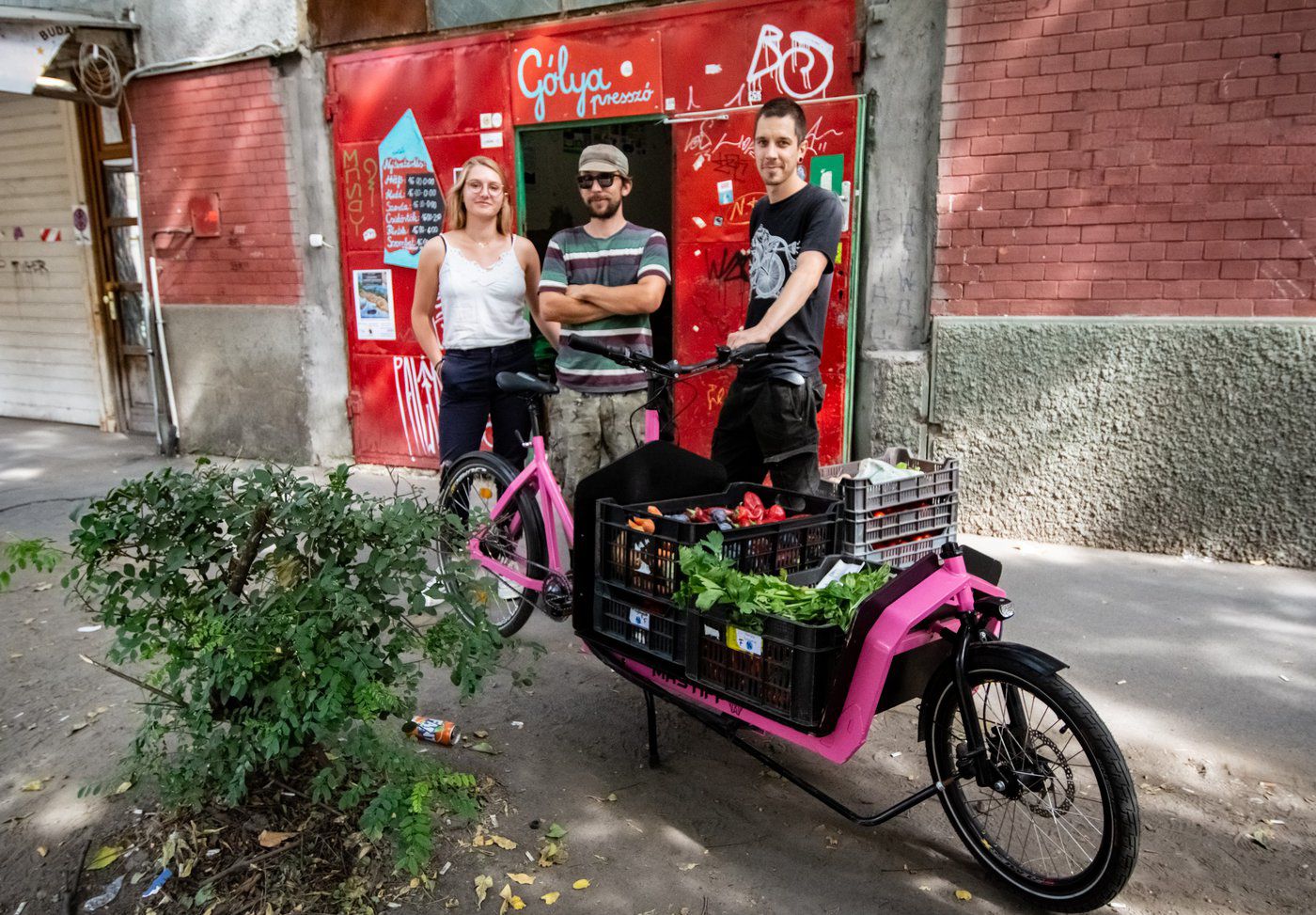
Zsámboki Biokert, an organic micro-farm located 50km from Budapest, and bicycle couriers Golya Futar along with bike making, repairing and hiring enterprise Cyclonomia, are all partners within Cargonomia’s network. They combine their efforts in an organic seasonal food box order scheme.
Along with neighbouring partner farms, the four-hectare Zsámboki Biokert supplies food for the boxes with deliveries made and coordinated by Gólya Futar to collection points in Budapest.
A city delivery node typically comprises 25 closely located families. The scheme enhances urban eaters’ knowledge about challenges faced by the farmers.
The garden team is open to hearing about eaters’ choices, exploring affordable and nutritious options for mutual benefit. Volunteers can get involved in farm activities or within Cargonomia’s network.
During the Covid-19 pandemic, mainstream agriculture and manufactured food production with long supply chains broke down leaving shoppers anxious, even prompting ugly runs on basic retail products.
Meanwhile, in Budapest, courier bikes continued to operate even when there were limits on other vehicles. They provided quality food with secure delivery.
Participants continued warm relations of solidarity and care in both production and distribution of their food.
Just as Cargonomia is multi-pronged, partnering with a range of organisations in many other activities, degrowth practitioners learn multiple skills. Logan Strenchock is a Zsámboki Biokert famer and works at Budapest’s Central European University.
He trains students on the farm, incorporates interns into wider Cargonomia activities, and engages in conscious food consumption movements.
Meanwhile, practitioners develop a range of niche initiatives producing and training others to ferment and preserve foods, hand making beer and juices, foraging mushrooms, crafting cheeses from local herds and so on.

Degrowth evolved as a concept over 50 years ago. This century it has become highly visible, especially in Europe, in sustainable transport campaigns and activities around collective self-provisioning in a range of areas.
Degrowth targets impending challenges associated with over-consumption and inequity, unmet needs, failing democracies and unsustainable ecosystems.
With projects on the ground addressing the looming impacts of climate change and food insecurity, degrowth is moving policymakers and attracting attention from all those keen to curb carbon emissions and live sustainably.
Anitra Nelson is Honorary Principal Fellow at University of Melbourne, co-author of Exploring Degrowth: A Critical Guide, and co-editor of Food for Degrowth, which explores ecologically-sound localised practices of collective self-provisioning.
Article courtesy of 360info.


