

KUALA LUMPUR, Oct 14 — Two experts have questioned the criteria for MediAsas’ success and sustainability of the government-designed health insurance product offered by private insurance and takaful operators (ITOs).
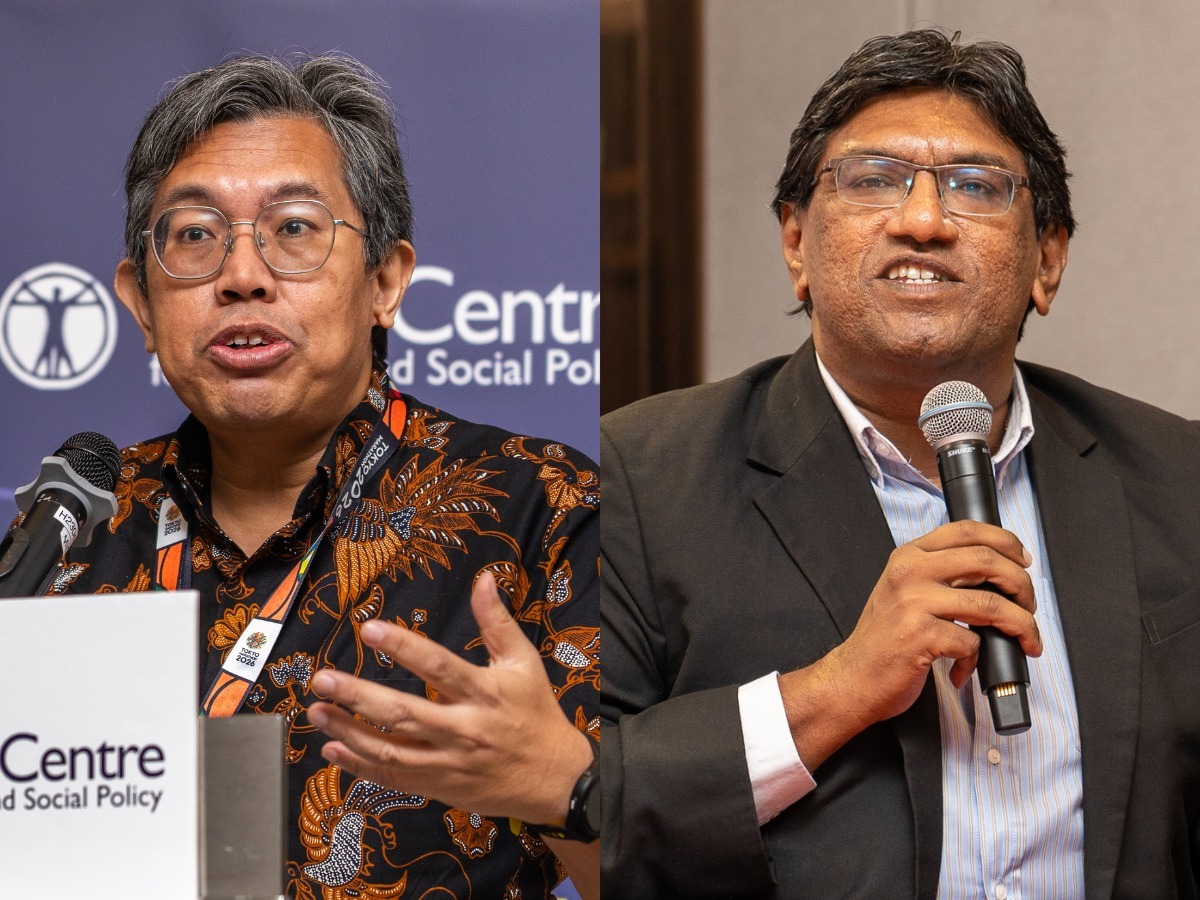
On BFM’s Health & Living podcast aired last Monday, which focused on Budget 2027, Galen Centre for Health and Social Policy chief executive Azrul Mohd Khalib welcomed the government’s RM200 annual premium subsidy per worker in the first year of MediAsas when it is planned for rollout in January, which would be a partial subsidy as annual premiums can cost RM500 to RM600.
“It’s good because it allows support for MediAsas, but what are the indicators of success for this initiative?” questioned Azrul.
“It’s entirely 100 per cent private sector driven. It’s not a government insurance scheme.”
He pointed out that the i-Lindung product previously launched by the government, which is carried by most ITOs, suffered problems with uptake despite a “fair amount of subsidy” going into critical illness coverage.
Under Budget 2027, Employees Provident Fund (EPF) contributors under 55 are allowed to pay MediAsas premiums through their Sejahtera Account.
The RM200 subsidy for up to 200,000 workers targets small and medium enterprises (SMEs) with fewer than 75 workers, limited to 50 workers per company. MediAsas has an RM100,000 annual limit for policyholders aged 59 years and below.
Azrul said the indicators of success for MediAsas shouldn’t be the number of subscribers, but how many policyholders successfully get reimbursed, claims processed successfully, and “most importantly, coverage against financial catastrophe is able to be delivered”.
National Cancer Society of Malaysia (NCSM) medical director Dr M. Murallitharan, who spoke at the same BFM podcast hosted by producer Lim Sue Ann, said MediAsas was irrelevant to people living with non-communicable diseases (NCDs) because of its exclusions of pre-existing conditions, like conventional medical plans.
“Coming along with what Azrul was saying, is it an effort to reform the insurance landscape as a whole? I think, again good intentions, but the problem with all these things is that you come back to the single biggest issue – is it going to be able to work at sustaining the pool, and will the pool be vast enough for it to be able to reimburse everyone accordingly?” he said.
“So first, how many people are going to come into the pool? If not, at the end of the day, the system will collapse by itself.”
MediAsas is entirely voluntary and planned for offering by various ITOs.
Unnamed spokespeople from Bank Negara Malaysia (BNM) and the Ministry of Health (MOH) reportedly claimed at a media briefing last month that people with early-stage cancer in remission, single-vessel heart disease, certain mental-health and developmental conditions which are stable and well managed, and people with mild and moderate autism could qualify to purchase MediAsas.
However, treatment for those pre-existing conditions may remain excluded from MediAsas, with policyholders only able to claim for “unrelated” illnesses.
Azrul cited MediAsas’ no-look-back feature that prohibits ITOs from denying claims on the basis of pre-existing conditions, but only after one pays premiums for seven continuous years.
Dr Murallitharan suggested that the government should have offered MediAsas subsidies to employers instead in order to sell the product, rather than individuals. “That would have been a better way to transition larger groups of people.”
“But employers would look at the best possible product for group coverage and may decide MediAsas is not the way to go,” Azrul replied.
“At the end of the day, the market will determine whether or not MediAsas is successful.”
He added that he would immediately buy MediAsas Fleksi, which has an RM300,000 annual limit, when it becomes available to personally test out the product. “The promise is good, but whether or not it can deliver depends on the private sector.”
Both Azrul and Dr Murallitharan felt that Budget 2027 didn’t prioritise primary care, with the latter noting that he was uncertain if the Social Security Organisation’s (Socso) health screening package would be funded next year.
While the Peka B40 programme targets lower-income people, Socso’s programme caters to the middle 40 per cent (M40).
Lim noted that the Madani Medical Scheme, which covers acute care for minor illnesses at private general practitioner (GP) clinics, wasn’t allocated in Budget 2027, with the assumption that the three-year programme has been abolished.
Azrul said the money saved from eliminating the Madani Medical Scheme should have gone to MediAsas instead to cover primary care at GP clinics.
“A lot of the plans we’re working on today are very hospital-centric. Even the MediAsas framework is very hospital-centric,” he said.
Lim also observed the “glaring” omission of Rakan KKM from Budget 2027. The programme was initially touted as a “premium economy” wing of government hospitals and meant to benchmark the diagnosis-related groups (DRG) payment system under MediAsas, since DRG isn’t mandated by law for private hospitals.
“I’m hoping this means they’re moving away from this premium economy plan they were talking about in government hospitals, but putting resources back to bolstering the public health care system so there’s no dilution of that,” Azrul remarked.
“I understand the intent, but we should make use of the infrastructure and services we already have, rather than create parallel competing ones.”
Dr Murallitharan said his biggest pet peeve with Budget 2027 was the lack of allocation to manage the health impact from the haze, pointing out that his personal health expenditure spiked by 200 per cent because of the haze.
Azrul noted that the RM40 billion subsidy for fossil fuels next year, up from a budgeted RM15 billion this year, “comes with a price”.
“The price is Skim Perubatan Madani,” quipped Dr Murallitharan.
Overall, in terms of health, Azrul described Budget 2027 as “underwhelming”, whereas Dr Murallitharan remarked, “won’t die lor.”
The MOH only received RM47.7 billion under Budget 2027, a minimal 2.5 per cent increase (less than RM1.2 billion) from 2026, marking the smallest raise in five years since Budget 2022.
“The number goes up a little bit, but it’s nowhere near enough,” said Dr Murallitharan.
“That’s why I said, ‘wont die lor’. It’s better than nothing, but it’s not enough to make any kind of significant difference. Even keeping business as usual, the signal from the government is like – we’re not going to give you enough to run business as usual, let alone the kind of deep spending you need to significantly put out to get to real health reform in this country.”

