

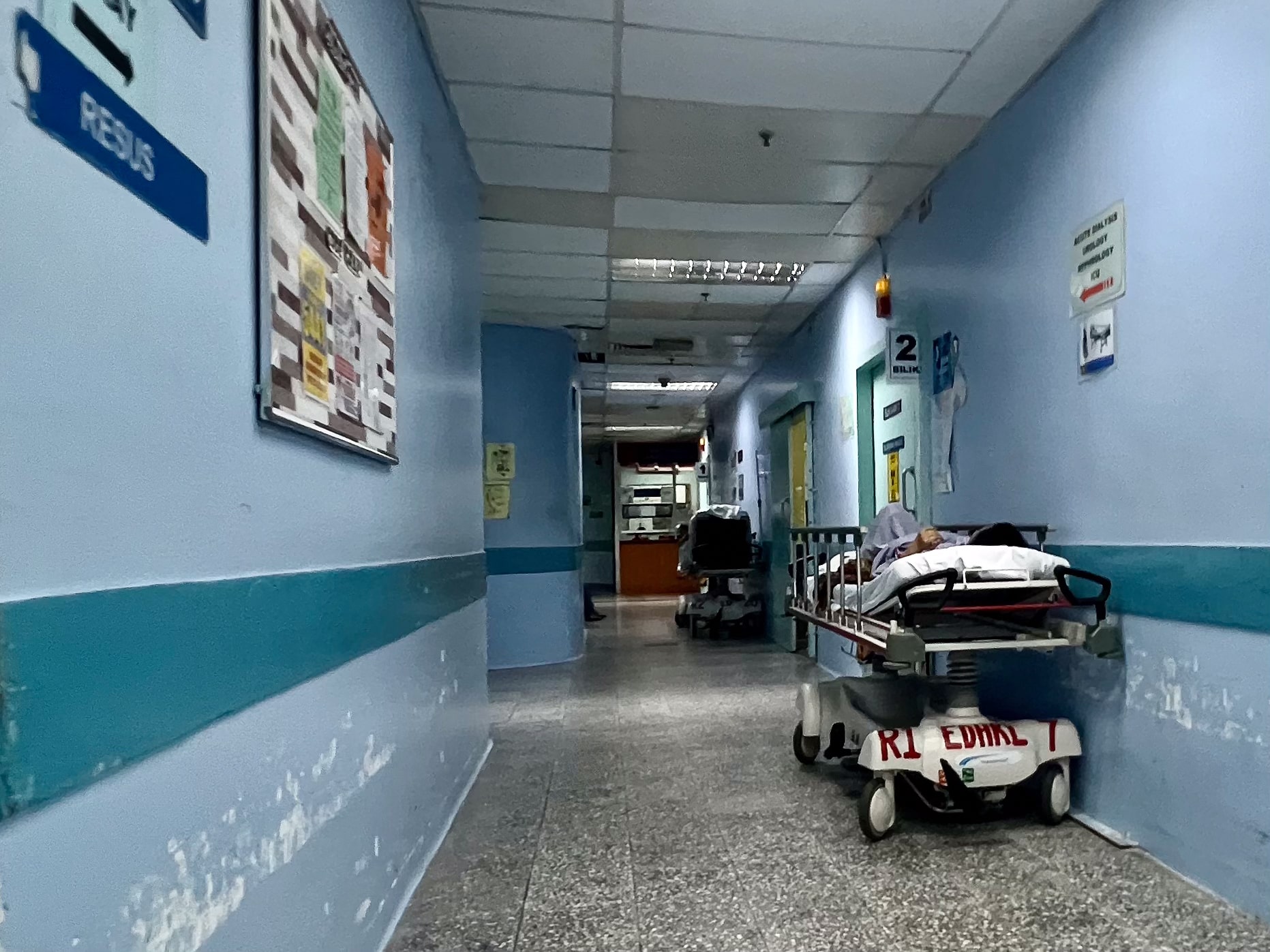
KUALA LUMPUR, April 30 — Two doctor groups have opposed the Treasury’s proposal to cut health spending by RM3.06 billion as the public health care system is already under severe strain.
The Federation of Private Medical Practitioners’ Associations Malaysia (FPMPAM) said a reduction of this scale – amounting to nearly 7 per cent of the Ministry of Health’s (MOH) RM46.5 billion budget this year – would likely have real consequences for both patients and health care workers.
“For patients: longer waiting times, delayed elective procedures, overcrowding in public facilities, and potential deterioration in chronic disease outcomes. Preventive and primary care programmes may be scaled back, leading to higher downstream costs,” FPMPAM president Dr Shanmuganathan TV Ganeson told CodeBlue in a statement.
“For health care workers: increased workload on an already stretched workforce, rising burnout, and further attrition from the public sector. This may accelerate the migration of talent into private practice or overseas.”
FPMPAM predicted worsening health indicators in Malaysia, not due to lack of clinical expertise but to constrained access and system capacity.
The Malaysian Medical Association (MMA) noted that the RM3.1 billion health spending cut would leave the MOH with a smaller allocation at RM43.4 billion than its RM45.3 billion budget for 2025.
“This is a significant reduction to a system already under severe strain. Malaysia is short of nearly 11,000 specialists, while nursing vacancies stand at 18 per cent. Hospitals nationwide are operating at or near full capacity,” said MMA president Dr R. Arasu in a statement.
He described the situation at Ampang Hospital, the national referral centre for haematology, as a “clear human face” of an underfunded public health care system.
CodeBlue previously reported that Ampang Hospital, which was among the earliest hospitals in Malaysia to implement a fully digital Total Hospital Information System (THIS), suffered a 33-hour outage of its eHIS system last week.
The once paperless government hospital still uses obsolete operating systems like Windows XP.
Last Monday, a burst pipe caused flooding in the operating theatre of Ampang Hospital, resulting in the postponement of elective surgeries.
Health Minister Dzulkefly Ahmad posted on X yesterday after visiting the hospital that he has directed a comprehensive structural and digital audit of Ampang Hospital.
“MOH and MOF (Ministry of Finance) must provide a clear explanation of how this was allowed to happen,” said Dr Arasu.
He also held MOF to its commitment that proposed spending cuts wouldn’t jeopardise critical services.
“MMA welcomes the government’s decision to exempt health care from the civil service hiring freeze. This must be fully honoured. Any spending adjustments should come from administrative areas — not medicines, maintenance, equipment, or staffing,” said Dr Arasu.
Dr Shanmuganathan said the proposed health spending cuts marked an inflection point in health care financing.
“If public health care continues to operate on a highly subsidised model—such as nominal RM1 outpatient charges—without parallel reforms in financing and utilisation, inefficiencies and overdependence are inevitable,” he said.
“Malaysia can no longer rely on a heavily subsidised, supply-constrained public system without structural reform.”
FPMPAM highlighted inefficiencies in the public health care system, particularly in procurement practices, administrative overheads, and non-essential activities.
“Measures such as greater transparency in procurement, wider use of open tender systems, direct sourcing where appropriate, and reduction of unnecessary administrative processes can improve value for money without compromising patient care,” said Dr Shanmuganathan.
He also disagreed with a “binary choice” between fuel subsidies and health care.
“The key issue is whether health care spending is prudent, targeted, and outcomes-driven. Without reform, simply allocating more funds will not resolve systemic inefficiencies,” said Dr Shanmuganathan.
“While concerns about the impact of budget cuts are valid, the issue goes beyond protecting allocations. Malaysia must confront a deeper question—whether our current model of heavily subsidised care, without parallel reforms in financing and utilisation, remains sustainable.”


