

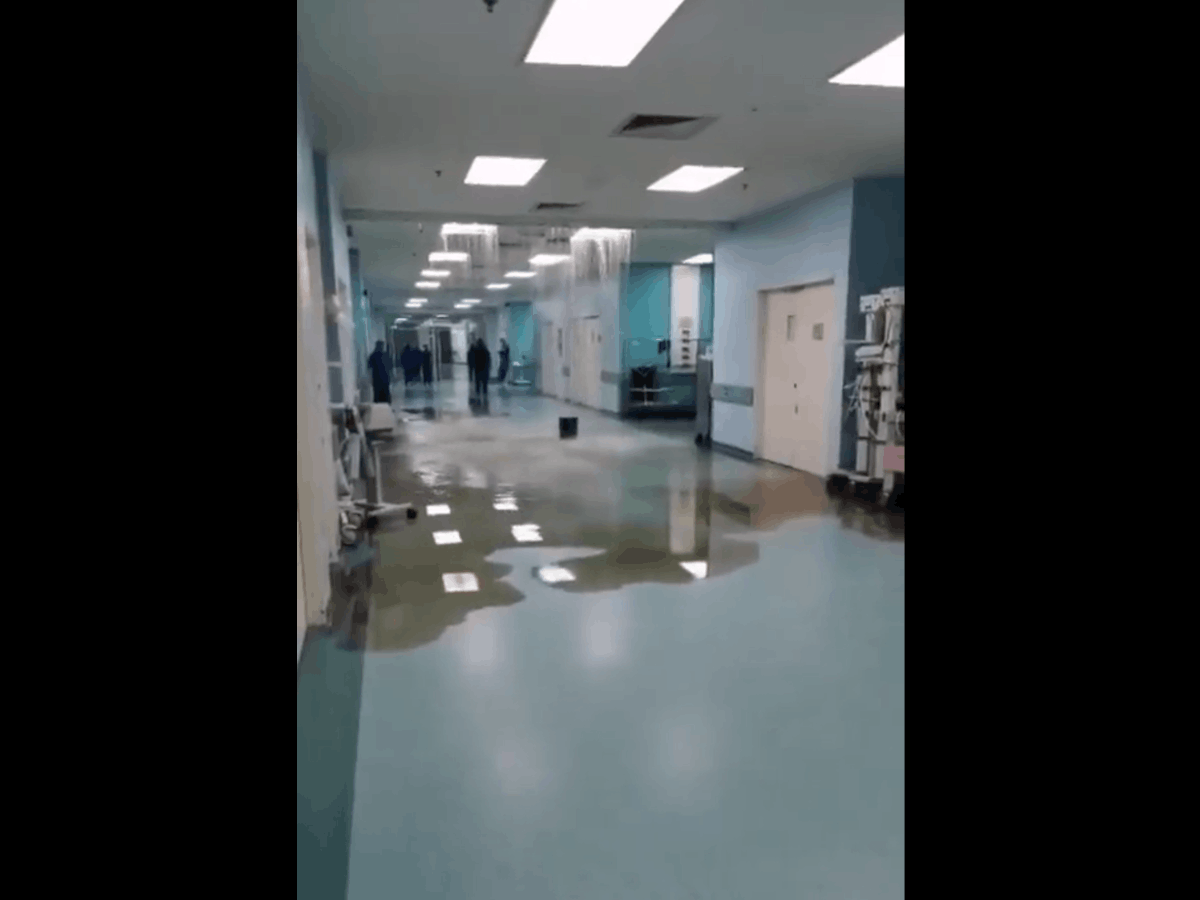
KUALA LUMPUR, April 28 — Ampang Hospital’s operating theatre (OT) will resume operations tomorrow after a broken pipe caused flooding in the facility yesterday.
Videos posted on X showed water pouring from the ceiling of the OT and staff moving equipment out of the operating theatre at the tertiary government hospital in Selangor.
“The problem has been rectified; the OT will function like normal tomorrow,” a source told CodeBlue today on condition of anonymity.
He added that Ampang Hospital’s eHIS system has been down for more than six days and that a technical team from the Selangor state health department (JKNS) and the eHIS principal from Singapore are still working on fixing it.
In the meantime, all processes at the once paperless Ampang Hospital, which was among the earliest hospitals in Malaysia to adopt a Total Hospital Information System (THIS) in 2007, are being run manually.
JKNS said in a statement today that the broken pipe affected OT operations, as a few surgical rooms couldn’t be used temporarily. However, contingency plans were activated to ensure continuity of critical services.
“All critical cases were transferred to safe operating rooms, whereas elective cases were postponed and rescheduled,” said JKNS.
“JKNS apologises for the inconvenience and remains committed to ensuring that repairs are implemented immediately so that the operating theatre can resume full operations in the nearest time.”
The state health department’s statement, however, omitted mention of Ampang Hospital’s non-functional eHIS system.
CodeBlue reported last Friday that Ampang Hospital’s IT system broke down for 33 hours from Wednesday morning to Thursday evening, disrupting blood test results, drug prescriptions, appointment scheduling, patient admissions, and patient discharges.
A doctor at Ampang Hospital told CodeBlue yesterday, however, that the eHIS system remained non-functional.
“Since late last year, the eHIS system has experienced repeated breakdowns. Despite this pattern, there appears to have been insufficient preparation or implementation of sustainable contingency measures beyond temporary activation of the ‘BCS’,” said the doctor.
“Over the recent weekend, there was no clear evidence of preparedness from hospital leadership to manage the anticipated patient load on Monday.
“As a result, operations on Monday morning were largely lagged, with no structured workflow in place. Many patients were left waiting at Unit Hasil due to registration failures, and only later were some clinics informed that registration could be bypassed.”
He also said only urgent tests were currently being processed, while non-urgent investigations (for example, autoimmune panels, tumor markers) were deferred until system recovery.
“These delays have significantly affected clinical decision-making, including patient discharge. On-call teams over the weekend faced considerable difficulty managing patients due to unavailable results. In some cases, patient conditions may have worsened due to these delays.”
Many patient appointments were postponed, particularly affecting specialties such as hematology and nephrology, where management is highly dependent on laboratory findings.
“Patients’ frustration has been directed toward frontline health care workers, including doctors and nurses, across emergency, ward, and clinic settings,” said the doctor.
“This situation places an unfair burden on clinical staff, who are not responsible for the system failure.”
Editor’s note: This article was updated with JKNS’s statement on the flooded OT.


