

The foundational trust in Malaysian schools as safe sanctuaries of learning has been fractured by an unprecedented spate of fatal school violence, highlighted by two student deaths on school grounds in just eight days.
This sudden crisis has transformed spaces traditionally revered as extensions of the home into scenes of tragedy, shocking the nation.
This terrifying trend forces Malaysia to urgently confront the reality that its schools are becoming arenas of violence, demanding immediate and undivided attention to restore them as safe environments for future generations.
Why School Violence Is Increasing
This tragic incident has forced educators and criminologists to confront an uncomfortable reality: school violence is not merely a problem within school walls, but a reflection of a broken society outside them.
Experts warn that Malaysia risks following the path of the United States, where unchecked youth aggression eventually led to school shootings.
The warning signs are all there, and we ignore them at our peril. To prevent future tragedies, we must first diagnose the disease. The causes of this rising violence are multifaceted, intertwining like the roots of a poisoned tree.
The Digital Poison Of Toxic Ideologies
Social media has a pervasive and insidious influence on Malaysian teenagers, constantly bombarding them with content that glorifies violence, aggression, and toxic masculinity.
Within this online environment, criminologists highlight that “red pill” and “alpha male” ideologies from the manosphere are spreading rapidly among young boys.
These toxic beliefs normalise violence against women by promoting dominance, control, and emotional suppression. The problem is so severe that Malaysia has already prohibited those under 16 from accessing major social media platforms.
Viral videos of fights are not just watched; they are consumed as entertainment, shaping distorted attitudes and making brutality seem acceptable, even admirable.
While the government’s move to ban social media for those under 16 is a step in the right direction, it is akin to closing the barn door after the horse has bolted; the digital poison is already in the well.
The Psychological Time Bomb
A worsening mental health crisis is gripping Malaysian youth, with the National Health and Morbidity Survey (NHMS) 2023 revealing that one in six children aged five to 15 experience mental health difficulties.
This crisis has doubled in severity between 2019 and 2023. Because outdated student support systems are failing to address these modern challenges, Malaysia must shift toward specialised interventions using licensed counsellors and psychologists.
The severe shortage of school counsellors in public education is a critical safety hazard, as schools often assign just one counsellor for over 500 students. This reality falls far short of the American School Counselor Association’s recommended ratio of one counsellor per 250 students.
Compounding this deficit, existing counsellors are frequently overwhelmed, underfunded, and diverted away from student therapy to handle administrative duties or supervise classes.
When children in distress have no safe place to turn, their untreated trauma and suppressed anger can fester, ultimately escalating into violence.
The Failing Foundations Of The Home
The home environment remains the most influential space for shaping a child’s values, where specific parenting styles dictate whether a child develops empathy or aggressive tendencies.
Crime experts and child psychologists warn that overprotective parenting (which shields children from accountability) weakens disciplinary standards and erodes authority.
This lack of consequences cultivates an entitlement mindset, leading children to believe their personal feelings and desires override community rules and respect for others.
The Systemic Vacuum In Schools
School security protocols suffer from critical systemic failures, particularly during after-school hours, as highlighted by the recent case where no CCTV cameras covered the area where a student was killed.
While the Ministry of Education has taken immediate steps to upgrade and repair security equipment, experts caution against turning schools into alienating, high-surveillance zones.
Instead, international criminologists and psychologists emphasize that effective violence prevention relies more heavily on early behavioral tracking and confidential communication channels, such as Anonymous Reporting Systems (ARS).
To combat this rising tide of violence, we must move beyond lip service and implement holistic, multi-stakeholder strategies. It takes a village to raise a child, and it will take an entire society to heal one.
The solution lies not just in tighter security but in a fundamental shift in how we nurture, educate, and protect our young.
Revolutionising Mental Health Support
The most urgent step is to treat mental health as a non-negotiable pillar of education. The government must drastically increase funding for school counsellors, aiming for the internationally recommended ratio of one counsellor for every 250 students.
More importantly, counsellors must be freed from administrative tasks so they can focus on direct student intervention.
Regular mental health screenings should be conducted at all educational institutions to identify at-risk students at the earliest possible stage.
Schools must be equipped to provide early intervention, not just crisis management.
Rebuilding The Home-School Partnership
Parents cannot be passive observers. They must reclaim their active role as primary educators of values, supported by national and community programmes that teach digital supervision, non-violent discipline, and open communication regarding consent and online behaviour.
To form a united front with families, schools must re-engage vulnerable households and embed mandatory social-emotional learning to teach empathy, consent, and conflict resolution.
This holistic approach should be reinforced by media literacy education to help youth critically assess toxic online content, accessible psychologists for early intervention, and a national database to track trends in school violence.
Reclaiming The Digital Space
While banning social media for minors is a start, it is insufficient. Malaysia needs a comprehensive digital literacy curriculum that teaches children to be critical, ethical, and responsible online citizens.
This means going beyond basic ICT skills and tackling head-on the toxic content that promotes violence and misogyny.
Tech companies must be held accountable for the content they algorithmically push to young users. The digital world is an inevitable part of a child’s life, so we must teach them to swim in these dangerous waters rather than simply trying to drain the ocean.
Empowering Schools As Safe Havens
Finally, schools must transform into sanctuaries of safety by looking beyond basic physical security to implement the comprehensive structural mandates of Malaysia’s Anti-Bullying Act 2026.
Enforced on June 16, 2026, Section 7(1) of the Act requires schools to establish six protective pillars, including dedicated prevention committees, accessible child-sensitive reporting channels, anti-bullying policies, and robust counselling support.
While the newly introduced Anti-Bullying Tribunal offers a free, direct channel for victims and parents to seek legal redress, true safety requires a whole-school culture of empathy, effective teacher-led discipline, and rigorous crisis response Standard Operating Procedures.
Proactive safety measures should blend early behavioural tracking with trust-building initiatives like the School Liaison Officer (SLO) programme, creating a visible deterrent against violence while preserving schools as supportive spaces for youth.
Reclaiming The Sanctuary: Moving Forward
The deaths in schools are a wound on the national consciousness. It is a stark, painful reminder that the violence we read about in other countries has arrived on our shores. We cannot afford to be a nation of bystanders, wringing our hands in despair after each tragedy.
If we do not address the root causes of this violence — the broken homes, the poisoned digital landscape, and the crumbling mental health support system — we will be sewing a tapestry of grief for generations to come.
Behind every school violence statistic is a child who deserves to learn in safety, pursue their dreams, and grow up protected by a nation that promised them a future. Academic report cards mean nothing if the educational environment itself is unsafe.
To prevent school bells from becoming grim reminders of failed protection, Malaysia must act immediately on expert recommendations and implement holistic reforms to rebuild a supportive community for its youths.
This current crisis must serve as a national awakening and a decisive turning point, ensuring that no Malaysian child ever has to fear for their life in a place of learning.
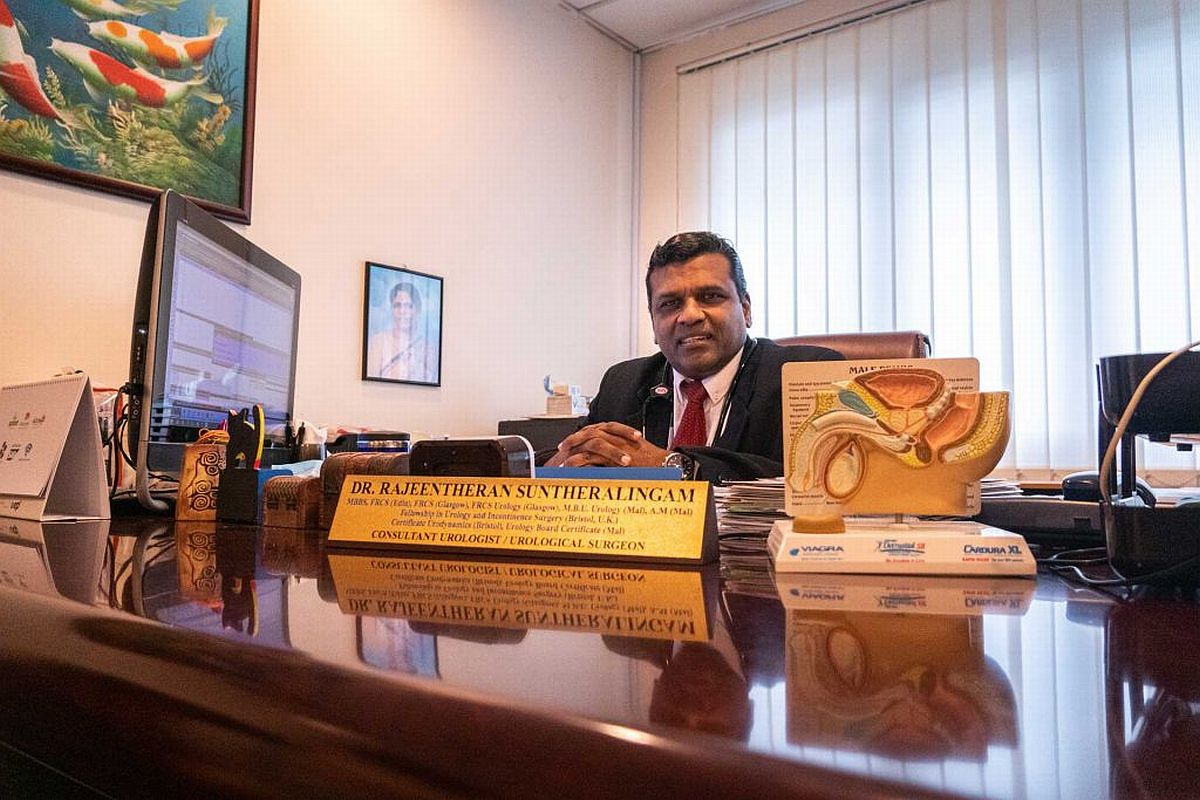
The author is a senior consultant urologist and urological surgeon at Damansara Specialist Hospital.
- This is the personal opinion of the writer or publication and does not necessarily represent the views of CodeBlue.

