

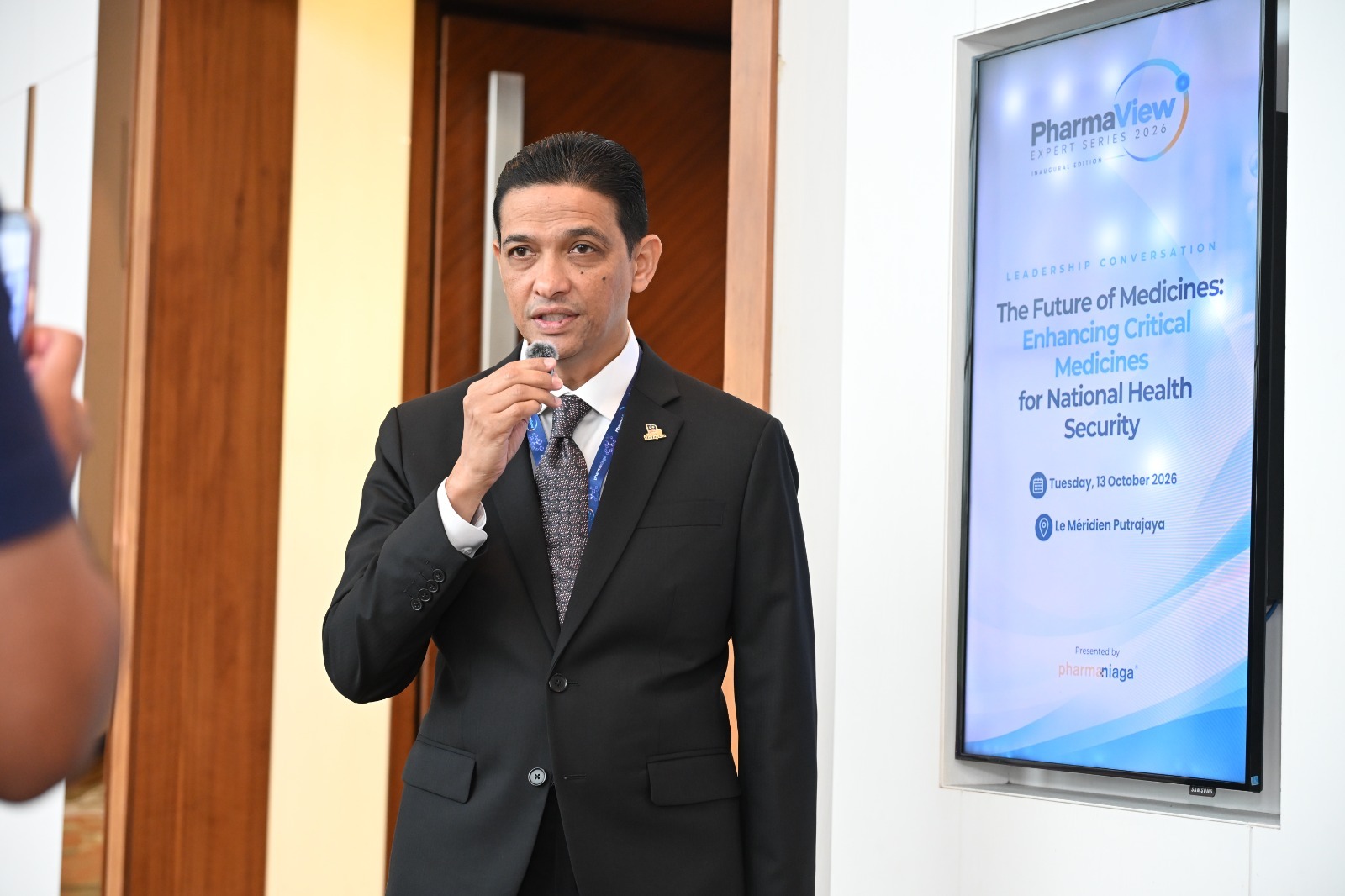
PUTRAJAYA, Oct 14 — Pharmaniaga Bhd is targeting local production of nine out of 11 vaccines under the National Immunisation Programme (NIP) as the pharmaceutical company seeks to reduce the country’s reliance on imported vaccines.
Pharmaniaga managing director Zulkifli Jafar said the company signed a memorandum of collaboration with Indonesia’s state-owned vaccine manufacturer PT Bio Farma on October 8 to strengthen Malaysia’s vaccine security and develop domestic manufacturing capabilities through technology transfer.
“Under the NIP, there are about 11 vaccines. We are currently looking at developing seven of them. But with our collaboration with PT Bio Farma, we can increase from seven to nine vaccines to be developed or manufactured locally,” Zulkifli told reporters on the sidelines of the PharmaView Expert Series 2026 here yesterday.
The move comes as Malaysia remains entirely dependent on overseas suppliers for its vaccines, leaving the country’s immunisation programme vulnerable to potential supply disruptions.
“Our vaccines are 100 per cent fully imported. That’s the reason why we are trying to localise as many as possible, especially in our NIP,” he said.
The NIP currently protects children against 13 vaccine-preventable diseases, including tuberculosis, hepatitis B, diphtheria, tetanus, pertussis, polio, measles, mumps, rubella, pneumococcal disease, Japanese encephalitis, and human papillomavirus.
PT Bio Farma, an Indonesian state-owned pharmaceutical company, has more than a century of experience in vaccine development and manufacturing. It is particularly known for producing Bacillus Calmette-Guerin (BCG) and polio vaccines.
Zulkifli said Pharmaniaga would explore working with PT Bio Farma on polio vaccines, followed by other products such as rabies and tetanus, diphtheria and acellular pertussis (Tdap) vaccines.
The partnership is also intended to strengthen cooperation between the two countries in vaccine manufacturing and potentially open up opportunities in other Asean markets.
Zulkifli said Indonesia’s larger population of about 285 million makes large-scale vaccine manufacturing more economically viable compared with Malaysia’s population of approximately 34 million to 35 million.
“We are not at the stage of bulk manufacturing. Economies of scale deter us because if you do bulk manufacturing for 34 or 35 million people, medicine becomes very expensive,” he said.
Pharmaniaga will initially explore importing and distributing certain vaccines from Indonesia before moving towards domestic production. “We have the rights to bring in the product and supply it to the government,” he said, referring to the company’s trading arrangements.
These arrangements involve importing finished vaccines for distribution in Malaysia, rather than manufacturing them locally. Pharmaniaga intends to progressively localise production as manufacturing capabilities and regulatory requirements are established.
Pharmaniaga Targets PCV13 In 2027, Two More Vaccines In 2028
Pharmaniaga is targeting the third or fourth quarter of 2027 to launch its first locally manufactured vaccine, the 13-valent pneumococcal conjugate vaccine (PCV13), which protects against pneumococcal disease.
The target is earlier than the government’s previously announced 2028 timeline.
Zulkifli said Pharmaniaga had submitted the necessary documentation for PCV13 and was awaiting approval from the National Pharmaceutical Regulatory Agency (NPRA).
“We are going to push it earlier. Instead of 2028, we’re going to push it in 2027. It’s Q3 to Q4, depending on the approval of the authority,” he said.
Pharmaniaga is also targeting two more vaccine launches in 2028, including the human papillomavirus (HPV) vaccine and the EV71 vaccine, which protects against a strain of enterovirus that causes hand, foot and mouth disease (HFMD).
A hexavalent vaccine, which combines protection against six diseases in one injection, is targeted for introduction in 2029.
Local Vaccine Production Could Cut Costs By 30%
Localising vaccine production could reduce costs by approximately 30 per cent, potentially easing the government’s vaccine procurement burden, Zulkifli said.
“We reduce easily about 30 per cent in terms of cost,” he said.
However, actual production volumes would depend on government procurement needs, which could vary according to vaccination coverage and budget constraints.
For HPV vaccination, he estimated demand at about 760,000 doses, but said the high cost of the vaccine limited the government’s ability to extend coverage to everyone who could benefit from it.
The government was also considering extending HPV vaccination to males, beyond the existing programme for females, which could further increase demand.
The PT Bio Farma collaboration forms part of Pharmaniaga’s broader efforts to strengthen domestic pharmaceutical manufacturing. Zulkifli said the company was separately working with other technology providers on generic medicines and biopharmaceutical products.
Pharmaniaga has also secured grants from the Ministry of Science, Technology and Innovation (MOSTI) to support vaccine development and strengthen local manufacturing capabilities.
The vaccine localisation push marks a new growth area for Pharmaniaga following its exit from Practice Note 17 (PN17) status in March 2026.
The pharmaceutical group was classified as financially distressed in February 2023 after recording a RM552.3 million provision for slow-moving Covid-19 vaccine inventories. It subsequently completed a financial regularisation plan in August 2025, involving a rights issue, a RM223.7 million private placement, and a RM520 million capital reduction.
Pharmaniaga has recorded 10 consecutive profitable quarters since returning to the black in the first quarter of 2024, with its most recent reported net profit standing at RM12.49 million for the second quarter of 2026.

