

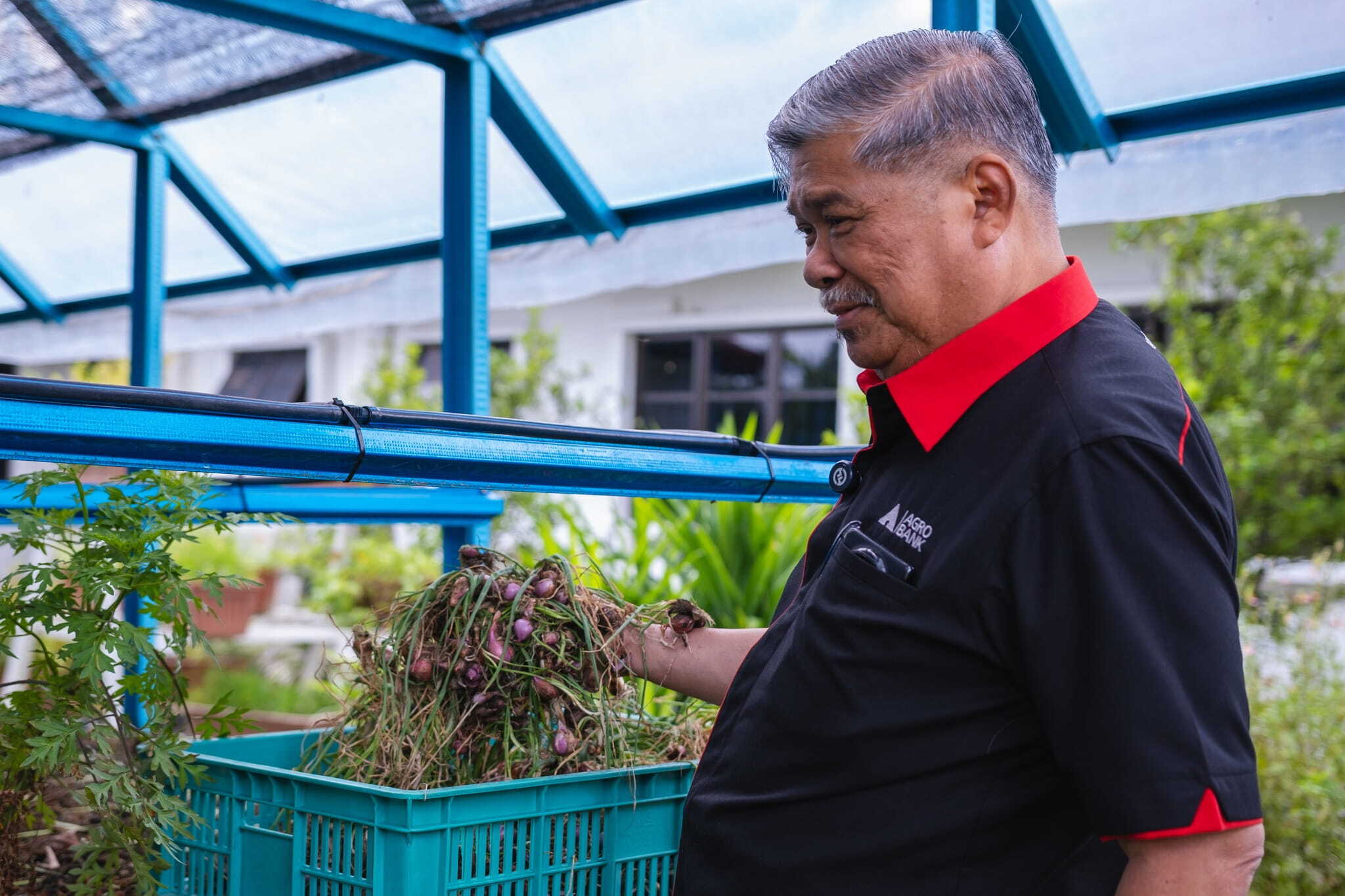
KUALA LUMPUR, August 3 — Nearly half of Malaysia’s agricultural producers are aged 60 years and above, while almost eight in 10 are at least 46 years old, underscoring the country’s ageing agri-food workforce.
Agriculture and Food Security Minister Mohamad Sabu said findings from the Department of Statistics Malaysia’s 2024 Agriculture Census showed that 461,866 agricultural producers, or 45.6 per cent, were aged 60 and above.
Another 326,968 agricultural producers, or 32.3 per cent, were between 46 and 59 years old.
“This means that nearly 78 per cent of agricultural producers comprise those aged 46 years and above, clearly demonstrating the urgent need to strengthen youth participation in the agri-food sector,” Mohamad said in a written Dewan Negara reply dated July 28.
The figures cover agricultural producers across Malaysia, including those involved in crop cultivation and livestock farming.
He said the Ministry of Agriculture and Food Security (KPKM) recognised that the country’s agri-food sector was facing the challenge of an ageing workforce, particularly in the paddy cultivation and capture fisheries subsectors.
Mohamad was responding to Senator Mohd Hatta Md Ramli, who asked whether Malaysia’s agriculture and fisheries sectors depended largely on workers aged 50 and above, whether the ministry actively monitored demographic data on paddy farmers and fishermen, and how young people had responded to initiatives such as the Agropreneur NextGen Grant.
Mohamad said KPKM continuously monitored the demographic profiles of paddy farmers, fishermen, and agri-food producers through databases maintained by agencies under the ministry, including the Department of Agriculture, Department of Fisheries Malaysia, Farmers’ Organisation Authority, Malaysian Fisheries Development Authority, Muda Agricultural Development Authority and other related agencies.
To increase youth participation in the agri-food sector, he said KPKM had implemented various youth entrepreneurship initiatives through the Agropreneur Muda Programme, which has now been strengthened through the Agropreneur NextGen Grant.
The initiative provides matching grants for the purchase of assets and equipment, technical and entrepreneurship training, mentoring services, technology transfer, and project monitoring to help young entrepreneurs start and expand viable agri-food businesses.
Up to the end of the 12th Malaysia Plan period from 2021 to 2025, a total of 3,914 young entrepreneurs had received the Agropreneur Muda Grant under KPKM.
Mohamad said the ministry was also focusing on human capital development through training institutions under KPKM, including the Agriculture Institute and the Malaysian Fisheries Academy.
The programmes emphasise Technical and Vocational Education and Training (TVET), the use of modern technology, mechanisation, smart farming and entrepreneurship skills to ensure graduates possess competencies that meet the needs of the agri-food industry.
The employability rate of graduates from KPKM training institutions increased to 81.2 per cent in 2024 from 78.1 per cent in 2023.
In line with KPKM’s Strategic Plan 2025-2030, the ministry aims to raise the average annual graduate employability rate to 85 per cent by 2030 through curriculum enhancement, industry-based training, skills certification and strategic collaboration with industry players.
Mohamad said KPKM would continue improving its existing initiatives to ensure more young people choose the agri-food sector as a modern, competitive career capable of generating sustainable income while supporting the country’s food security agenda.


