

PUTRAJAYA, August 7 — Malaysia has the potential to become a regional leader in reducing antibiotic use in food-producing animals, but stronger controls on feed hygiene, farm biosecurity, and Salmonella prevention will be needed, a livestock nutrition expert said.
Yafeng Zhai of Numega Nutrition Malaysia said Malaysia already has several advantages, including regulations governing veterinary medicine use, reliance on imported rather than domestically produced antibiotics, and a regulator that is open to international collaboration.
“I believe that Malaysia can lead in food safety if they continue to strengthen Salmonella control within Southeast Asia, antibiotic reduction, and feed and farm biosecurity,” Zhai said during his presentation at the Global Animal Production and Veterinary Industry Summit (Gavis) 2026 on July 23.
Zhai said Malaysia was ahead of several regional peers in regulating antibiotics used in livestock, noting that some neighbouring countries had only recently introduced similar controls.
“In Malaysia, you have your own law and regulation for antibiotics. Malaysia already leads. Vietnam just had the regulation for antibiotics last year,” he said.
Malaysia’s smaller livestock sector and dependence on imported antibiotics also make it easier to monitor the supply chain, Zhai said.
“The most important thing is Malaysia is not an antibiotic-producing country. That’s why it is easier to control from the supply chain because you import them. China is different because it produces many kinds of antibiotics, so it is really hard to control,” he said.
He also highlighted the role of the Department of Veterinary Services (DVS), saying Malaysian regulators were receptive to new technologies and international practices.
“I met many officials from DVS Malaysia. Most of them can speak English well. That is an advantage, and they are quite open to discussing new things and new technologies from around the world,” Zhai said.
However, reducing antibiotic use in farms requires more than regulating medicines, he said. Preventing bacterial contamination throughout the production chain is essential to reducing disease and the need for treatment.
Feed is one of the earliest points where pathogens can enter livestock production. Contaminated raw materials used in animal feed can introduce bacteria such as Salmonella into farms, increasing the risk of animals carrying and spreading the pathogen.
“Testing finished products alone cannot guarantee safety. We should start from feed, water, and farming control,” Zhai said.
Salmonella remains a major challenge because animals can carry the bacteria without showing obvious signs of illness, allowing it to spread through farms and enter the food chain.
Zhai noted that even regions with strict food safety regulations, including the European Union (EU), continue to report Salmonella infections and outbreaks involving meat, eggs, processed foods and cross-border supply chains.
He said feed should therefore be treated as a critical control point. “If your animal protein raw material has Salmonella contamination, even if it goes through pelleting, it cannot kill all the pathogens,” Zhai said.
Pelleting involves conditioning mixed feed ingredients with heat and moisture before compressing them into pellets. While the process can reduce bacterial contamination, Zhai said it cannot eliminate all pathogens and may need to be combined with other interventions, including chemical treatment.
Drawing on European practices, he said some feed mills fumigate production lines, while exporters supplying European markets may carry out more frequent fumigation to maintain stringent food safety standards.
The industry has also shifted towards alternative feed hygiene solutions as regulations have changed. The EU ended the authorisation of formaldehyde as a feed additive in 2018 following safety concerns, including risks to workers handling the substance. Manufacturers have since increasingly explored alternatives based on organic acids, including formic acid.
Zhai said reducing antibiotic dependence ultimately depends on preventing disease rather than relying on antibiotics after infections occur.
“We want safe food. We want safer feed. We want healthy animals. Of course, lower antibiotic dependence. I believe this target can be achieved,” he said.
He added that achieving this goal would require continued investment in technology and cooperation across the livestock supply chain.
Zhai also cautioned against maintaining different food safety standards for export and domestic markets. “We cannot export to other countries and have Salmonella-free products, but for us locally we don’t care about Salmonella. It’s not the right way.”
During a question-and-answer session, a participant highlighted the difficulty of tracing Salmonella contamination because it can originate from multiple sources, including breeding farms, feed ingredients, transport systems, workers, and farm environments.
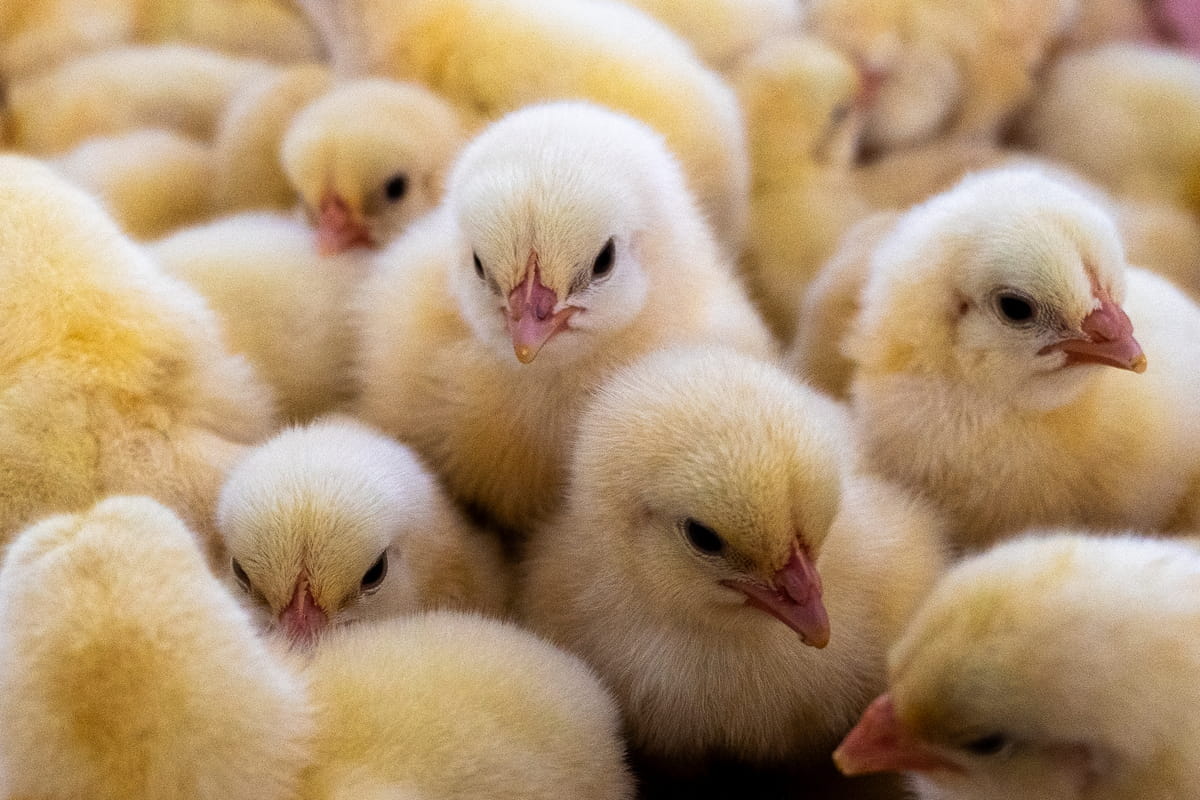
Zhai said Salmonella control should begin at the day-old chick stage, as contamination may originate from parent flocks before birds even arrive at farms. In Europe, chicks are tested upon arrival, with producers monitoring Salmonella-positive rates and taking corrective measures when levels exceed acceptable thresholds, he said.
He said early intervention is critical because once birds become colonised, reducing Salmonella becomes significantly more difficult.
While measures such as antibiotics and flushing programmes – which may involve administering products through drinking water to help manage bacterial levels – may be used to manage infection, they are less effective once the bacteria has become established in animals.
“We cannot guarantee zero Salmonella. That is very hard. The most important point is you have to test the chicks first,” he said.


