

For decades, the residents of Petaling Jaya have watched ambulances speed past their neighbourhoods, bound for hospitals in Sungai Buloh, Shah Alam, or Kuala Lumpur.
Now, after years of advocacy, the government has finally confirmed what many had given up hoping for: a 500-bed public hospital will rise in Taman Medan. The Petaling district, home to over 2.3 million people, may soon have its own public facility.
Yet the announcement has been met not with unanimous applause, but with a rising chorus of doubt. The question is no longer whether PJ needs a hospital. The question is whether Malaysia can afford to build one and whether, even if it does, anyone will be left to staff it.
The Case for Building: A Promise Deferred
On paper, the arguments for a new PJ hospital are compelling. The district’s population of 2.3 million – including more than 800,000 in Petaling Jaya city alone with a land area of 97.2 km2 – currently depends on Sungai Buloh Hospital (1,037 beds), Shah Alam Hospital (490 beds), and the University Malaya Medical Centre (946 beds). Those facilities are stretched thin, their emergency departments congested, their elective surgery waiting lists growing.
Furthermore, Health Minister Dzulkefly Ahmad has pushed back against claims that the project lacks funding, arguing that while the hospital is not listed under the 13th Malaysia Plan, it can be funded through the Rolling Plan mechanism, with land acquisition possibly announced in Budget 2027 and allocations obtained for 2028.
The Selangor state government, for its part, has pledged to expedite land processes, noting that it has been searching for a suitable site since 2018.
To the thousands of PJ residents who have waited a generation for this moment, these arguments carry real weight. A confirmed site, a committed state government, and a minister determined to deliver: for many, that is enough.
A House Divided: The Case Against Building from Scratch
A house divided against itself cannot stand. Experts argue that the Malaysian health care system is divided against itself, and a new hospital in PJ is a dangerous misallocation of resources.
The core driver of the access problem in PJ is not geography, but the absence of a universal financing mechanism and a crippling nationwide shortage of staff.
The most damning argument against a new building is the manpower crisis.
Staffing, Costs, And A Decade of Waiting
A modern 500-bed hospital, critics argue, is not merely a building. It is a small township – requiring laboratories, operating theatres, intensive care units, imaging facilities, kitchens, mortuary services, clinical waste management, infection control systems, and a complex medical supply chain.
Hospital Kuala Lumpur, a facility of comparable scale, employs around 12,000 health care and administrative personnel. In a system already haemorrhaging staff, with nursing vacancies at 18 per cent, a specialist deficit approaching 11,000, and a January 2026 housemanship intake of just 10.5 per cent, where would these thousands of workers come from?
The Lease Option: A Faster Path, Or A False Promise?
In response to these daunting realities, there was a proposed alternative: lease an existing private hospital in PJ and convert it to public use. The logic is straightforward. A leased facility would bypass the decade-long construction timeline, the multi-billion-ringgit capital expenditure, and the complex land acquisition process. It would be operational in months, not years.
But here too, the devil is in the details. Even a medium-sized private hospital of 200 to 300 beds requires hundreds of nurses, doctors, and allied health professionals — and these do not materialise with the lease agreement.
Worse, converting a private hospital to full public operations would likely trigger the departure of its existing private-sector clinical staff, who joined on private-sector remuneration terms.
The government would inherit a building stripped of the human capital that made it function.
The Grand Paradox: Beds Vs Bodies
We are now faced with the central paradox of the current crisis: In 2026, a hospital bed is not the scarce resource. It is the human being qualified to stand beside it. The debate over whether to build or lease ultimately obscures a more profound truth: neither option can resolve the crisis of access.
The government must urgently focus on plugging the workforce haemorrhage: settling the contract doctor dispute and raising the nursing allowance to reverse the brain drain. Only then can we make a valid decision about the physical infrastructure of Petaling Jaya.
The staffing crisis, in other words, follows wherever you go. It does not vanish simply because you choose a different building.
The Elephant In The Room: A Treasury Under Siege
None of these debates can be resolved without acknowledging the fiscal reality that looms over every government decision in 2026. The ongoing conflict in Iran has sent Malaysia’s fuel subsidy bill soaring to an estimated RM58.4 billion for the year – nearly four times the RM15 billion originally budgeted.
In response, the Treasury has demanded RM10 billion in operating cuts across government, including a proposed RM4.65 billion reduction to the Health Ministry’s budget.
In this environment, spending upwards of RM1 billion on a new hospital, with construction costs estimated at approximately RM2 million per bed, is not merely difficult. It may be impossible without trade-offs that would cripple other essential services.
You can’t squeeze blood from a stone. The Treasury’s stone is already dry.
The Third Way: Reforming Access, Not Building Beds
A more radical proposal has emerged from the debate: perhaps the core problem in PJ is not a shortage of beds, but a failure of access.
What prevents access is not geography. It is cost, information asymmetry, wait times, and the absence of a coordinated pathway between primary, secondary, and tertiary care. A large proportion of PJ’s population can physically reach both public and private facilities.
The challenge is that the existing mix remains inaccessible to those who most need it: the lower-income working population, the uninsured, and the elderly without family transport.
Conclusion: The Question We Must Answer
The debate over the PJ hospital has been framed as a choice between building and leasing. But the true choice is more fundamental. Do we build a new hospital that will take a decade to complete, cost over a billion ringgit, and struggle to find staff — all while existing hospitals crumble from underfunding and overwork?
Do we lease an existing private facility, only to discover that a building without staff is merely an expensive shell? Or do we step back and ask whether the entire premise — that PJ needs a new hospital at all — rests on a failure to reform access, financing, and primary care?
We should look before we leap. The government is preparing to leap. But it has not yet looked closely enough at the ground below.
PJ’s residents have waited a generation for a hospital. They can wait a little longer for the right decision. What they cannot afford is a monument to political ambition that stands empty for years or a building that siphons staff from every surrounding facility, leaving the entire Klang Valley worse off than before.
The question is not whether PJ deserves better. It does. The question is whether Malaysia can afford to give it better in the only way that truly matters: with beds that are staffed, waiting rooms that move, and a system that serves everyone, not just the postcodes that shout loudest.
As we are reminded, “a stitch in time saves nine.” But the stitch that is needed may not be a new building. It may be a comprehensive redesign of access, a proper resolution of the contract doctor crisis, an immediate correction to the frozen nursing allowance, and a realistic assessment of what it means to provide care in a nation that is, at this very moment, prioritising fuel subsidies over hospital beds.
The patient is the health care system itself. The remedy is not a single hospital in a single postcode. It is a comprehensive, multi-year reform of financing, workforce, and access. Anything less is not a solution. It is a ribbon-cutting ceremony.
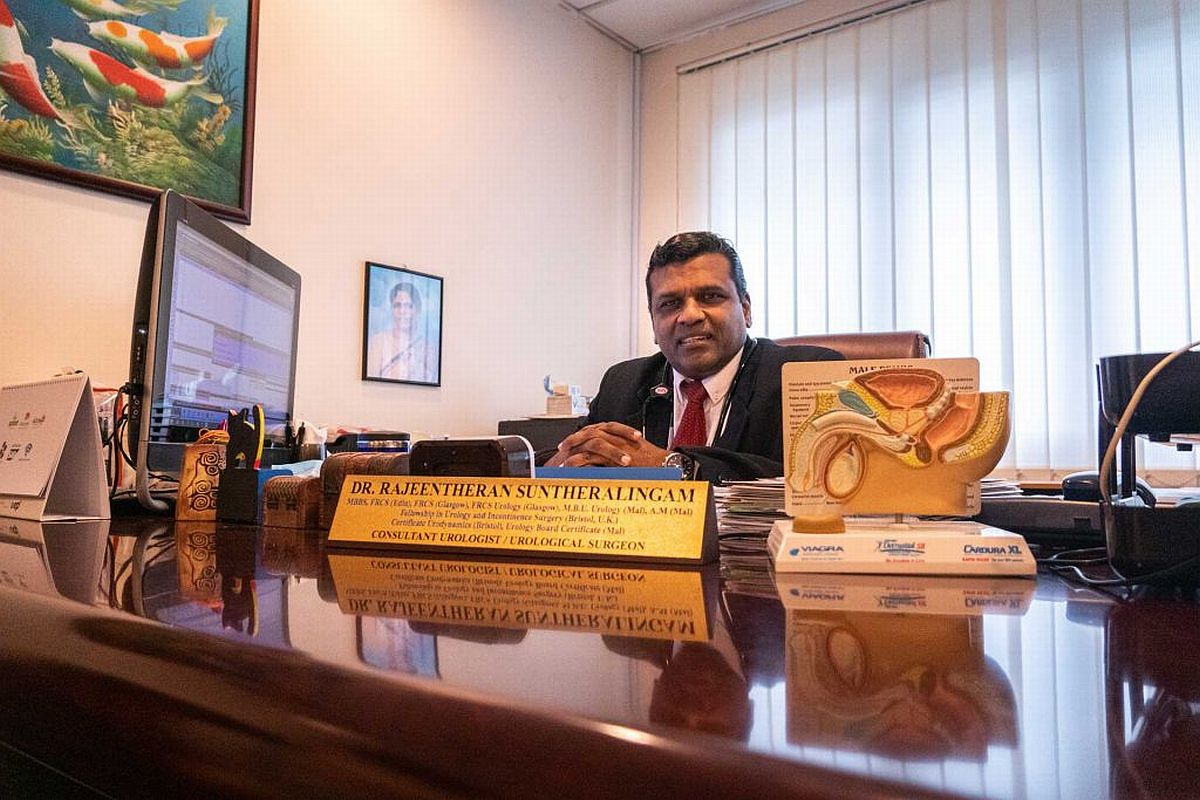
The author is a senior consultant urologist and urological surgeon at Damansara Specialist Hospital.
- This is the personal opinion of the writer or publication and does not necessarily represent the views of CodeBlue.


