

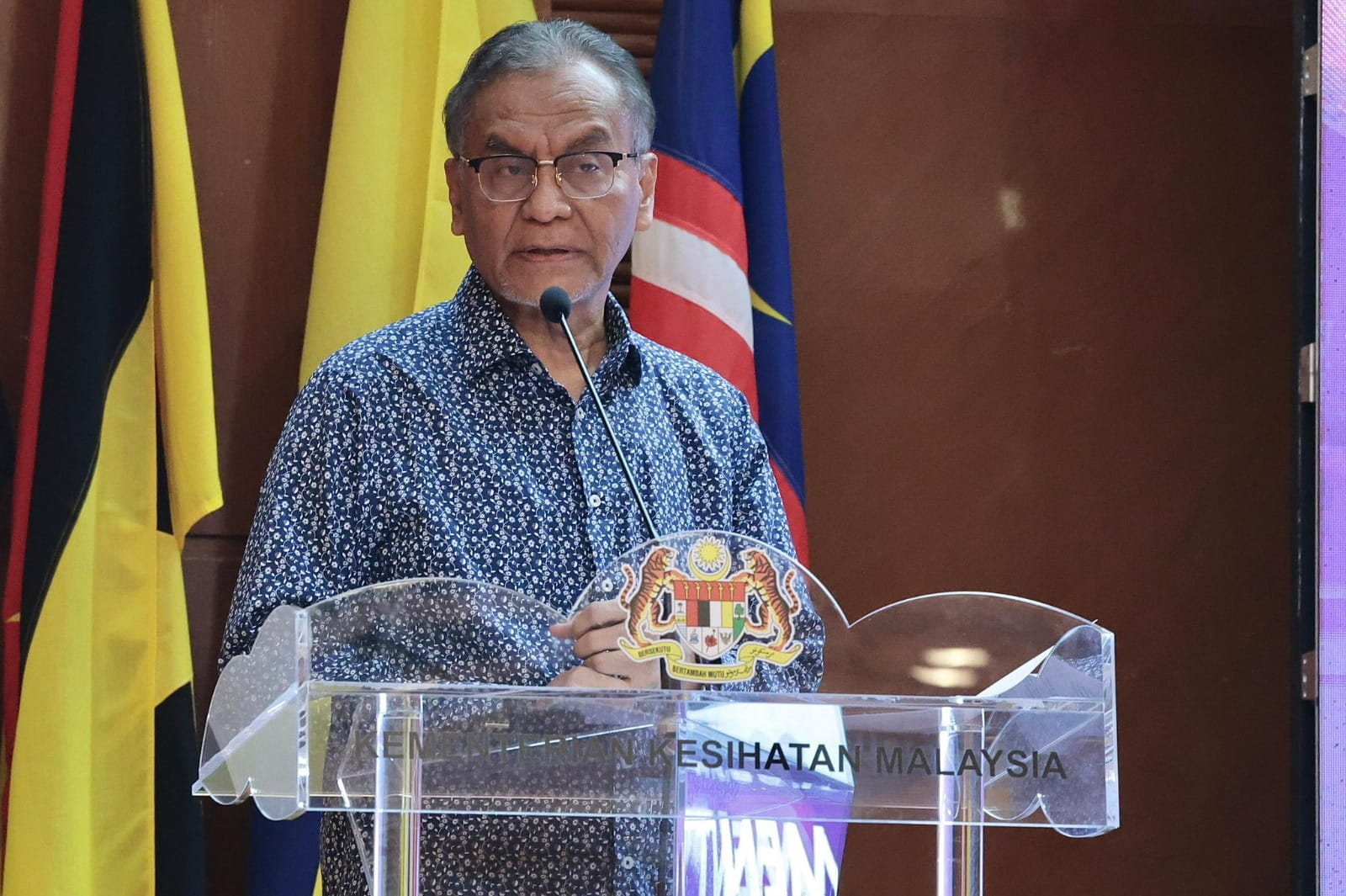
KUALA LUMPUR, May 1 — Health Minister Dzulkefly Ahmad revealed yesterday that he expects a whopping 10 per cent cut to the Ministry of Health’s (MOH) 2026 budget.
Ten per cent of the MOH’s total RM46.5 billion budget this year is equivalent to RM4.65 billion, which is RM1.65 billion more than the RM3 billion operating expenditure cut initially proposed by the Treasury.
“We only got RM46.5 billion, while MOE (Ministry of Education) received, if I’m not mistaken, more than RM60 billion. So MOE’s allocations have always been higher than ours,” Dzulkefly told a press conference at the MOH’s headquarters in Putrajaya yesterday after an occupational health event.
“We expect to face a cut of around 10 per cent, but no matter, we’re still negotiating to retain core services.”
CodeBlue obtained an audio recording of his press conference.
A 10 per cent cut, or RM4.65 billion, will leave the MOH with RM41.85 billion, just about RM630 million more than its 2024 budget of RM41.22 billion two years ago.
MOH’s 2026 operating budget is RM39.8 billion. RM4.65 billion is equivalent to slashing 12 per cent.
Emoluments comprise about 62 per cent (RM24.8 billion) of the MOH’s RM39.8 billion operating budget, followed by services and supplies at RM13.9 billion. Assets, fixed payments, and other expenses make up only about RM1 billion.
The health minister pledged to protect “essential core services” – such as basic health services, patient treatment, emergency care, and drug and medical device supplies – from spending cuts.
“I guarantee that all of these won’t face reductions because they were planned under Budget 2026,” Dzulkefly told reporters, without specifying what “non-essential” expenditure worth close to RM5 billion could be cut.
Dzulkefly also said the MOH would keep the 4,500 permanent positions allocated this year for contract doctors.
In a post on X last night, the health minister said the MOH would continue negotiating with the Ministry of Finance (MOF) to reduce the proposed spending cuts.
MOF previously said in a statement yesterday that its directive for spending cuts across the government was targeted at “non-critical” operational expenditure, citing measures like postponing events, limiting overseas trips, and saving on utilities, amid a ballooning fuel subsidy bill.
“Realignment will be focused on matters unrelated to service delivery, such as office utilities and optimisation of non-clinical assets,” said Dzulkefly.
Ampang Hospital, a major tertiary hospital in Selangor whose IT system has been down for a week now, still uses old computers and obsolete operating systems like Windows XP. Sibu Hospital’s neurosurgery head of department wrote recently in an op-ed about nationalism that it took him nearly two years to obtain a sparsely furnished office back in 2021.
Health care workers in the MOH, particularly those in Klinik Kesihatan, previously said they frequently fork out their own money to meet facility needs due to limited budgets, such as basic medical equipment, stationery, or consumables. They also personally cover expenses like travel, basic needs, and medical devices like wheelchairs for impoverished patients.


