

CYBERJAYA, May 22 — The diagnosis-related group (DRG) proposal for private hospitals will use severity levels to determine target prices, rather than fees suggested by the insurance industry.
ProtectHealth Corporation Sdn Bhd, which is responsible for managing the DRG mechanism, said a procedure cost report by the Life Insurance Association of Malaysia (LIAM) provides broad price ranges for selected procedures.
However, the DRG mechanism will classify hospital cases by severity, meaning that patients with the same diagnosis or procedure may fall into different price groups depending on how complex or severe their cases are.
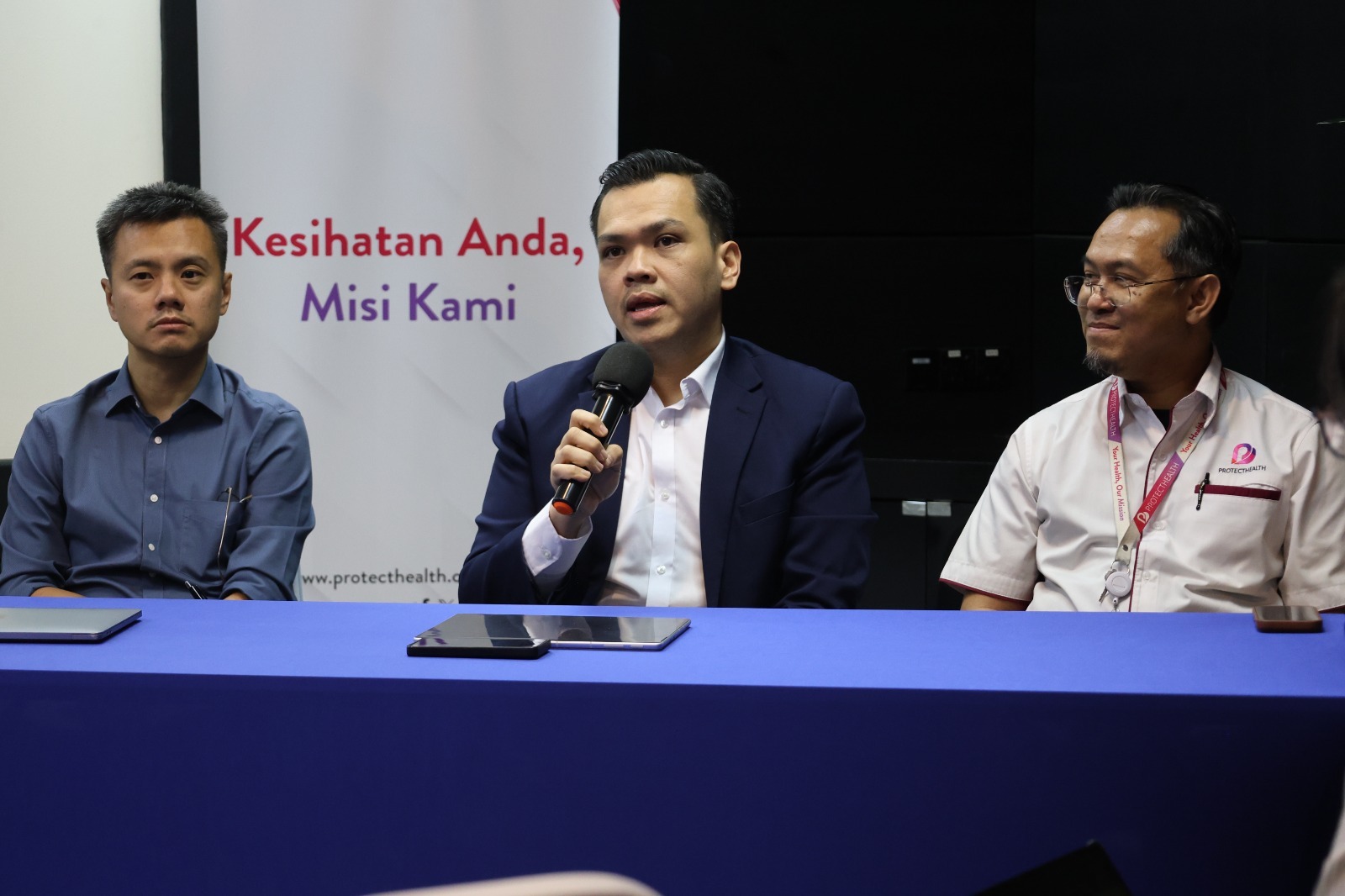
“In the LIAM report, I believe they were using the Insurance Services Malaysia (ISM) data. Unfortunately, the granularity is not there,” ProtectHealth chief executive officer Wan Mohd Hazwan Wan Mohd Najib told a media briefing here on May 15.
“So even if you say, how will DRG compare to the price guide issued by LIAM, we haven’t done the full comparison yet, but I think it will be quite different because DRG will have specific severity – one, two, three – so that severity will determine the target price.”
LIAM previously released a procedure cost report showing the cost ranges of selected medical procedures in private hospitals, based on insurance industry data from the ISM database.
The report gives consumers an indication of how much certain private hospital procedures may cost for patients with insurance coverage, but does not set severity-based target prices for individual case groups.
ProtectHealth said the DRG framework is also being designed to minimise ambiguity in hospital bills by covering most disease groups and setting a clear mechanism to resolve disputes.
“I think we want to make sure there are as little grey areas as possible, so it will cover most groups of diseases,” Wan Mohd Hazwan said. “So even if there is a dispute, there will be a clear mechanism on how exactly to resolve it.”
The DRG mechanism is expected to support the upcoming base medical and health insurance/takaful (MHIT) plan designed by the government, set for launch in January 2027, that intends to provide a standardised minimum health insurance or takaful product.
Under DRG, inpatient cases are grouped based on diagnosis, procedures, severity, and other clinical factors, with each group linked to a target price or payment guide.
Wan Mohd Hazwan said the DRG mechanism under the Base MHIT plan would apply broadly to all inpatient cases covered by the product, including diseases, procedures, and surgeries.
This differs from the government’s Hospital Services Outsourcing Programme (HSOP) managed by ProtectHealth, which mainly covers elective cases that can be scheduled in advance and managed using pre-set criteria. HSOP outsources cases in government hospitals to private hospitals.
According to ProtectHealth’s data, HSOP currently covers 11 services nationwide. Since 2024, it has recorded more than 50,000 patient referrals, over 60,000 completed procedures, and more than RM160 million in spending.
In 2025, radiology accounted for the largest number of completed procedure referrals under HSOP, at 26,937, followed by cardiology at 10,589 and ophthalmology at 1,958.
Dr Gan Saw Chien, ProtectHealth’s head of strategic programme development, said HSOP is also a case-based payment system, but unlike DRG, it does not use a DRG classification system to group cases.
“For the hospital outsourcing programme, it is mainly about elective cases,” Dr Gan said.
“It is a case-based payment system, but we are not using DRG to group the cases. So there are other predefined criteria, and the patients are selected by the Ministry of Health (MOH) hospitals according to the elective list, prolonged list, and sent over.”
Dr Gan said prices under HSOP are negotiated nationally for each service package, while DRG uses a formal classification system to group inpatient cases by diagnosis, procedure, and severity before assigning a target price.
“For DRG, it will be a system in which you can group all inpatient cases. And in the context of base MHIT, as long as it’s an inpatient case, it can apply to the DRG,” Dr Gan said.
“Both are case-based systems, but the criteria used are different – one uses our preset criteria, while the other uses the DRG system. So you can’t compare apples to apples.”
Wan Mohd Hazwan said ProtectHealth is still discussing how a phased rollout of DRG will be structured. He said the phasing could be based on common cases or it could apply to all cases but only by a certain percentage.
“There is a different way to divide the phasing,” he said. “It can be on a common case approach, or it can be by percentage – maybe all cases, but by percentage.”
“We will share a bit more on the mechanisms once it’s a go. Right now, it’s still at engagement,” he added, noting that ProtectHealth had held engagements with insurers, takaful operators, and hospitals.
The phased rollout comes amid concerns from private hospital representatives that DRG implementation would require sufficient data and time.
In March last year, the Association of Private Hospitals Malaysia (APHM) said the United States took four years to pilot DRG before adopting it for Medicare and Medicaid. APHM president Dr Kuljit Singh said Malaysia may need up to a decade to develop a reliable dataset for DRG.
Dr Gan, however, said Malaysia was not starting from zero, as the country already has DRG coding capability.
“Malaysia has been using DRG for more than 10 years,” he said. “MOH has had the coding capability, one of the key components of DRG, for more than a decade. I think sometimes some of the stakeholders outside didn’t realise that.
“So if you want to compare it to other international experiences, we already have a great starting point because we do have a lot of capacity in Malaysia already.”
If DRG is introduced only for the base MHIT plan, since the government has yet to make legislative changes to compel private hospitals to use the fee mechanism across board, the results can only be seen a few years later because insurance and takaful companies (ITOs) typically impose a two-year waiting period before allowing medical claims.
Many specialists who participated inCodeBlue’s October 2025 survey on health insurance said guarantee letters for their patients were frequently denied if coverage was under two years, even if policies stated a waiting period of three months.
CodeBlue previously reported the case of a cancer patient, whose July 2025 cancer claim was denied even though it was submitted a little after two years after his policy took effect in April 2023, well outside the 120-day waiting period stated in his policy.
Many insurance agents commenting on the case questioned the timing of the policyholder’s claim, indicating that even claims submitted just past the two-year mark may still be flagged by insurers.
The government has yet to specify if Base MHIT policyholders can submit claims on the first day of coverage.


