

The reported proposal to cut RM3.06 billion from the Ministry of Health’s 2026 operating budget is not just a budget issue. It is a patient safety issue. It is also a question of national priorities.
For the government, RM3.06 billion may look like a number on a spreadsheet. But in a public hospital, that money means medicine, gloves, sutures, blood tubes, scans, dialysis items, oxygen, ambulances, cleaners, security guards, working lifts, working air-conditioning, functioning toilets, and enough staff to keep patients safe.
CodeBlue reported that the Treasury has proposed cutting RM3.06 billion, or 6.6 per cent, from MOH’s RM46.5 billion 2026 budget. This would leave MOH with RM43.4 billion, even lower than last year’s RM45.3 billion budget. The same report said Treasury is looking for RM10 billion in savings across ministries, with the Ministry of Higher Education also facing a proposed RM2.39 billion cut.
This is not the right place to cut.
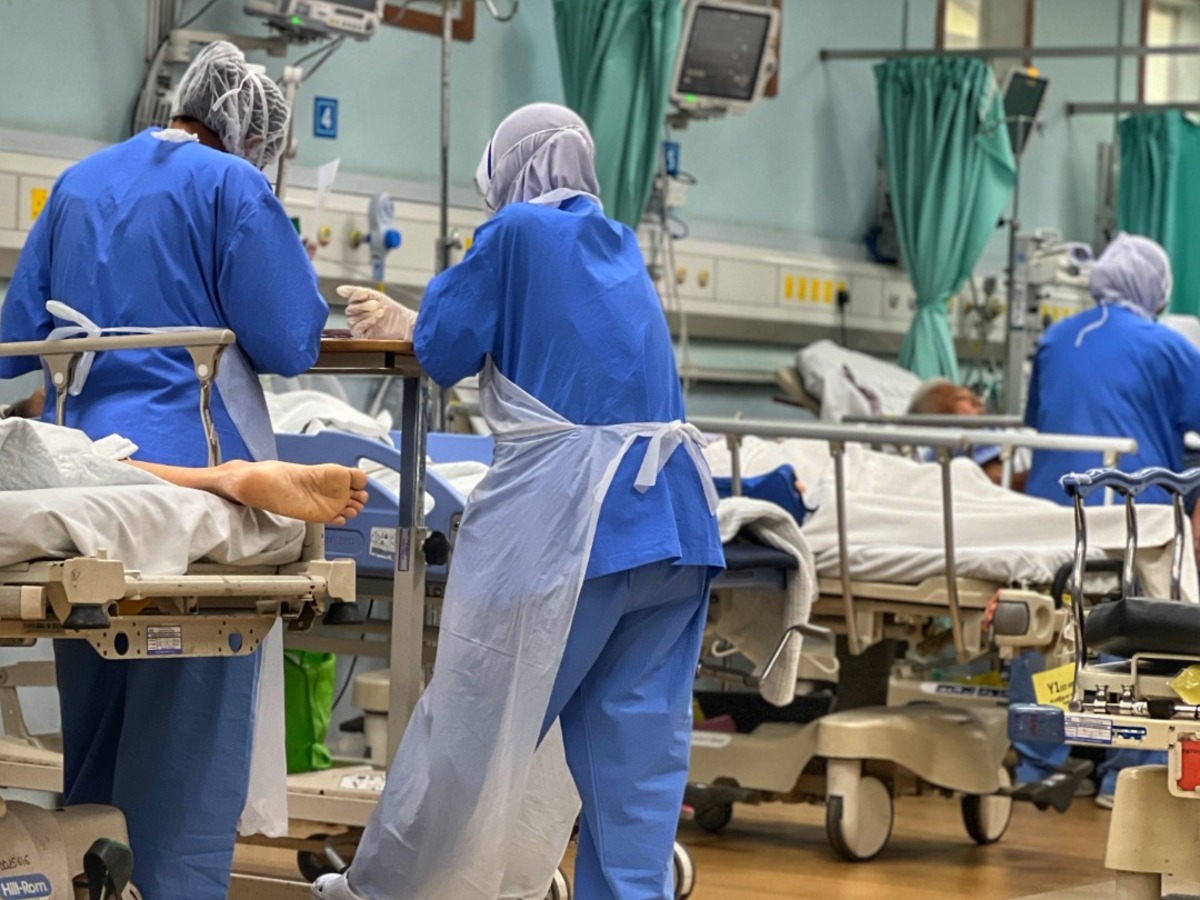
Public hospitals are already under pressure. Patients wait for beds. Doctors and nurses work beyond capacity. Emergency departments are crowded. Elective operations are delayed. Equipment breaks down. Some hospitals struggle with basic maintenance. In this situation, cutting billions from health care is not “saving money”. It is transferring the cost to patients and health care workers.
The Galen Centre for Health and Social Policy has warned that the proposed RM3.06 billion reduction could undermine Malaysia’s public health care system and place patients, health care workers, and essential services at serious risk. That warning should not be taken lightly. When a hospital budget is cut, the damage may not appear immediately. It appears slowly: longer waiting times, delayed scans, postponed surgery, medicine shortages, broken equipment, tired staff, and poorer patient outcomes.
The Finance Ministry reportedly said the spending review will not affect critical services. That sounds comforting, but the reality in hospitals is different. In health care, almost everything is connected. If cleaning is cut, infection risk rises. If maintenance is delayed, equipment fails. If staff claims are delayed, morale drops. If procurement slows, treatment slows. If clinics are overloaded, patients come later with worse disease.
If the country truly needs to save money, then savings must start from the top. Do not start with the patient on the hospital bed. Do not start with the mother waiting for an emergency caesarean section. Do not start with the cancer patient waiting for a scan. Do not start with the dialysis patient. Do not start with the old man waiting on a trolley in the emergency department.
Start with politicians. Start with top management. Start with excessive allowances. Start with official perks. Start with overseas trips. Start with official cars. Start with ceremonies. Start with waste.
Members of Parliament already receive a fixed monthly allowance of RM25,700, with other allowances and claims depending on eligibility. Bernama reported that, according to the Prime Minister’s Office, an MP’s total income can reach RM30,000 to RM40,000 per month. Before hospitals are told to sacrifice, Parliament must sacrifice first.
Political allowances should be reduced. Ministerial and deputy ministerial perks should be reviewed. High-level Turus and Jusa allowances should be cut where they are excessive. Entertainment allowances, travel allowances, driver-related allowances, meeting allowances, and other comfort-based benefits must be reduced before health services are touched.
Overseas trips by ministers, deputy ministers, political appointees, and senior officers should be frozen unless truly necessary. If a trip is not urgent, do not go. If it can be handled online, do it online. If the rakyat are told to accept austerity, politicians must stop flying around the world at public expense.
Official vehicles should also be reviewed. No new official vehicles. No unnecessary vehicle replacement. No luxury upgrades. Ministries should use existing pool vehicles. Senior officers who can afford it should use their own cars and claim reasonable mileage, just like ordinary working Malaysians. If leaders can ask hospitals to cut costs, they should be brave enough to cut their own comfort first.
Political pensions must also be dealt with honestly. In 2024, Prime Minister Anwar Ibrahim said the proposed abolition of pensions for politicians would be discussed by Cabinet and brought to Parliament. He also said it was difficult to justify removing pensions for civil servants while giving politicians an exception. That principle is correct. Now it must be acted upon.
Malaysia should end lifelong pensions for new politicians. It should also review double and triple public-funded income where politicians hold several positions or receive multiple public payments. A person should not be allowed to collect salary, allowance, pension, speaker payment, assemblyman allowance, MP allowance, government-linked appointment income, and other public-funded benefits without strict limits. Public service should not become a lifetime reward system for the political class.
The same standard should apply to unnecessary ministries, agencies, units, committees, task forces, and special bodies. If two agencies are doing similar work, merge them. If a unit exists mainly to produce meetings, slogans, banners, launches, and reports, close it. If a ministry cannot show direct benefit to the rakyat, reduce its budget before touching hospitals.
The Health Ministry itself is not exempt from scrutiny. The public anger over MOH’s 2025 star-studded Raya event was not simply about singers; it was about tone. CodeBlue reported that the event featuring Siti Nurhaliza and Jamal Abdillah sparked fury among health care workers who were still complaining about low on-call allowances, rejected overtime claims, insufficient equipment, and staff shortages.
Siti Nurhaliza later clarified that she sang voluntarily without payment, and that must be fairly acknowledged. But the larger lesson remains: when health workers are told there is no money, leadership must avoid even the appearance of celebration at the top while the wards are rationing dignity at the bottom.
Health care workers do not want glamour. They want manpower, equipment, fair claims, safe workplaces, and basic respect. They want leaders who understand that morale is damaged not only by low pay and heavy workload, but also by the feeling that the top is celebrating while the bottom is struggling.
The government must also abandon vanity spending. If there is money for luxury-style public facilities, official upgrades, ceremonial branding, excessive refurbishments, and projects that look good in photographs but do nothing for patients, then there is money for hospitals.
Public reporting has already raised questions about “BMW-class” smart toilets and a RM4 million allocation. Clean toilets matter, including in hospitals and public spaces. But if Malaysia is forced to choose, the priority is obvious: functioning hospital toilets, safe wards, ventilators, imaging slots, and medicines come before prestige projects.
The government should also pause unnecessary foreign donations and overseas commitments when domestic health care is under strain. Malaysia should remain humane and responsible, especially during disasters. But charity and image-building abroad should not come before sick Malaysians waiting at home.
There is also a need for honest discussion about public health care fees. Malaysia’s public health care is very cheap for citizens. Government outpatient care can cost RM1, while specialist follow-up can cost RM5 in many settings. This is good for access, especially for the poor. But it’s not wrong to discuss whether those who can afford it should pay slightly more.
For example, the RM1 outpatient fee could be increased to RM10 for patients who can afford it. But the poor must be protected. B40 patients, elderly poor patients, disabled patients, children from poor families, and chronic disease patients who need frequent follow-up should be exempted or protected. Most importantly, every extra ringgit collected must go back directly to the clinic or hospital that collected it. It must not disappear into the general government account.
But let us be clear: patients should not be asked to pay more unless politicians and top officials sacrifice first. The rakyat should not pay RM10 while politicians keep every allowance, every car, every claim, every pension, every overseas trip, and every comfort.
This is the heart of the issue. Health care workers have already sacrificed too much. They worked through Covid-19. They covered staff shortages. They stayed back after office hours. They accepted overcrowded wards and angry patients. They kept the system running even when the system did not take care of them properly.
Now, to cut billions from health care while political comfort remains protected would be a betrayal.
The government must publish exactly what will be cut from MOH. Which services will be affected? Which hospitals? Which programmes? Which medicines? Which maintenance contracts? Which staff-related payments? Which public health programmes? Which rural clinics? Which emergency services? The public has a right to know.
Do not hide behind general words like “optimisation” and “reprioritisation”. Say clearly what is being cut. If nothing critical is affected, prove it. If patient care is safe, show the numbers. If hospitals can absorb the cut, let hospital directors, department heads, doctors, nurses, pharmacists, medical assistants, and allied health workers say so openly.
Health care should be the last place to cut, not the first place to bleed.
If Treasury wants RM10 billion in savings, begin with political allowances, official perks, top management benefits, unnecessary overseas trips, official vehicles, political pensions, duplicative agencies, wasteful ceremonies, vanity projects, and non-essential foreign spending.
Do not begin with hospitals.
A government that cuts patient care before cutting political comfort has shown the rakyat its real priorities. And the rakyat are entitled to ask a simple question: when the country is short of money, why must the sick sacrifice before the powerful?
The author is a specialist doctor in the Ministry of Health. CodeBlue is providing the author anonymity because civil servants are prohibited from writing to the press.
- This is the personal opinion of the writer or publication and does not necessarily represent the views of CodeBlue.


