

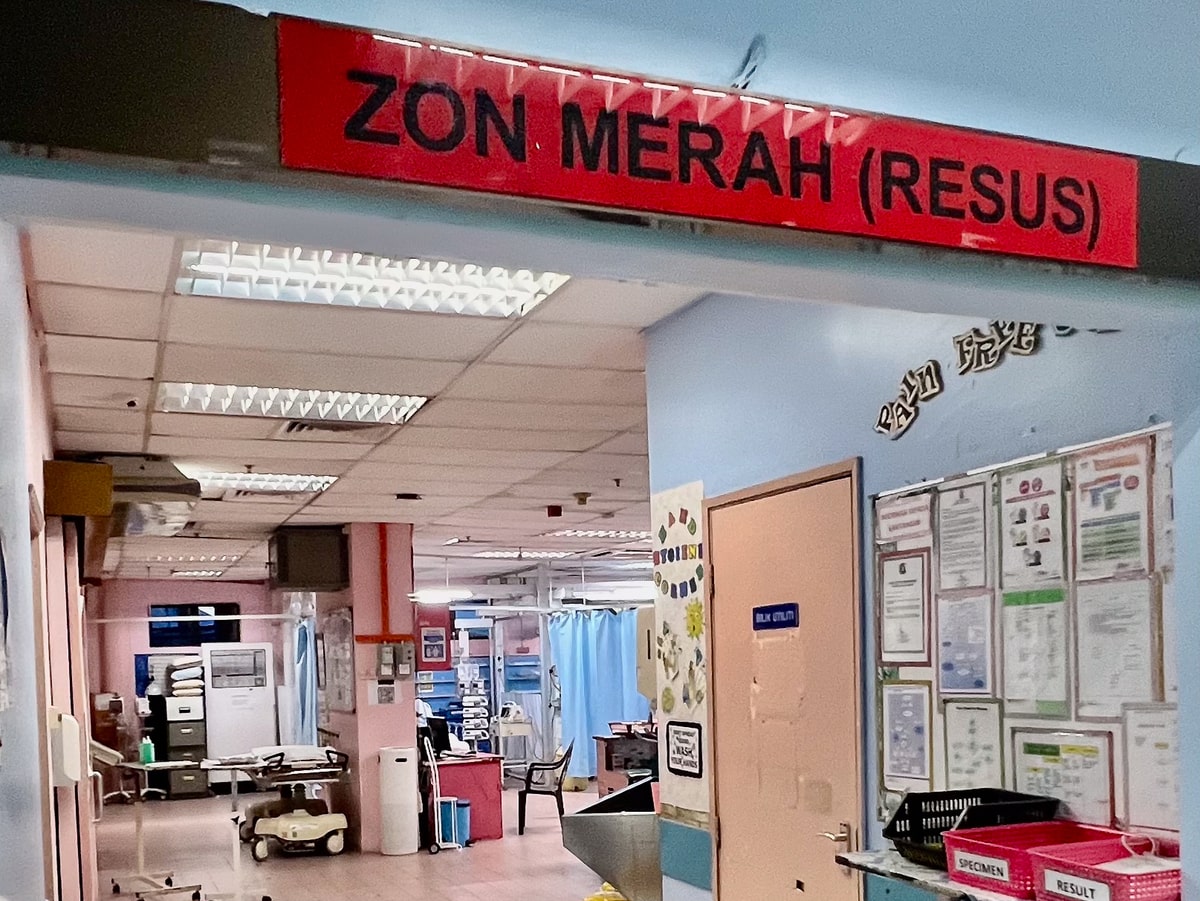
The recent disclosure by the Ministry of Health (MOH) that only 53 per cent of house officer (HO) slots nationwide are occupied as of February 2026 is a watershed moment for Malaysian public health care.
With 5,698 vacant trainee doctor positions—and a first intake for the year that filled only 10 per cent of national vacancies—the system has moved beyond “temporary strain” into a state of structural atrophy.
In a recent statement, Health Minister Dzulkefly Ahmad acknowledged this “perennial problem,” citing a decline in medical graduates and a chronic maldistribution of the workforce.
While the minister has rightly pledged a transition from “stop-gap measures” to “comprehensive structural reforms”—including the phased abolition of the contract system and the implementation of strategic placements—a fundamental question of governance remains: Can these reforms succeed under an administrative framework designed for the 20th century?
The Constraint Of The Generalist Model
At the heart of the current human resource (HR) paralysis is a mismatch between a highly specialised clinical service and the “generalist” administrative model of the Administrative and Diplomatic Service (PTD). Currently, the MOH hosts over 700 PTD officer positions who, by design, rotate through disparate ministries every few years.
As famously argued in the UK’s 1968 Fulton Report, the “gifted amateur” model of administration is structurally ill-equipped to manage complex, technical departments. When administrators rotate from unrelated sectors into health care, the steep learning curve results in administrative lag.
This disconnect is the silent driver behind the crises reported at Kinabatangan Hospital, Hospital Tengku Ampuan Rahimah Klang, and Hospital Sultanah Aminah Johor Bahru. From delayed transfer allowances to the failure to retain the thousands of health care workers who resigned in 2025 alone, the cost of “generalism” is paid in systemic inefficiency.
The Central Agency Bottleneck
Currently, the MOH’s human capital is governed by the Public Service Department (JPA) and the Public Service Commission (SPA). These central agencies apply a “one-size-fits-all” civil service logic to a 24/7/365 clinical environment.
The result is a rigid “Waran” (voted post) system that treats a trauma surgeon’s promotion with the same bureaucratic criteria as a clerical officer’s. When central agencies prioritise fiscal spreadsheets over patient safety—by slashing regional incentives or delaying permanent appointments—they inadvertently undermine the very welfare reforms the minister seeks to champion.
A national health crisis cannot be solved using the same bureaucratic tools used to manage a district land office.
SPK: The Engine Of Structural Reform
The health minister’s vision for “comprehensive structural reform” is precisely what Malaysia requires to meet global health care standards. However, these goals are currently tethered to the systemic constraints of the JPA and SPA. A Suruhanjaya Perkhidmatan Kesihatan (SPK)—or Health Service Commission—acts as the critical enabler for this vision in three key areas:
Strategic Maldistribution and Welfare Autonomy: The Minister’s plan for “strategic placements” in Sabah and Johor will continue to face friction as long as the allowance structure remains uncompetitive. An SPK would possess the autonomy to create “Regional Premiums” and bespoke housing incentives, transforming rural service from a professional “sentence” into a sustainable career choice.
A Permanent End to the Contract System: The contract system was a fiscal reaction to a centralised quota problem. An SPK would empower the MOH to create permanent posts based on actual clinical demand and patient-to-doctor ratios, rather than awaiting non-sector-specific approvals that do not reflect hospital and health clinic realities.
“Just-in-Time” Clinical Integration: To address the 47 per cent HO vacancy rate, an SPK can bypass the SPA’s standardised, multi-sector recruitment cycles. This allows for the immediate appointment of graduates the moment they are eligible, injecting vital manpower into frontline facilities without months of administrative dormancy.
The Path To Institutional Excellence
The assertion that an SPK would lack sufficient authority is a defeatist stance. We must look to the Education Service Commission (SPP) as a successful blueprint for decoupling specialised public services from centralised oversight to ensure domain-specific expertise.
Administrative Specialisation: The 700+ administrative positions within the MOH should be converted into a permanent Health Administrative Scheme. This ensures that those managing hospital, public health budgets, and HR are career experts in health systems, not rotating personnel awaiting their next cross-ministerial posting.
Meritocracy and Agility: An independent commission allows for rapid, merit-based progression. It enables clinical and administrative “stars” to reach decision-making levels in their 40s, providing the energetic, long-term leadership required to sustain reforms beyond a single political cycle.
Conclusion
The 5,698 vacant housemen slots are a clarion call: the current machinery is failing. We do not need more tactical maneuvers; we need a fundamental decoupling of health care from the general civil service.
If we continue to allow non-clinical bureaucrats to manage clinical realities, the 53 per cent fill rate will only continue to erode.
Establishing the Suruhanjaya Perkhidmatan Kesihatan (SPK) is no longer just a policy preference—it is a requirement for systemic survival. In the context of national health care, administrative efficiency is the ultimate determinant of patient safety.
The author is a government doctor. CodeBlue is providing the author anonymity as civil servants are prohibited from writing to the press.
- This is the personal opinion of the writer or publication and does not necessarily represent the views of CodeBlue.


