

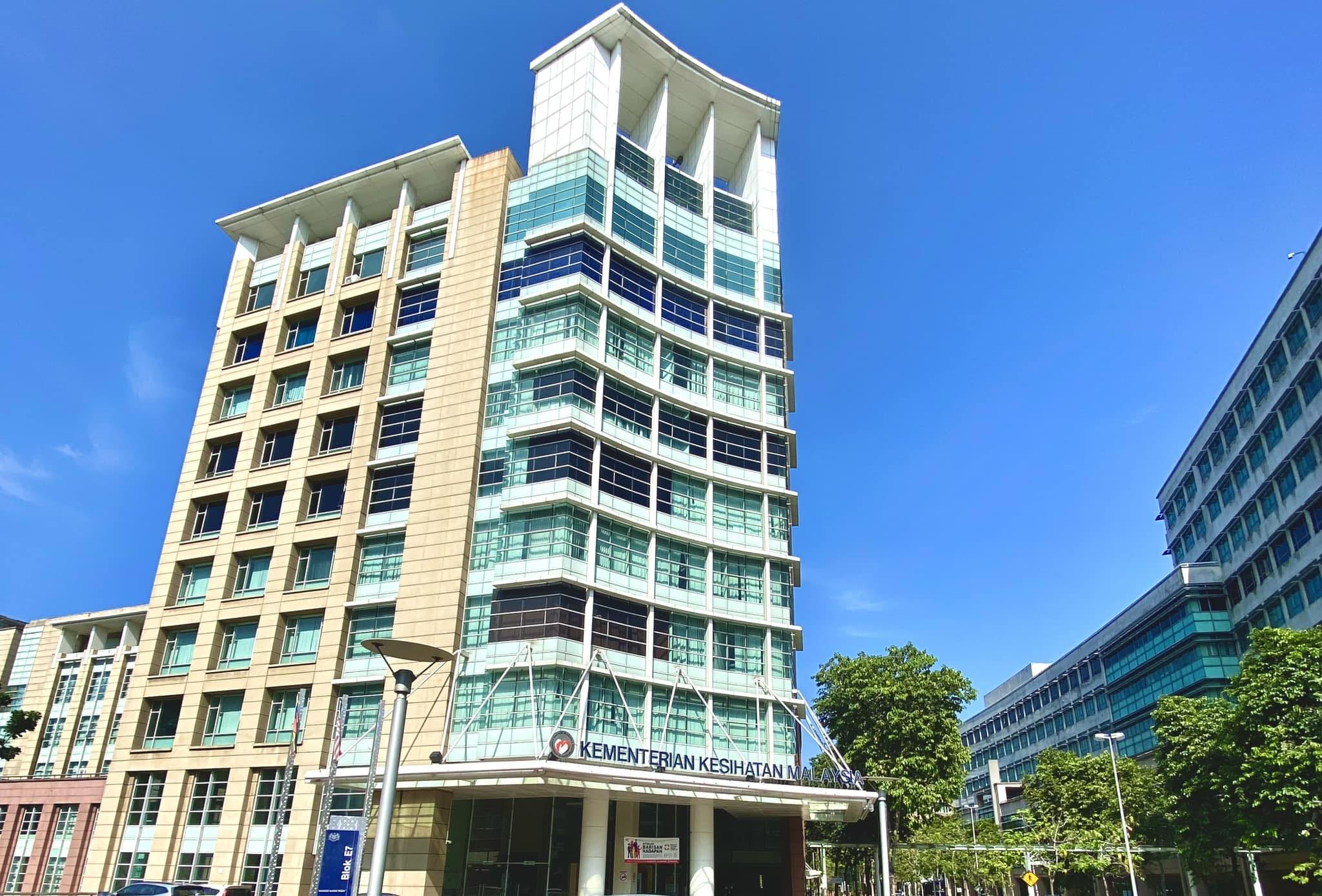
KUALA LUMPUR, Dec 10 — Doctors’ associations have warned the government against arbitrarily redeploying specialist doctors from Ministry of Health (MOH) headquarters in Putrajaya or states to hospitals and clinics.
Hartal Doktor Kontrak (HDK) spokesman Dr Muhammad Yassin said most specialists in KKM Putrajaya are public health specialists who make health care policies and guidelines and need to remain in federal or state headquarters.
“Moving them to hospitals or KK (klinik kesihatan) is counterproductive and will limit their expertise. Furthermore, these places are already filled with clinical specialists and family medicine specialists (FMS) who are more well versed on clinical aspects and management,” Dr Muhammad told CodeBlue yesterday.
He suggested that transferring some medical officers, who are not in Master programmes or who don’t have plans to join a public health Master programme, to clinical settings might be more prudent.
When asked if all policy and administrative work in KKM Putrajaya should be borne by administrative and diplomatic officers (PTDs) or people with expertise in medical administration instead, HDK said some public health specialists can still contribute in those roles.
“If the PTDs have medical administration expertise, then they too can contribute and be more actively involved in policy/admin work,” said Dr Muhammad.
Chief Secretary to the Government (KSN) Shamsul Azri Abu Bakar said recently that the government will redeploy specialist doctors from KKM Putrajaya to hospitals and public health clinics to curb staff shortages.
He added that 380 doctors have been transferred to public health care facilities over the last two years.
Shamsul Azri didn’t state whether the workload among redeployed specialists would be redistributed among existing staff in MOH’s headquarters and if this might overload them, or if headcount would be increased by hiring PTDs or people qualified in medical administration.
In a statement this morning, the MOH clarified that besides the mobilisation of 380 medical officers from its headquarters, the redeployment exercise also involved nurses and assistant medical officers from KKM Putrajaya to health care facilities.
An anonymous high-level source told CodeBlue that he believed the workload of specialists transferred out of KKM Putrajaya could be reallocated to their colleagues in headquarters.
“Do you need 10 doctors to do admin work and policy if you can have two to three to do the job?” he said. “So don’t complain about shortages of medical personnel if there are a lot of them in HQ doing administrative work.”
PTDs Taking Over Doctors’ Roles In KKM Putrajaya?

HDK’s Facebook post of the KSN’s remarks received a mix of criticism and support. Many asked if the redeployed specialists would be replaced with PTDs in MOH’s headquarters.
“PTD lah, who else? I don’t have any problems with PTDs, but certain positions, even if it’s labelled ‘administrative’, must be given to those who understand it. If we want to manage a war, even if it’s called ‘manage’, it must be given to a general. Likewise, if we want to manage health, this must be given to a doctor. Then it’s fair,” said one.
Another wrote that doctors in KKM Putrajaya don’t do “pure admin work”, but have technical expertise and training in specific areas and specialties.
“They’re required to draft policies, plan development and services, monitor achievements, and many other aspects to make services more people-centric. If HQ isn’t efficient in such duties and responsibilities, the repercussions will disrupt plans to make services more people-centric,” said that person.
“We need to understand that making services more people-centric isn’t just about service delivery from doctors who treat patients in clinics and hospitals, but about planning, preparing, and expanding programmes in the field.”
A third believed that if PTDs took over the role of doctors in KKM Putrajaya, the health service would deteriorate further as PTDs would simply purchase the “cheapest” medical equipment and assets.
However, another person noted that doctors in MOH’s federal headquarters receive critical and specialist allowances, even though they “only attend meetings”.
Malaysian Medical Association (MMA) called for any redistribution of medical manpower to be made public.
“Clear communication on the categories of doctors involved, the selection criteria, and the planned areas of deployment will help avoid misunderstanding or oversimplification. Transparency also ensures accountability in strengthening the system where it matters most,” MMA president Dr R. Arasu said in a statement yesterday.
He also pointed out that a number of doctors in KKM Putrajaya may not have been in active clinical practice.
“Asking them to suddenly assume clinical responsibilities is not a straightforward solution. Proper matching of competencies, appropriate reorientation, and clear identification of the clinical areas they will be tasked to support are required to ensure patient safety and service continuity,” said Dr Arasu.
“Redeployment is not just relocation; it is a clinical and operational responsibility that must be executed with care.”
While some roles at headquarters may indeed be better deployed to service facilities, Dr Arasu noted that many HQ functions remain essential to the health system’s stability, including public health planning, clinical governance, training, digital health, quality and safety oversight, and long-term policy development.
CEOs Of Malaysian Private Hospitals Aren’t MDs, NHS England Chief Is An Accountant

The CEOs of many private hospitals in Malaysia aren’t medical doctors. The head of NHS England, James “Jim” Mackey, isn’t an MD either but an accountant by training.
In his first interview since becoming CEO of NHS England, Mackey told The Telegraph last June that the NHS sees patients as an “inconvenience” and that the UK’s national health service is often “deaf” to criticism.
Mackey – who was brought in explicitly as a turnaround chief and previously ran the NHS’s most successful hospital for two decades – is reportedly the most trusted NHS chief in decades.
In Malaysia, the Health director-general and hospital directors in the MOH are always MDs.
Association of Private Hospitals Malaysia (APHM) president Dr Kuljit Singh, who is also medical director of Prince Court Medical Centre, explained that private hospitals are complex operations that require a wide range of expertise.
“In Malaysia, a hospital CEO is not required to be a medical doctor. Many come from backgrounds in operations and strategy, business administration, finance, and management. In fact, many have long careers within the health care industry,” Dr Kuljit told CodeBlue.
“In my view, private hospitals run efficiently because the CEO isn’t always a clinician and has professional skills that doctors may not necessarily specialise in, for example, finance and operational efficiency.
“At the same time, private hospitals must, by law, appoint a person-in-charge (PIC) or medical director who oversees clinical standards and patient care. The collaboration between the CEO and the medical director is what enables private hospitals to operate efficiently and deliver better value to patients.
“To further support operations and delivery of health care, the CEO and medical director are supported by required committees such as the Management Committee, Medical Advisory Committee, Infection Control Committee, Drugs and Therapeutic Committee, Ethics Committee, Quality Assurance Committee, and Procurement Committee. Each consists of a combination of clinicians and the management team.”


