

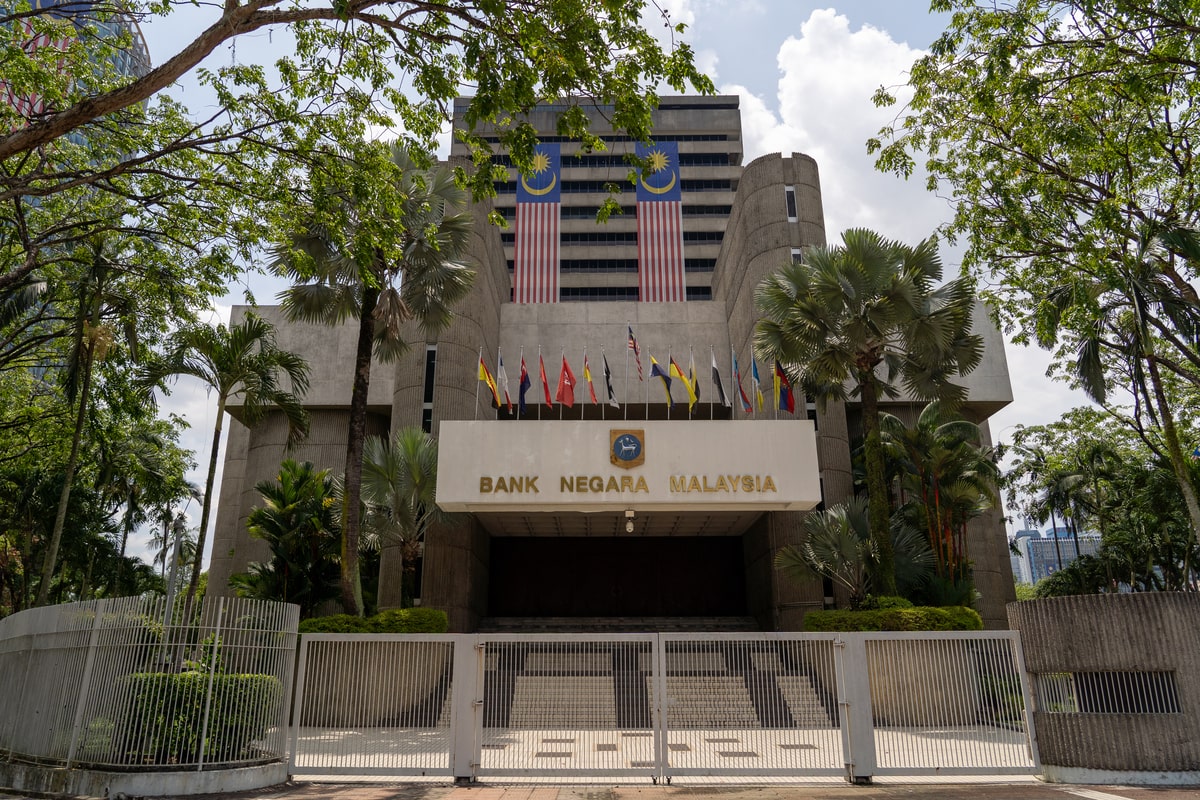
KUALA LUMPUR, Oct 24 — Bank Negara Malaysia (BNM) asserted today that insurers and takaful operators (ITOs) and third-party administrators (TPAs) cannot “direct” patient care.
A nationwide CodeBlue survey among 855 specialist doctors practising in private hospitals found that 99 per cent of specialists across specialties perceived ITO or TPA “interference” with their clinical decision-making.
“ITOs and TPAs have no authority to direct patient care, which remains exclusively a matter for clinicians. The role of ITOs and TPAs is limited to establishing what is claimable under an insurance policy,” BNM said in a statement to CodeBlue, in response to CodeBlue’s poll.
“If treatments are not covered under an insurance policy, payments would be settled directly with the patient, similar to policies with deductibles which are paid for directly by the patient.”
However, the CodeBlue survey results, supported by hundreds of testimonies from specialists, suggest that practices by payers go well beyond contractual reimbursement decisions, often extending into the clinical domain.
Specialists described insurers denying inpatient admissions by insisting on daycare or outpatient classification, rejecting general anaesthesia (GA) for surgeries, or refusing to cover standard therapies, including both innovative and generic medicines.
Doctors said such restrictions effectively constrain their ability to provide appropriate care within the private health care system.
BNM’s use of the word “direct” appears to mischaracterise doctors’ concerns. Specialists in CodeBlue’s survey have repeatedly cited “interference”, not direct clinical instruction, describing insurers’ control over treatment approvals, guarantee letters (GLs), and payment authorisations as a de facto form of gatekeeping that shapes clinical decisions.
BNM Says Medical Claims Reviewed Against ‘Accepted Protocols’
Bank Negara said ITOs assess medical claims based on “accepted treatment protocols” and “clinical practice guidelines” (CPG) to determine what is claimable under an insurance policy.
“In cases where treatments do not follow accepted protocols, ITOs will make appropriate enquiries to understand the clinical rationale for treatments. If the treatments are established to be medically necessary, claims must be honoured.”
BNM said insurers and takaful operators are responsible for managing claims in accordance with the terms of their contracts to ensure the sustainability of pooled premiums and prevent “fraud, waste, and abuse”.
“Insurers and takaful operators therefore have a responsibility to policyholders to review and manage claims in accordance with the terms of the insurance contract,” said the central bank.
“This is important to contain premium inflation due to fraud, waste, and abuse, which could otherwise contribute to unreasonable increases in insurance premiums affecting all policyholders.”
However, CodeBlue’s survey shows a much more complicated picture of how these standards are applied in practice.
Many respondents said insurers and TPAs routinely invoke “medical necessity” to deny or delay coverage even for standard, guideline-recommended care, effectively overriding doctors’ clinical judgment.
Specialists cited repeated denials of inpatient admissions by insurers who insisted cases be treated as daycare or outpatient procedures, even when patients required monitoring or post-operative observation.
Others described refusals to cover GA for surgeries or denials of standard-of-care drugs – including long-established cancer medicines like trastuzumab and gemcitabine – on grounds that they were “not indicated” or “not covered”.
Doctors said such denials are often justified by insurers or TPAs under the banner of “medical necessity”, but in reality stem from cost containment or rigid internal interpretations of guidelines, rather than evidence-based clinical reasoning.
Several specialists also told CodeBlue that when insurers query clinical rationales, these reviews are frequently conducted by non-clinical personnel or outsourced to third-party administrators with no specialist input, resulting in delays, confusion, or denials that compromise continuity of care.
While BNM maintains that claims must be honoured if “medically necessary”, doctors say the process too often turns medical review into an administrative veto, with insurers’ commercial criteria eclipsing clinicians’ expertise.
Pre-Existing Conditions: ‘Automatic Coverage Would Destabilise The Pool’
Beyond disputes over medical necessity and clinical authority, Bank Negara also defended the long-standing exclusion of pre-existing conditions from private insurance coverage, citing the risk of “adverse selection”.
“Pre-existing conditions are generally not covered by private insurance products in the market which operate under a voluntary system,” BNM told CodeBlue in its statement today.
“As individuals with known pre-existing conditions are more likely to purchase insurance, extending automatic coverage will lead to disproportionately high claims.
“Higher corresponding premiums for everyone in the pool further discourages healthy individuals from purchasing insurance, eventually destabilising the insurance pool – a cycle known as ‘adverse selection’.”
The central bank said there are instances where insurers may choose to provide coverage for pre-existing conditions with restrictions, but that any such limitations must be clearly disclosed to policyholders at the time of purchase.
“Any restrictions, including where a longer waiting period is applied, must be clearly explained to policyholders at the time of purchase,” BNM said.
CodeBlue’s survey included complaints from many respondents about how ITOs denied coverage or revoked GLs due to “pre-existing conditions”, most commonly diabetes, even though such chronic illnesses were unrelated to the admission diagnosis, like dengue, pneumonia, or fracture.
Specialists also highlighted insurer requests for patients’ lipid profile or blood sugar levels that the clinicians considered irrelevant to their diagnosis of the illness that patients were getting admitted for.
TPAs Must Register With MOH, GMC To Handle Disputes
The central bank said that ITOs may appoint TPAs to manage claims, adding that TPAs must be registered as managed care organisations with the Ministry of Health (MOH).
“Many TPAs also act for corporations in the management of employee benefit schemes which may not involve ITOs,” BNM noted.
Bank Negara said it continues to work with the Malaysian Medical Association (MMA), the Association of Private Hospitals of Malaysia (APHM), the insurance and takaful industry, and the MOH to improve communication between insurers and medical practitioners.
“This aims to guide more consistent practices by ITOs and reduce delays in communicating decisions by ITOs on claimable expenditures,” BNM said.
It added that the Grievance Mechanism Committee (GMC) – which includes medical practitioners – was set up to review cases related to claims procedures, guarantee letters, and disputes over hospital charges and medical management for claims purposes.
“The GMC provides an avenue for providers and medical practitioners to resolve issues that may be encountered in obtaining approval or payment for legitimate claims from ITOs,” BNM said.
BNM said efforts are underway to complement the GMC with the development of “mutually agreed treatment protocols” for specific procedures claimable under medical and health insurance and takaful (MHIT) plans.
“This would be co-developed by specialists, ITOs, and TPAs to serve as a clearer benchmark for appropriate claims.”
OFS Report Cites Similar Cases Raised In CodeBlue’s Survey
Recent cases published in the Ombudsman for Financial Services (OFS) 2024 Annual Report echo the same insurer behaviours that doctors described in CodeBlue’s national survey, including denials of standard treatments, refusal to honour inpatient classification, and rejections of medically indicated procedures.
In Case Study 1, the OFS ruled in favour of a policyholder whose medical and hospitalisation claim was wrongly denied after an insurer invoked a policy exclusion for “gout, arthritis, and any complications thereof”. The patient had been treated for Cervical C4-C6 OPLL (Ossification of the Posterior Longitudinal Ligament) – a degenerative spinal condition that caused severe cord compression.
OFS found that the illness was a distinct ossification disorder, not caused by or a complication of arthritis or gout, and that the insurer had misapplied the exclusion clause. The Ombudsman concluded that the treatment was medically necessary and directed the insurer to settle the claim in full after the findings were presented.
In Case Study 3, the OFS ruled in favour of a stroke patient whose insurer had rejected a rehabilitation claim on the basis that the facility was “not a hospital” and that the treatment was “not medically necessary”.
The patient, admitted to an Ambulatory Care Centre for post-stroke rehabilitation due to severe left-sided weakness, required intensive physiotherapy and nursing care. The insurer refused coverage, arguing that the centre was classified as a rehabilitation facility rather than a hospital, and that the physiotherapy provided was unrelated to the patient’s hypertension.
OFS found that the centre held a valid licence as a Private Hospital (“Hospital Swasta”) under Malaysian law, met the policy’s definition of a hospital, and provided continuous physician supervision and 24-hour nursing care.
It also noted that under the Contra Proferentem principle, ambiguities in policy wording must be interpreted in favour of policyholders. Following OFS’ findings, the insurer revised its decision and settled the claim in full.
In Case Study 4, the OFS examined a case where an insurer revoked a GL after hospital admission, citing a policy exclusion for preventive treatments.
An infant was admitted with a left-thigh abscess and high fever, and based on this initial diagnosis, the insurer issued a GL authorising hospitalisation.
During the final review, however, the diagnosis was updated to a post-recurrent drug allergy linked to a Hexaxim vaccination – part of the National Immunisation Programme (NIP) – leading the insurer to deny the claim under a clause excluding “preventive treatments or vaccinations”.
OFS found that the insurer had already been informed of the post-vaccine condition in the referral letter submitted with the initial GL request, but had overlooked this information when approving the guarantee.
The subsequent revocation, OFS noted, prevented the family from seeking alternative, more affordable care and caused unnecessary financial hardship. Acknowledging the oversight, the insurer reversed its decision and settled the claim in full following OFS’ intervention.
Taken together, these rulings undermine Bank Negara’s assurance that ITOs and TPAs “have no authority to direct patient care”.
While the regulator distinguishes between clinical direction and claims eligibility, OFS’ own adjudicated cases show that claims decisions are frequently made in ways that influence or constrain clinical management, precisely the interference doctors have raised in CodeBlue’s reporting.
OFS, now known as the Financial Markets Ombudsman Service (FMOS), is appointed by Bank Negara.


