

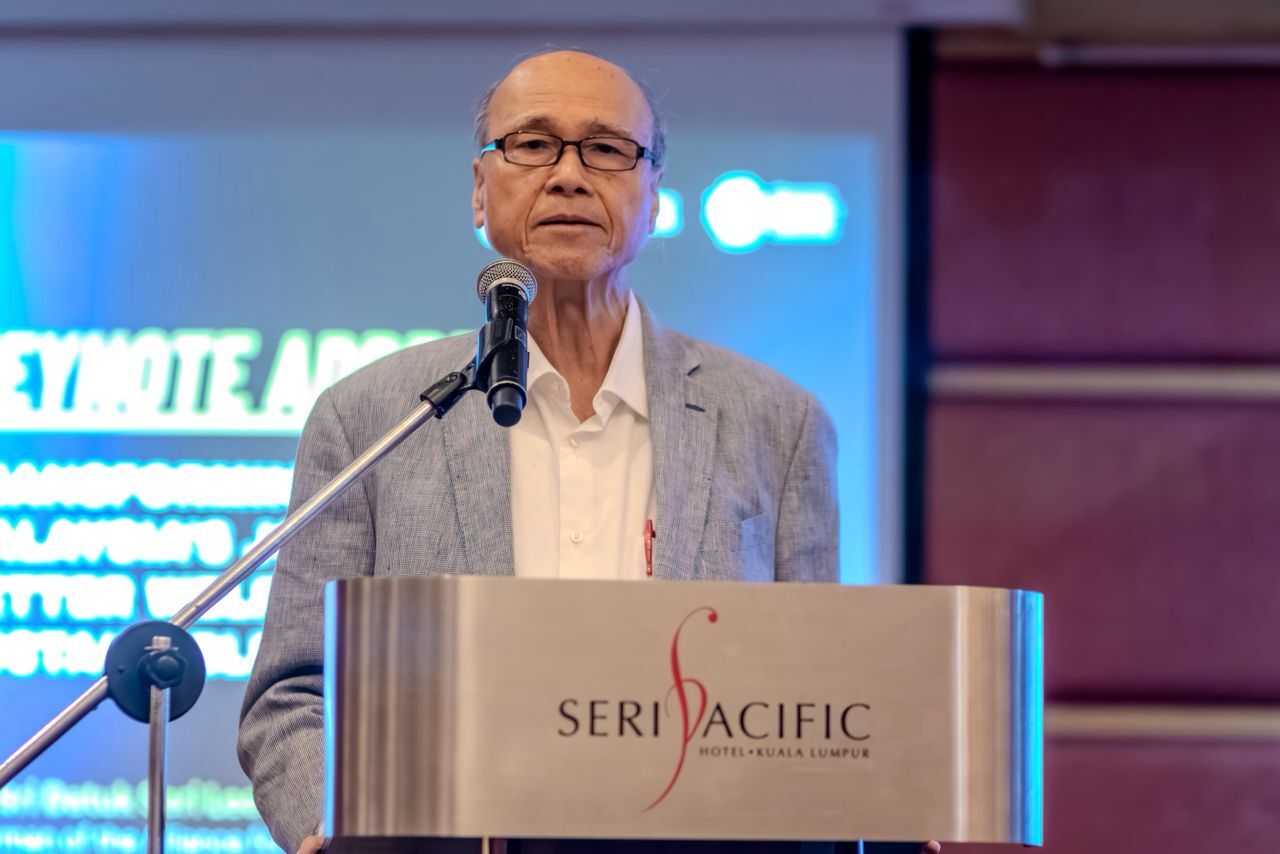
KUALA LUMPUR, Sept 26 — Millions of hens in Malaysia remain confined in battery cages “so small they cannot even spread their wings”, said veteran animal welfare advocate Lee Lam Thye.
The former MP described conventional egg production as a system built on “silent suffering”, as he touted cage-free farming instead.
Cage-free eggs come from hens that are not confined to battery cages. Instead, they are kept in open barns where they can walk, perch, dust-bathe, and lay eggs in nests. “Cage-free” isn’t the same as “free-range”; the latter implies access to outdoor space.
Lee said Malaysia’s food system could no longer be driven solely by efficiency and profit, stressing the need for a new paradigm that measures progress by the well-being of animals, farmers, workers, and consumers.
“For decades, factory farming has operated quietly, behind closed doors, out of public sight. Behind the low prices and high volumes are living beings – millions of laying hens confined in battery cages so small they cannot even spread their wings,” Lee said in his keynote address at the Malaysia Cage-Free Corporate Implementation Progress Forum & Industry Leadership Awards 2025 here last Saturday.
“These are not rare cases. They are the norm in conventional egg production. And the question we must ask ourselves today is simple: ‘Can we call ourselves a progressive society if our food system is built upon silent suffering?’”
Lee stressed that transitioning to cage-free production was “not only about animal welfare”, but one that touches every pillar of Malaysia’s national agenda.
“Cage-free farms, especially those adopting regenerative practices, use less antibiotics, promote better waste management, and integrate renewable energy,” Lee said, referring to farming methods that restore soil health and biodiversity.
He pointed to producers like Liang Kee Farming that have incorporated organic farming, aquaponics (where fish and plants are grown together), stingless bee pollination for crop fertilisation, and closed-loop ecosystems that recycle waste back into production.
He added that producers such as TC Poultry, Huat Lai, and H&N Agriculture have already adopted IoT-enabled aviary systems that reduce stress-induced illnesses in hens, lowering disease outbreaks and reliance on preventive antibiotics to produce cleaner and safer food.
Lee called for a paradigm shift from “volume to value, from profit-only” to “people-planet-animal sustainability”.
“It is no longer acceptable to measure agricultural success only by output per square metre. True success must be measured by the wellbeing of all animals, farmers, workers, and consumers,” he said.
Lee argued that investing in premium, certified products could boost Malaysia’s economic resilience by opening new export markets, attracting ESG-conscious investors, and protecting local farmers from unsustainable imports.
“Malaysians are becoming more educated, more ethical in their choices. Consumers today care how food is produced, not just what it costs. And when businesses adopt better welfare, they earn loyalty, not just revenue,” he said.
Lee urged the government to build on the Animal Welfare Act 2015, which recognises the right of animals to express natural behaviour, by introducing clear guidelines, stronger enforcement, and a national policy roadmap for humane and sustainable food production.
“We have the knowledge. We have the producers. We have the law. And now, we have the momentum,” Lee said. “Let’s not wait until external pressure forces our hand. Let us act voluntarily, confidently, and compassionately because that is what true leadership looks like.”
He highlighted Malaysia’s achievements, including Asia’s first humane-certified aviary at Liang Kee, the first IoT-enabled cage-free aviary at TC Poultry, and the region’s largest cage-free aviary at Huat Lai, as proof that Malaysia has the capacity to lead the region.
Malaysia’s Journey From Backyard Farms To Regional Cage-Free Hub

In his opening address, Dr Saravanakumar S. Pillai, senior principal for policy and engagement at Humane World for Animals, said Malaysia’s cage-free journey began in earnest in 2021 when better-welfare egg production was still limited to backyard farms and small-scale efforts.
“Few imagined then that, within just four short years, Malaysia would be recognised as a reference hub for cage-free advocacy in Southeast Asia,” Dr Saravanakumar said.
“We have advanced step by step – from modest backyard beginnings to structured free-range and aviary systems; from cage-to-cage-free conversions to integrated farms led by both large producers and smallholders.
“What was once considered an alternative has now become a national movement that unites farmers, corporates, policymakers, and consumers alike.”
He credited the momentum to a growing ecosystem that brought together producers, corporates, financiers, and regulators.
The Malaysia Cage-Free Egg Producers Organisation (MCFEPO) now serves as a collective voice for farmers. AgroBank’s sustainable financing has created new opportunities for farmers to expand and modernise, while the Agriculture and Food Security Ministry (KPKM) and the Department of Veterinary Services (DVS) have provided crucial regulatory backing.
“These efforts have made Malaysia a destination for learning,” Dr Saravanakumar added, noting that participants from Bangladesh, India, and Singapore had joined the forum, while producers from Korea and India had previously visited to see Malaysia’s progress firsthand.
He said the establishment of the Malaysia Centre of Excellence for Cage-Free Production with TC Poultry was another milestone, ensuring that training, education, and awareness are not limited to farms, but extended across Malaysian society.
“Our producers now speak with one strong voice through MCFEPO. Their financial foundation is strengthened by the cooperative, which provides stability and buy-back mechanisms for smallholders. AgroBank’s sustainable financing has unlocked opportunities for farmers to expand and modernise,” he said.
Cage-Free Dashboard And National Guidelines Launched

The forum also saw the launch of the Malaysia Cage-Free Commitment Implementation Dashboard, the first of its kind in the region. The tool will monitor and rate corporate progress on cage-free commitments on a one- to five-star scale to improve accountability across the supply chain.
KPKM unveiled Malaysia’s Cage-Free Pullets and Hens Production Guidelines at the forum, a reference for producers to align with international welfare standards.
KPKM deputy secretary-general (policy) Norazman Ayob said the guidelines were part of a broader effort to strengthen Malaysia’s food security, which he described as inseparable from national security.
“Food security counts towards national security. While there are many factors that put our nation’s security at risk, not having enough food in times of crisis would definitely be a recipe for disaster,” Norazman said.
Norazman noted that animal welfare has become a global trade issue, with international markets increasingly expecting higher standards.
He pointed to the Animal Welfare Act that requires adequate nutrition, suitable living environments, opportunities for natural behaviour, and protection from disease and pain, and urged producers to go beyond the minimum.
“Producers who meet cage-free egg standards in their farming practices stand to benefit from expanded market access,” he said.
MCFEPO elect chairman Meor Ezree Syazrin bin Meor Abdul Ghani said producers were committed to aligning with better-welfare practices. “With clear guidelines, corporate demand, and government support, we are building an ecosystem where farmers thrive and consumers trust the eggs they buy,” he said.
Lee also urged a whole-of-nation approach to humane farming, from government agencies and universities to financiers and consumers. “I urge consumers, especially our youth, to be vocal, informed, and responsible in their choices. Every ringgit spent is a vote for the kind of world we want.”


