

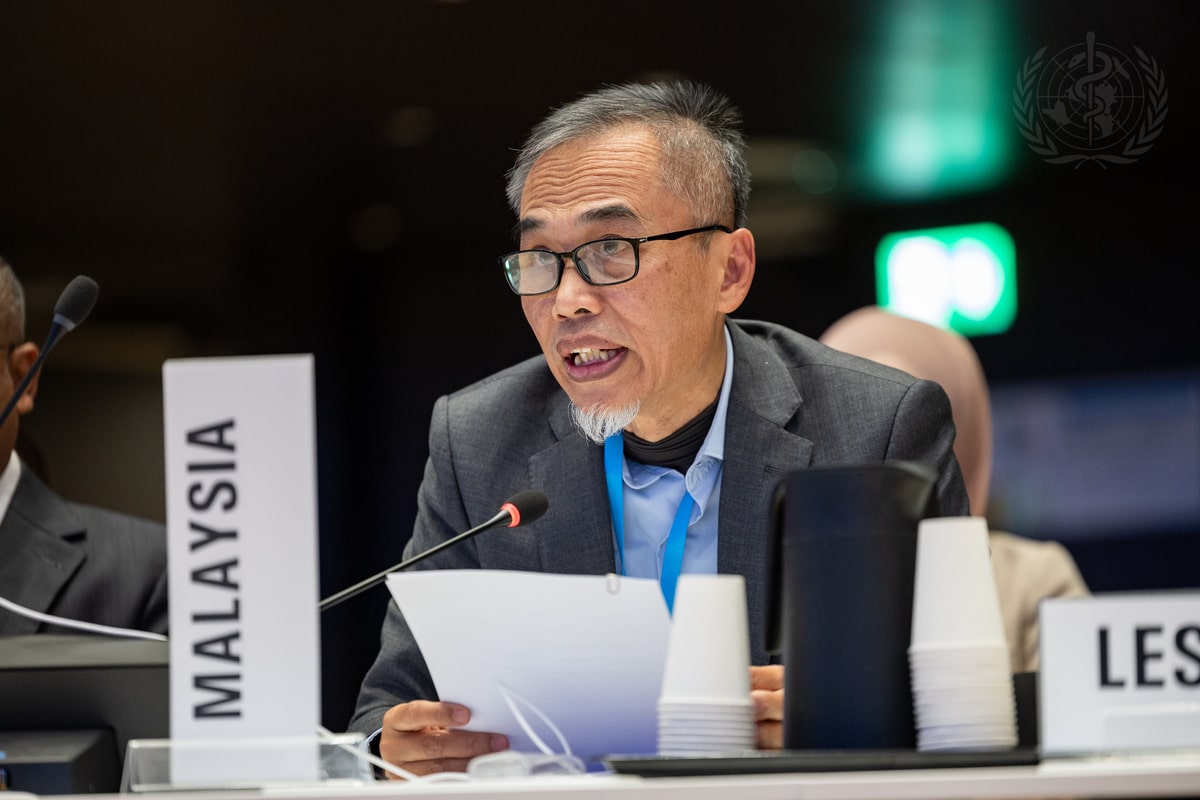
KUALA LUMPUR, April 25 — As Asean chair this year, Malaysia plans to advance collaborative research and foster the development of therapeutics and diagnostics in the Global South, said Dr Muhammad Radzi Abu Hassan.
The Health director-general cited ravidasvir as an example, a hepatitis C antiviral drug that costs less than US$500 (RM2,186) per course, far cheaper than sofosbuvir that costs between US$70,000 (RM306,075) and US$80,000 (RM349,800) for a 12-week course. Sofosbuvir by Gilead Sciences, a patented drug, cures Hepatitis C.
Ravidasvir, according to Dr Radzi, is a safe and effective alternative when combined with sofosbuvir.
Ravidasvir was brought to market in 2022 following a collaboration between the health ministries of Malaysia and Thailand, industry partners in Egypt and Malaysia, and the Drugs for Neglected Diseases initiative (DNDi), an international not-for-profit research and development organisation.
“This type of South-South cooperation could serve as a model for developing countries with endemic disease, highlighting how collective action can help them address health challenges and promote medical innovation,” Dr Radzi wrote in an op-ed for Project Syndicate, a US-based commentaries website.
“As this year’s chair of the Association of Southeast Asian Nations (Asean), Malaysia plans to advance the agenda of collaborative, need-driven research, and foster the development of therapeutics and diagnostics in the Global South.”
DNDi worked with an Egyptian drug manufacturer to develop the molecule for ravidasvir that was originally produced in the United States, “but overlooked by large pharmaceutical companies.”
Then Malaysia’s MOH, together with DNDi in Southeast Asia, designed an “aggressive access strategy” that drove down the prices of three treatment options.
“Throughout the process, Global South partners were in the driver’s seat,” Dr Radzi wrote.
“This sense of ownership prompted a flurry of activity in Malaysia, ultimately lowering the barriers between siloed government departments and dispelling conventional thinking.
“For example, our regulatory authority was the first to register the combination of ravidasvir and sofosbuvir without approval by a stringent regulatory authority. Pharmaniaga, a Malaysian generic-drugs manufacturer, supported these efforts by taking on the challenge of preparing a registration dossier for a new chemical entity.”
Last February, the Ministry of Health (MOH) released results from a clinical trial that showed a shorter regimen (eight as opposed to 12 weeks) of sofosbuvir-ravidasvir treatment was not inferior in non-cirrhotic hepatitis C patients.
“This represents a big win for those living with the disease in the Global South, as it lowers the therapeutic cost even further and improves patient compliance.”
Dr Radzi, however, highlighted challenges in hepatitis C diagnostics.
“Traditional lab-based testing is expensive and logistically challenging for mass screening programs across Southeast Asia. But instead of waiting for high-income countries to develop solutions, the Global South should take the lead in innovating point-of-care diagnostics that are inexpensive and scalable.”
He touted the Asean-Gulf Cooperation Council-China Summit scheduled next month as an avenue to explore ways to strengthen South-South collaboration, particularly regarding knowledge and technology transfers and access to medical innovation.
“The development of ravidasvir offers insights into how regional collaboration and targeted investment can lead to affordable medical innovations, adding to a growing playbook of strategies for improving access to therapeutics and diagnostics in the Global South,” said Dr Radzi.
“If these countries agree to act collectively, they can likely repeat this success for a wide range of neglected and non-communicable diseases – and take ownership of a process long dominated by the Global North.”


