

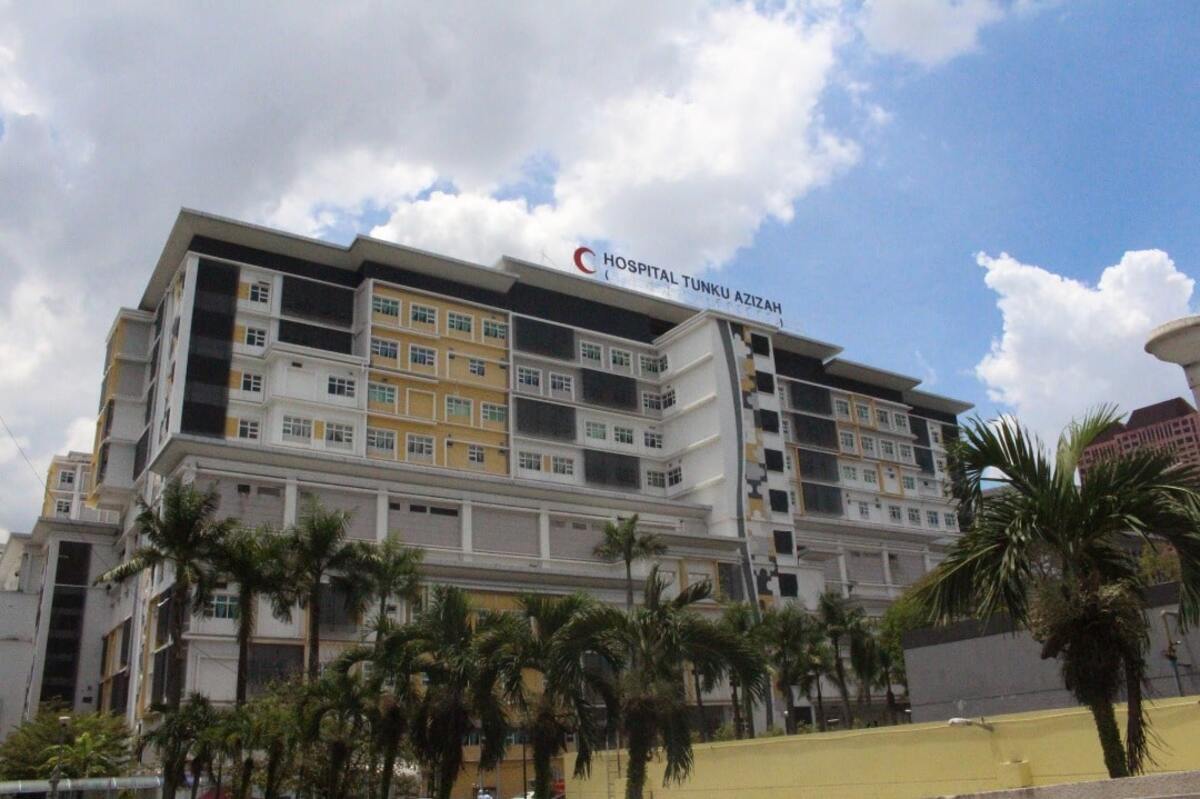
KUALA LUMPUR, April 3 — In what appears to be Malaysia’s first reported case of a civil servant defrauding her coworkers, an administrative assistant has been accused of conning at least 187 house officers out of more than RM47,000.
Ms S, a 28-year-old N1 pembantu tadbir (PT) solely in charge of housemen in the paediatric department of Tunku Azizah Hospital (HTA) in Kuala Lumpur, allegedly perpetrated the massive scam against trainee doctors in the department over the past two and a half years from as early as September 2023 to March 2026, until her victims finally exposed the scheme last Friday.
CodeBlue’s interviews with a dozen victims this week – housemen who are still at HTA, except one in Kuala Lumpur Hospital (HKL) now – revealed an audacious scam, in which the low-ranking PT (N1 is the lowest admin assistant grade in the administrative and support scheme) wielded institutional bureaucracy in the Ministry of Health (MOH) and authority over junior doctors to her advantage.
Ms S’ alleged swindle of her coworkers, who were mostly in their late 20s, involved a sophisticated two-prong strategy: collecting an RM900 “refund” by falsely claiming that the government “overpaid” emoluments and a “fee” of RM40 to RM45 for a mandatory course, the neonatal resuscitation programme (NRP), that was actually free of charge.
Payments by 187 known victims – all doctors during housemanship postings to HTA’s paediatric department – were either banked into Ms S’ personal account or physically paid to her in cash, totalling RM47,210 over the past 30 months.
The 187 people paid the PT either RM45 or RM40 each, except one who paid RM120, under the NRP scam, totalling RM8,210. Forty-two of them were additionally hoodwinked by the salary scam, with 40 housemen getting cheated of RM900 each, one of RM1,200, and another of RM1,800, totalling RM39,000.
Identified RM900/RM1,200/RM1,800 transactions under the salary scam occurred from December 5, 2025 to March 17, 2026, whereas known RM45/RM40/RM120 transactions under the NRP scam took place earlier from September 18, 2023 to March 13, 2026.
Doctors shared with CodeBlue a victim compilation list, including their names, IC numbers, amounts paid, and transaction dates, besides several transaction slips.
CodeBlue understands that the victim tally may rise because the group of doctors at HTA who uncovered the admin assistant’s alleged scam is trying to reach out to more unidentified victims: doctors who have completed their housemanship and are now working in other public hospitals.
Most of the 12 housemen interviewed by CodeBlue said they didn’t think much about making payment to the PT’s personal account at the time, citing a heavy clinical work burden and trust in “Kak S*****”, whom they relied heavily on for human resource responsibilities.
The young house officers at their first job in the civil service also fell for the scam because they were generally unfamiliar with the government’s payroll systems and employment processes.
“Junior doctors are especially vulnerable to such fraud due to hierarchy bias and information asymmetry,” one of the victims, Dr A, told CodeBlue.
“We are trained to comply with instructions from seniors and admin, where questioning authorities often feels risky and inappropriate.”
CodeBlue is withholding Ms S’ name due to an ongoing police investigation. At least 13 police reports, as sighted by CodeBlue, have been filed. When contacted, Ms S said she was “cooperating” to resolve the “financial issues”, adding that she hoped “this issue can be resolved privately and not published in an article”.
According to her victims, only two of the 42 doctors who fell for the salary scam got some money back from Ms S at RM300 and RM150 respectively, while only a handful of NRP victims were repaid.
CodeBlue understands that Ms S, purportedly a contract staff hired under the government’s MyStep programme, has since been terminated. HTA declined comment, referring CodeBlue to MOH Putrajaya. MOH Putrajaya also declined comment, citing the police probe.
Based on CodeBlue’s interviews, most, if not all, of the deceptions and financial transactions in the admin assistant’s alleged criminal bamboozlement occurred in their workplace at HTA, a tertiary referral centre providing paediatric and obstetrics and gynaecology services as a component of the larger HKL complex. HKL is the biggest government hospital in Malaysia.
Dr Shamsul Anuar Kamarudin has been HTA director since before 2023. It’s unknown when Ms S was first hired for work in the public hospital.
CodeBlue is providing anonymity to the housemen interviewed because civil servants are prohibited from speaking to the media. The 12 doctors are randomly named A to L for this story.
Forged Document Allegedly Used For RM900 Salary Scam

Ms S’ modus operandi (MO) for her alleged emolument “refund” con mostly involved setting up one-on-one meetings in her office on Level 6 of HTA with her victims, during which she falsely claimed to house officers that the government had “overpaid” their Imbuhan Tetap Khidmat Awam emolument for the first three months of housemanship by RM900.
The PT reportedly told the junior doctors that they weren’t eligible for the allowance and, as such, had to return the money.
The admin assistant even gave them a two-page Lampiran PP.1.3.4 (B) form titled “Bayaran Balik Emolumen Terlebih Bayar PPS” to sign, which included their name, identity card number, and the words – “Kategori Terlebih Bayar: Kutipan Balik Emolumen” and “Amaun Bayaran Balik: RM900 (secara tunai)”.
The fake document included a “Pengesahan Sumber Manusia” section that said: “Jumlah keseluruhan kutipan balik emolumen adalah RM900.00. Pegawai juga adalah bebas daripada sebarang prosiding jenayah atau tindakan tatatertib”, complete with blank entries for the name, position/grade, phone number, email, and signature of a human resource officer, and date.
The second page of the falsified document had a section, “Perakuan Ketua Jabatan”, with blank entries for the date and the head of department’s (HOD) name, position, and signature, along with the department chop footnoted by Lampiran PP.1.3.4(C).
The document was a forgery of the real Lampiran PP.1.3.4 (B) form titled “Permohonan Pemberian Awal Award Wang Tunai Gantian Cuti Rehat (GCR) (Sebanyak 90 Hari) Di Bawah Ceraian PP.1.3.4”.

Dr B said she met with Ms S last March 17 in the administration office on Level 6, after ending last night’s shift late at around 8.30am instead of clocking off at 7am. The admin assistant gave the houseman two options to pay the RM900 “refund”: either by cash, which Dr B would have to personally submit in an envelope to the salary unit (Unit Gaji) or via QR code to Ms S’ personal account.
Getting RM900 cash required going down to Level 2 where an ATM was located because Dr B didn’t have the money on her, but she was too tired. Ms S even offered to help bring the envelope of money to the salary unit on the houseman’s behalf. But the apologetic doctor didn’t want to trouble the admin assistant, so she decided to just bank the money to Ms S’ account.
“She showed me the QR code and said it was her personal account. I never hesitated and I never doubted because I never thought of being scammed by her since she’s the admin. Whatever she said, I fully trusted her,” Dr B told CodeBlue. “So I straight away banked it to her.”
Ms S welcomed Dr B’s immediate settling of the issue as she was going off on Raya break the next day. Dr B would turn out to be her last victim.
In another case, Dr C met with Ms S in her office last March 16, where the admin assistant presented the house officer an “official-looking” form with his name, IC number, and the supposedly overpaid RM900 amount.
Dr C was taken aback by the large figure, a “big chunk” of his RM4,900 monthly salary, and asked if he could delay payment or pay by instalments, which Ms S refused.
“She said Jabatan Gaji had the power to extend me if there was any delay in the payment,” Dr C told CodeBlue.
“It’s my last posting before my emergency department rotation. I didn’t want to be extended. I just felt like I trusted her pretty much most of the time, so I thought it would be fine.”
Hence Dr C transferred RM900 to the PT’s personal account via QR code and signed the form for Ms S. This occurred at the counter of the administration office, right in front of the specialist’s office, where “people were coming in and out” and “everyone that you would see higher up are there”.
The admin assistant’s brazenness was displayed in a third case when she attempted to get RM900 from Dr D last January, again for a refund supposedly requested by HTA’s salary unit.
When Dr D met with Ms S in the latter’s office, the PT initially asked her to pay RM900 in cash. But the doctor refused point-blank: “I said I don’t have money and I don’t want to pay.”
The admin assistant fell silent. Then she made a purported phone call in front of Dr D, supposedly to the salary unit, saying: “Can Dr [name], my houseman, not pay the RM900? You can deduct RM300 from her salary each month.”
After the presumably fake phone call, Ms S told Dr D not to worry and offered to draft a memo, complete with the HOD’s chop, that would say that the house officer needn’t pay RM900 because Dr D had no money.
The memo never came and Dr D didn’t follow up because Ms S didn’t chase her for the RM900, unlike some of Dr D’s friends whom she said were “driven to tears” and ended up paying the PT.
“She was so good at acting; it seemed real,” Dr D told CodeBlue. “So when the scam kantoi, I was crazy shocked.”
When asked why she refused to pay Ms S, when 42 of Dr D’s colleagues got duped, the junior doctor said it was “crazy nonsense to ask for RM900 cash. And it’s nonsensical to pay the government money through her; she’s just an admin.”
While she didn’t fall for the RM900 salary scam, Dr D did get hoodwinked earlier into paying Ms S the RM45 “fee” for the NRP assessment in either late October or early November 2025 via QR code to the admin assistant’ personal account.
“I was a little suspicious at first. So I asked, ‘why bank into your personal account?’ She said she would collect the money first before paying for the assessment. So I thought it was fine.”
Dr D didn’t end up doing the NRP course after completing her paediatric posting last week. But she managed to get her RM45 back from Ms S via QR code last Tuesday.
For the two housemen who were conned out of RM1,200 and RM1,800 respectively, compared to the RM900 stolen from 40 others each, the admin assistant allegedly told them that they owed the government the higher amounts.
RM45 NRP ‘Fee’ Scam Of Housemen Batches On Orientation Day
If Ms S’ MO for her alleged RM900 salary scam was individual shakedowns during personal meetings in her office, her alleged RM45 NRP hustle defrauded entire groups of house officers during orientation at the MOH hospital.
Being the sole PT in charge of trainee doctors in HTA’s paediatrics department, Ms S conducted briefings alone for housemen on the first day of their posting to the unit; the specialist’s session was separate. Her victims said no one else was present in the room during Ms S’ briefings, aside from the house officers.
All of the 12 housemen interviewed by CodeBlue fell for the RM45 scam; the doctors were told varying accounts of the payment for the compulsory NRP course: a fee, or for books or certification.
The assessment was real, albeit actually free of charge, but many house officers weren’t allocated NRP slots during their paediatric posting. Many of those who managed to attend the course didn’t receive a certificate or course materials; for those who received certification and a photocopied book, these items were genuine but were actually free.
Based on CodeBlue’s interviews, Ms S wouldn’t let the trainee doctors leave the room until everyone paid her RM45 there and then, either via QR code to her personal account or cash.
The size of the groups attending the PT’s briefings for housemen ranged from under 10 to 20 over people. This means that Ms S could get RM450 from a single orientation session if the number of attendees averaged at 10.
Dr E, who began his paediatric posting at HTA last January 19, said that during Ms S’ briefing for his group of around 20 plus housemen that day, the PT told them that they had to pay RM45 for a certificate and books for the compulsory NRP course. All of them paid her on the spot, either cash or via QR code to her personal account. Dr E paid in an online transfer because of problematic QR.
Dr E initially felt suspicious about transferring RM45 to Ms S’ personal account, since the payments he made for previous courses in other postings, like a basic life support course in the emergency department, were transferred to the hospital’s account.
When he later asked his seniors who graduated from paediatrics, they told him that they had also paid Ms S directly, albeit a cheaper RM40 “fee” for the NRP examination compared to his RM45 payment.
“So I wasn’t suspicious because all our friends also transferred,” Dr E told CodeBlue. “Some more, the one who asked for this is someone we trust – our PT.”
Dr F, who met Ms S together with another houseman last January 8 on the day they reported for duty at HTA’s paediatric department, said they paid the PT immediately via QR code to her personal account.
“Before this, our friends told us about the payment, so we proceeded,” Dr F told CodeBlue. “At that point, I thought it was just a thing in paeds rotation; something that I needed to do.”
He hasn’t been scheduled for the NRP course yet; his paediatric rotation is scheduled to end next month.
Dr G, who paid RM45 to Ms S on December 8 last year for the NRP exam, said he too was initially skeptical about making the payment to the admin assistant’s personal account.
“But it’s like a norm for us to pay. Our seniors who went through the posting all said you have to pay on the first day. No one made an issue about the RM45,” he told CodeBlue. “I didn’t suspect much because everyone was doing it.”
How Two Housemen Ended A 30-Month Scam
Dr H and Dr I – who were defrauded of RM945 and RM45 respectively – ended Ms S’ alleged criminal activity at HTA after two and a half years when both women house officers uncovered the scam last week.
Ms S wanted to meet Dr I on March 27 to talk about “salary”, but postponed the meeting because the former was on sick leave. Previously, another houseman had requested the admin assistant for a letterhead of the RM900 form, but Ms S couldn’t produce it, saying she was on MC.
Dr I’s coworkers showed Dr I a copy of the form that they had signed. The PT had claimed that the “refund” was necessary due to an audit.
“It didn’t make sense to me,” Dr I told CodeBlue. “Why would the government go through an admin to get money back from us? Why not just deduct from our salary slip for the following month’s salary? That would be easier, rather than getting it from another person.”
She also began questioning Ms S’ claim to her colleagues about the RM900 “overpayment” for three months of the RM300 monthly Imbuhan Tetap Khidmat Awam allowance because Dr I didn’t recall any change in her pay between the first three months of housemanship until now.
“If we weren’t eligible, she would have to collect every month for two years. It didn’t quite make sense.”
When Dr I asked her friends in other postings – the last three housemen batches of 2024 – she noted that only those in paediatrics were asked to pay RM900.
“It started to sound very fishy – why only in paeds?”
Dr H, who paid Ms S RM900 on February 25, similarly started to feel doubt when she noticed that she continued to receive the RM300 Imbuhan Tetap Khidmat Awam emolument that the admin assistant had claimed the junior doctors weren’t eligible for because they were on contract.
After asking her seniors, she similarly discovered that the PT’s RM900 request only occurred in the paediatric department.
So Dr H went to the hospital’s salary unit last March 26 and showed the staff a photo of the RM900 form that a coworker had signed. The salary unit couldn’t find the form and told Dr H to ask Ms S which department the document originated from. When Dr H immediately asked the PT, Ms S said the form was from the human resource department.
The next day, Dr H and Dr I went to the human resource department together. The person in charge, Ms W, told them that the department didn’t issue the form.
“I felt like we got scammed,” Dr H told CodeBlue.
Ms W later texted Dr H that she had discovered that the fake RM900 document was actually a modified version of the GCR form, as she advised the house officer to lodge a police report.
Dr H and Dr I then spoke to the specialist in charge of housemen in the paediatric department, who similarly told them to file complaints to the police.
Dr H showed CodeBlue a screenshot of her WhatsApp messages with Ms S last March 27 when the former confronted the latter on text and demanded repayment of RM945.
“I apologise. Can you give me some time? I really have problems. I promise I’ll pay back; this is the first time I did something like this,” the 28-year-old admin assistant reportedly confessed on WhatsApp. The same message was sent to another houseman, Dr L.
“I’m sorry that I can’t pay today, but I promise I’ll pay. I will settle one by one. I have serious problems. I’m really desperate. My family got into debt with loan sharks. I’m truly sorry, but I promise I’ll pay back, one by one. Give me some time,” added the accused scammer.
Ms S paid Dr H just RM150 last Friday.
Even though the PT claimed that her family was in financial trouble, Dr D pointed out that Ms S’ posts on her WhatsApp status frequently showed her eating “nice” food and even buying a new sport rim for her car during Raya holidays.
Dr H and another house officer filed complaints last Friday at the Dang Wangi police station, after which an inspector told them that the police would open a case because it involved “too many government servants”.
Ms S was subsequently sacked on Monday, according to the HOD and specialist in charge of housemen, said Dr H.
How Doctors Got Scammed: Admin Assistant ‘Handled Everything’
Many of the housemen interviewed by CodeBlue said they had put their full trust in Ms S and completely depended on the admin assistant for human resource issues like leave applications, management of their logbooks, and as a liaison between junior doctors and other departments.
So most didn’t think twice about banking in money to the PT’s personal account, especially RM45 for the fake NRP fee, although a few were skeptical about her RM900 request to “refund” the government’s supposed overpayment of emoluments.
The trainee doctors also talked about how being overloaded with clinical duties – working 12 to sometimes 14 hours a day – didn’t allow them the space of mind to question an admin assistant’s requests for payment to her personal account.
Dr J said he “didn’t really ask much” when Ms S asked him to pay the RM900 “refund” and provided him with a “very official-looking” form to sign.
“I didn’t ask about any circular. I didn’t question whether it was real or not. I was just under the impression that the admin said this and she’s someone of authority,” Dr J, who fell for both the RM900 salary and RM45 NRP scams, told CodeBlue.
“At that time, I was very busy. Half my mind was on needing to go back to the ward.”
Housemen said they relied on Ms S a lot for paperwork like leave applications, MC, performance, and documents from other departments like Unit Pengurusan Pegawai Perubatan and human resources. The PT also managed things like meetings between junior doctors and the specialist, logbook submissions, and requirements to complete postings.
“She’s like the middle person; we don’t directly contact supervisors or other departments. We really put a lot of trust in her, the same way we did with admin from other postings,” said Dr I.
Dr K called Ms S a “monopoly” in the administration who “fully handles everything”, as the specialist “doesn’t really know how it works”.
Some house officers described Ms S as being kind, friendly, and helpful to them, though perhaps “lazy” in matters like managing their overseas leave applications or scheduling NRP slots that some didn’t get.
“Admin in other postings were quite mean to us, though not to the extent of scamming us,” said Dr I. “My other specialists in other postings covered for their admin and sided with them. We had to do what the admin said. Since from previous postings, we were used to being treated like that.”
She expressed gratitude for the concern shown by their superiors in the paediatric department over the alleged scam.
Dr C said in all his rotations, admin assistants are “usually the ones siding with us, taking care of us”. Hence, when it came to Ms S, “I never had any reason to doubt her; we usually just trust our PTs.”
Exploiting The System, Doctors’ Vulnerabilities, Genuine Incidents
By all accounts, despite being a junior admin assistant, Ms S knew how to exploit the system, particularly in the national health service. “There was always a process,” said Dr C.
The accused con artist showed supreme confidence in her next level scheme, such as by holding meetings with her targets in open settings within the hospital (as opposed to literally closed-door meetings in a room) and allegedly producing convincing forged documents, including a perceived ability to get an HOD’s chop.
The “persuasive and reasonable” young woman even told her victims to pay RM900 to the salary unit, knowing that overworked housemen wouldn’t call out her bluff but choose the easier option of paying her directly instead. Urgency was frequently weaponised to get the money. “She was rushing me to pay, so I just paid,” said Dr K.
The admin assistant’s alleged tactics differed between targets. With naturally suspicious people like Dr D, Ms S refrained from pushing and even displayed faux concern, whereas she was more aggressive with other victims and made implicit threats like an extended posting to Dr C.
In another reported case, as disclosed by Dr I, Ms S allegedly told a house officer last December 29 that she had to pay RM900 because she had supposedly taken too many MCs and annual leave days. If not, the admin assistant wouldn’t be able to generate cuti rehat by the end of 2025 for the following year and the doctor, who completes her posting in January, wouldn’t be permitted to request for annual leave.
“During the end of posting, leave means a lot to us. We’re working 60 hours minimum per week. Even though it’s fewer hours in paeds compared to other postings and we’re not really on our feet all the time, 12 hours per shift is still a lot. So everyone looks forward to the end-of-posting holiday when we get three to four days of leave,” said Dr I.
“She really knows what to say to trigger us.”
Genuine incidents of the government “overpaying” doctors’ salaries have occurred, such as a medical officer who was reportedly told to pay back RM14,000 after a whopping three years of being overpaid due to admin error.
Hence, Ms S’ alleged lie about housemen being “overpaid” three months of allowance or salary amounting to RM900, or even four or six months amounting to RM1,200 to RM1,800, doesn’t seem overblown.
Most of CodeBlue’s interviewees believed that Ms S acted alone throughout the past two and a half years, saying there was no evidence she had an accomplice at HTA.
“A whole bunch of doctors could get scammed so easily by our PT,” said Dr C. “It’s quite a feat; she’s quite sophisticated.”
MOH Must Take Responsibility For Admin Assistant Hiring
Most of the 12 housemen interviewed by CodeBlue didn’t expect the government to pay them compensation for the alleged scam, even though they wanted their money back, especially those who lost RM900. Others who fell for the smaller con were generally resigned to losing RM45.
Some of the victims blamed themselves. “It’s partly our fault for not being aware of how payments work and whatnot,” said Dr J.
However, the doctors also demanded accountability from the MOH, particularly over the recruitment of admin assistants as Ms S was reportedly a contract staff under the government’s MyStep programme. Many wanted tighter screening of hiring for the position.
“I feel like the hospital director should take responsibility,” Dr K told CodeBlue. “They should be careful about workers and look into the admin job.”
She noted that there were at least two PTs in her previous postings and that the specialist in charge of housemen worked closely with the admin assistant. But in the paediatric department, there was no connection between the PT, specialist, and housemen; doctors dealt with the admin assistant personally.
Dr D expressed concern about recruiting admin assistants who are not permanent civil servants under the MOH, as this person has access to staff’s personal details like their bank account number or address.
“We can’t simply hire anyone to manage housemen.”
Dr C urged the MOH to regularly issue anti-scam reminders, similar to corporate agencies, and the creation of a salary unit hotline so that staff can contact it directly instead of going through the PT.
Dr G suggested that senior doctors increase monitoring of admin assistants, even as he acknowledged the busyness of specialists and that the reason PTs are hired is to reduce their paperwork burden.
“Admin is the one who handles all our personal documents, paperwork, and any issues that we’re dealing with,” he said. “So we trusted her, but she betrayed us in the end.”


