

KUALA LUMPUR, Jan 14 — Civil servant Juliana Razid was 34 when she was diagnosed with Stage II hormone-positive breast cancer in 2016.
She had been married for two years and told doctors in Putrajaya, before chemotherapy, that she and her husband hoped to start a family. She was advised to focus on treating the cancer first.
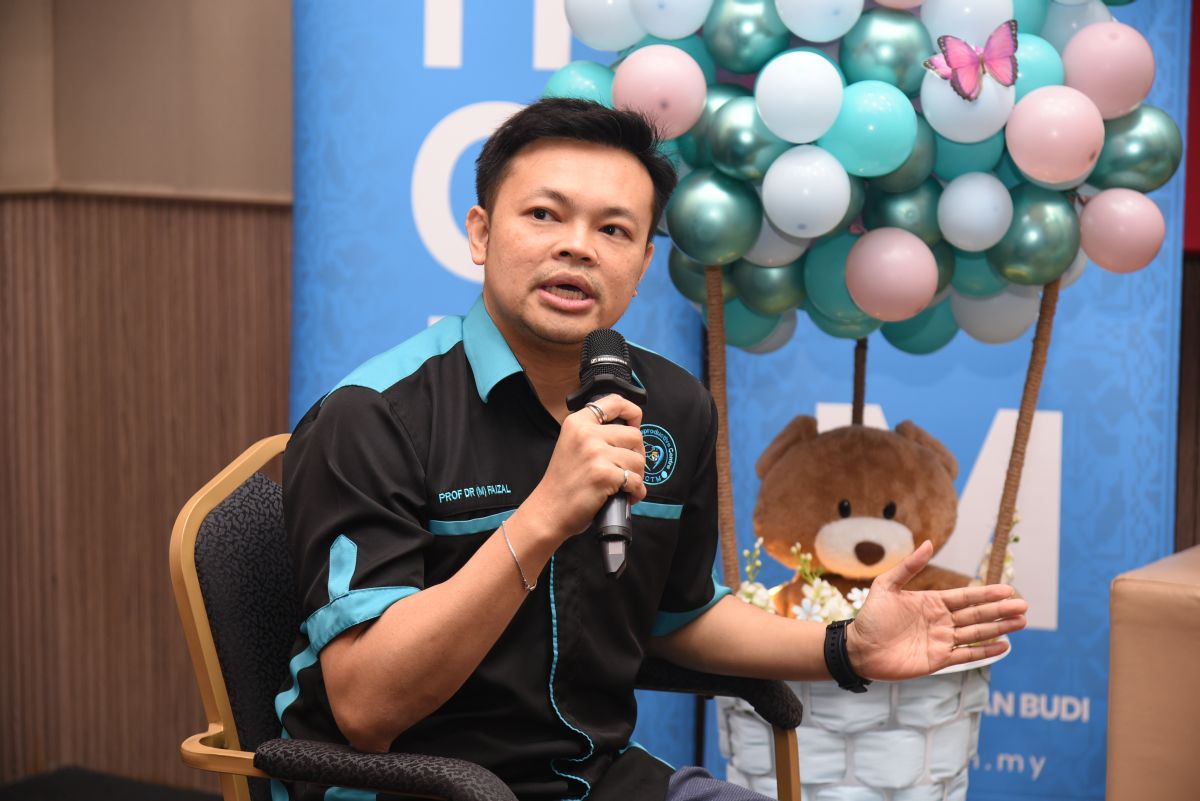
“At that moment, the priority was cancer treatment,” she recalled during a Media Day 2025 programme at Hospital Canselor Tuanku Muhriz (HCTM) UKM on December 17.
Over the next three years, Juliana underwent cancer treatment that included surgery, six rounds of chemotherapy, and subsequent hormone therapy with tamoxifen.
It was only in 2019, after scans showed no new cancer or recurrence, that Juliana began pursuing medical treatment to conceive.
She went on to spend seven years undergoing fertility treatment, which included four rounds of intrauterine insemination (IUI) at Putrajaya Hospital and seven full in vitro fertilisation (IVF) cycles amid the Covid-19 pandemic at HCTM, a university hospital.
In July 2025, she safely delivered a baby girl. Juliana is now 43.

Her story, shared alongside reproductive and oncofertility specialist Assoc Prof Dr Mohd Faizal Ahmad of HCTM’s Advanced Reproductive Centre (ARC), puts a human face on a clinical message that Malaysia’s fertility specialists have been emphasising for years.
For patients of reproductive age, fertility preservation should be discussed at the point of cancer diagnosis – before chemotherapy begins – because cancer treatment can permanently damage fertility and reduce egg quality.
Malaysia’s oncofertility services remain relatively new and are still not widely understood outside specialist circles.
HCTM’s ARC is the country’s first dedicated oncofertility referral centre, launched in August 2020. It is positioned as a place where cancer patients can be referred quickly for fertility preservation before treatment starts.
In Malaysia, fertility preservation for cancer patients had long been handled “on an ad hoc basis” without a dedicated referral centre, Dr Faizal said.
As a result, many patients are still advised to prioritise cancer treatment first and only consider pregnancy later, when fertility may already be compromised.
Juliana’s case followed that pattern.
Dr Faizal said Juliana’s experience illustrates why oncofertility counselling needs to be upstreamed to the point of diagnosis, not left until after cancer treatment.
“If she had come to us immediately after the cancer diagnosis, before chemotherapy, her IVF treatment would likely not have been this extensive,” Dr Faizal said. “When patients are diagnosed with cancer and come to us right away, we can freeze embryos while the egg quality is still good.”

Malaysia’s oncofertility push has tried to formalise that pathway, including rapid referral to reproductive specialists so eggs, embryos, or reproductive tissue can be preserved before chemotherapy or radiotherapy begins.
At the launch of HCTM’s ARC as an oncofertility referral centre in August 2020, the centre was described as offering preservation for long periods, with reproductive tissue preserved for “between 10 to 20 years”, reflecting the length of time many cancer survivors need before they are ready to try for pregnancy.
Still, Dr Faizal said, old habits persist in clinical counselling.
“Usually breast or endocrine doctors will say, ‘Don’t think about getting pregnant yet. Think about your cancer first,’” he said. “But actually, they need to come to us first, before chemotherapy. That is our challenge as fertility specialists.”
The oncofertility specialist also described the emotional weight for clinicians when repeated cycles fail, even when both doctor and patient know there is no guarantee.
“In Juliana’s fifth cycle, I retrieved fluid from the follicles but there were no eggs,” he said. “I told her, maybe this is not meant to be. Maybe it’s time to consider adoption.”
But he said the couple refused to stop. “As long as there is strength, we try,” they told him, he said. “We will come back stronger.”
In the final cycle, Dr Faizal said his team wanted to abandon the attempt when follicle growth remained slow past Day 15, but he chose to continue monitoring up to Day 32.
“We monitored until Day 32,” he said. “There was only one egg.”
Dr Faizal said he instructed his colleague to keep flushing during retrieval.
“I told her, you must get that egg,” he said. “Just one.”
“That egg became the baby.”
Beyond fertility, Juliana’s pregnancy also carried medical concerns related to her age and her history of cancer, including the risk of cancer recurrence during pregnancy and the possibility of chromosomal abnormalities in the baby.
Dr Faizal said Juliana declined non-invasive prenatal testing (NIPT), saying she preferred to accept whatever outcome might come. “She told us, ‘Doctor, we accept whatever happens,’” he said. “‘If my child has a problem, I accept it. I don’t want to kill the joy.’”
He then recalled his own fear at delivery.
“When I cut her abdomen to deliver the baby, the first thing I thought was, ‘Oh God, please don’t let anything be wrong with this child,’” Dr Faizal said. “When I saw her face was perfect, I was happy.”
Dr Faizal said he hopes more coverage can help shift public and clinical awareness so fertility preservation becomes a standard part of the initial cancer conversation, not an afterthought.
“Breast cancer, lung cancer, they always do treatment first before coming to reproductive centers,” he said. “They need to come to us first.”
HCTM’s ARC offers fertility services without requiring a referral letter and allows patients to undergo fertility procedures without long waiting periods.
ARC provides services including IUI, IVF, and intracytoplasmic sperm injection (ICSI), as well as fertility preservation options such as sperm freezing and ovarian tissue or oocyte preservation.
The centre lists estimated procedure costs of RM550 for IUI and RM7,500 for IVF or ICSI, excluding medications and other related charges.
Other listed services include semen analysis, sperm DNA fragmentation testing, hysteroscopy, and percutaneous epididymal sperm aspiration (PESA). ARC operates on weekdays at HCTM in Cheras, Kuala Lumpur.


