

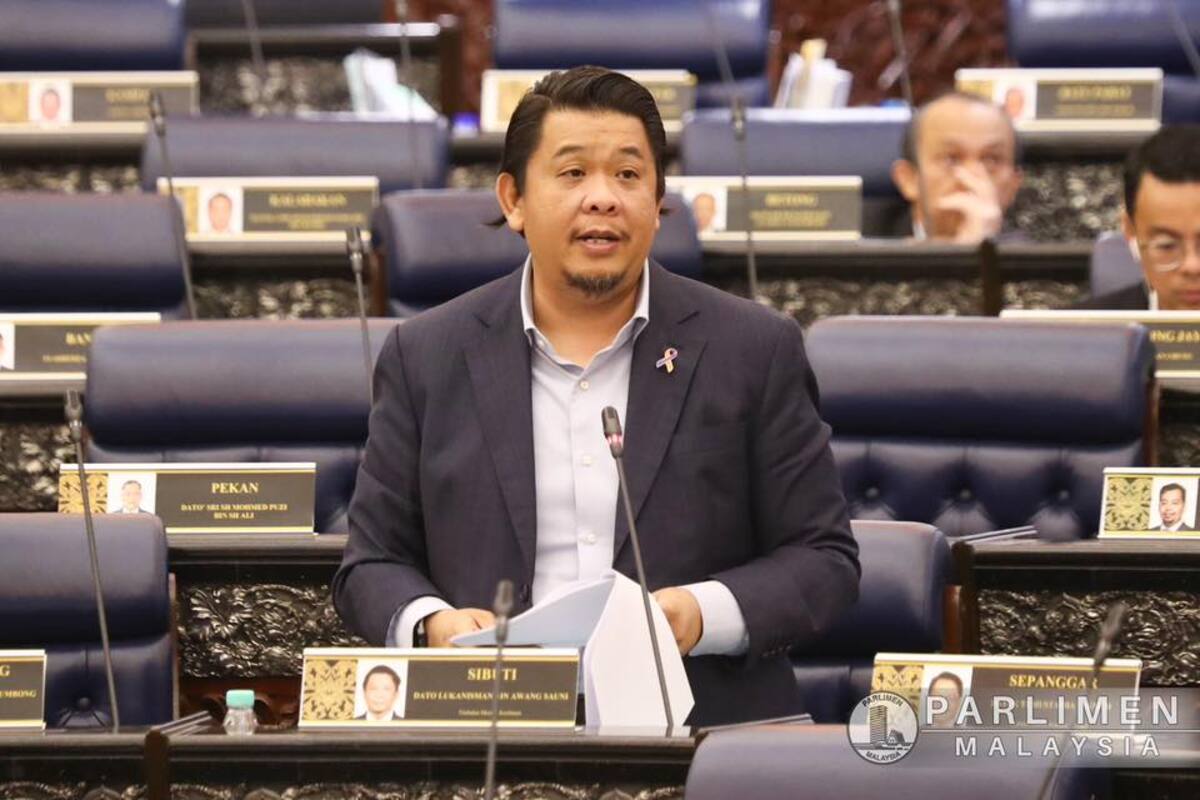
KUALA LUMPUR, Dec 8 — The Ministry of Health (MOH) is studying amendments to the Private Healthcare Facilities and Services Act 1998 (Act 586) to expand the scope of charges that can be regulated in private hospitals.
Deputy Health Minister Lukanisman Awang Sauni told the Dewan Negara today that the government is reviewing ways to widen Act 586 beyond doctors’ consultation and procedure fees, which are currently the only charges legally regulated by the government.
“We are indeed studying suitable amendments to Act 586 to expand regulation beyond consultation fees,” Lukanisman said. “We want to expand beyond consultation fees so that there are several more charges that can be regulated under Act 586, so that we can control medical inflation.”
He was responding to Senator Dr Lingeshwaran R Arunasalam, who cited Bank Negara Malaysia (BNM) findings that hospital supplies and service costs make up 59 to 70 per cent of private hospital bills and are the main driver of rising insurance premiums.
Lukanisman said the ministry recognises the limitations of the current law, as it does not give MOH authority over most hospital charges.
“At present, the fee schedule under Act 586 only covers consultation fees and medical procedure fees. Other charges like the price of medicines, medical equipment and ward admission are not regulated under the Act,” he said.
MOH Lacks Authority To Regulate Most Private Hospital Charges
The deputy minister acknowledged that private hospitals continue to impose a wide range of charges – including medicines, consumables, devices, equipment, laboratory items and ward fees – that fall entirely outside government oversight.
“The ministry cannot control charges that fall outside the fee schedule,” Lukanisman said. He added that although MOH monitors compliance with the regulated fees through the Private Medical Practice Control Section (CKAPS), which oversees licensing, complaints and enforcement under Act 586, enforcement powers apply only to consultation and procedure fees.
He said MOH conducts periodic audits and enforcement inspections under Act 586 and can issue warning letters, impose compounds for violating subsection 106(4), prosecute offenders, or issue show-cause notices for licence suspension or cancellation.
The deputy minister reported that CKAPS received 817 complaints on private health care charges in 2024 and took enforcement action in 188 cases.
These included 70 complaints involving consultation fees, 48 involving procedure fees, and 25 involving medication charges, along with other issues. “This represents our framework to enforce fees and protect consumers,” he said.
However, Lukanisman acknowledged that the broader issue of medical cost inflation remains unresolved.
“Issues of excessive charges by private hospitals remain under review. We continue to discuss more comprehensive methods to establish a broader policy to help and protect Malaysians,” he said.
No Clear Guideline For Emergency Cases Pending GL Approval
Senators also pressed the government on incidents where private hospitals allegedly withheld treatment until insurance companies issued guarantee letters (GL).
Senator Salehuddin Saidin cited a Shah Alam case in which a patient purportedly waited five hours for approval before receiving care.
Lukanisman confirmed that such complaints have reached the ministry, but admitted that MOH has no explicit rule requiring private hospitals to initiate treatment before insurance approval. “There is no clear guideline,” he said.
He added that MOH can review complaints and remind hospitals not to prioritise payment verification in emergencies.
“We will issue reminders to private hospitals not to prioritise payment or approval first before treatment,” Lukanisman said. He urged private hospitals to show “a little empathy” when patients face urgent or life-threatening situations.
The deputy minister contrasted private hospitals with the public sector, noting that government hospitals provide care “regardless of background, economy or social status”.
He also said the joint ministerial committee on private health care costs is studying itemised billing and the potential adoption of diagnosis-related groups (DRG) payment models to improve transparency and help patients understand expected costs before committing to treatment.
Private hospitals currently practise itemised billing. Transitioning from a fee-for-service model to a DRG system means the end of itemised billing for various hospital charges because patients or payers will be charged a bundled payment for an episode of care.
Patients Can Lodge Overcharging Complaints With CKAPS
In response to Senator Vell Paari Samy Vellu’s question on what protections patients have when they believe they have been overcharged, Lukanisman said complaints should be submitted through CKAPS via the online portal, telephone, official letters or walk-ins.
“If there are complaints about excessive consultation charges, the information can be submitted through the channels mentioned,” he said.
He noted that Act 586 allows MOH to issue warnings, compounds or prosecute facilities that violate the regulated fee schedule. “Facilities that fail to comply can face fines of up to RM5,000 for individuals and RM15,000 for corporations,” he said.
However, he stressed that patients must take the initiative to report suspected overcharging, as MOH does not automatically review private hospital bills unless a complaint is filed. The system therefore places responsibility on patients, many of whom may be ill, distressed, or unfamiliar with medical billing processes.
He said discussions are underway to identify better regulatory approaches to protect patients, but for now, the complaint mechanism remains the primary avenue for redress.


