

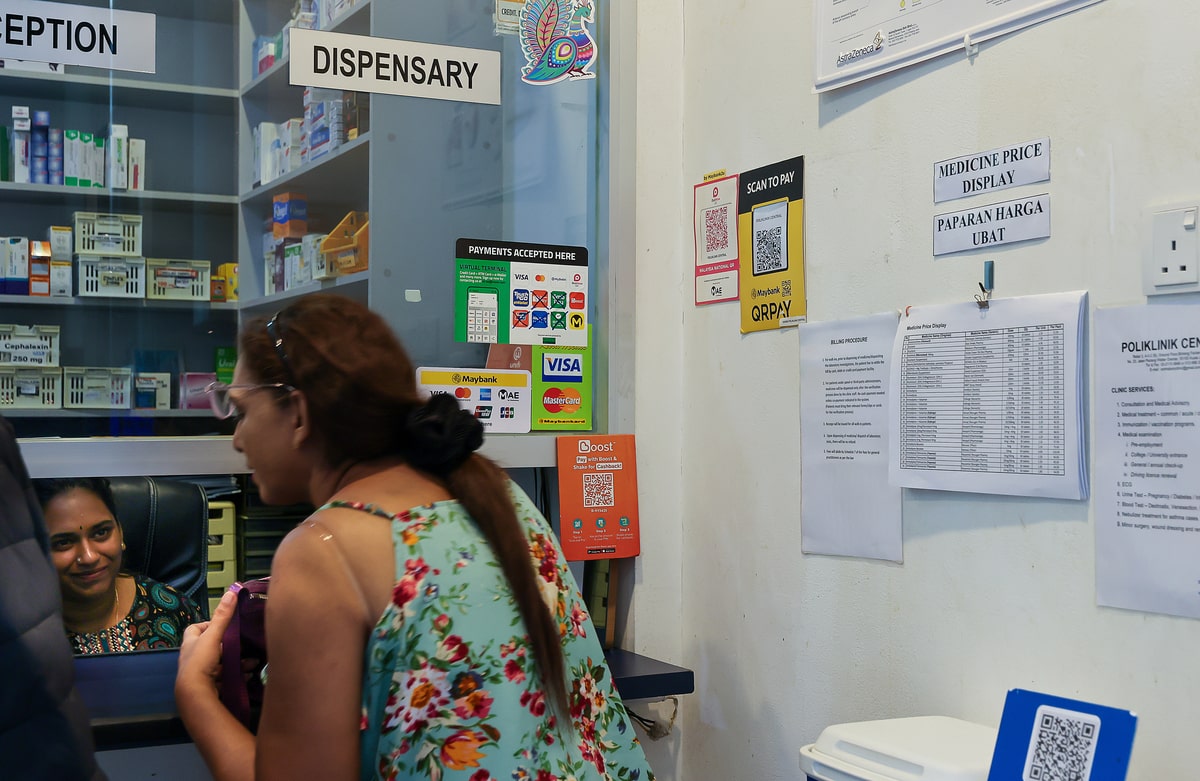
KUALA LUMPUR, August 11 — Several health-related reforms by the Domestic Trade and Cost of Living Ministry (KPDN) have been hailed for boosting consumer rights in the health care sector.
The Malaysian Consumer and Family Economics Association (Macfea) said the combined policies of drug price display, mandatory prescriptions, and itemised billing would enable consumers to choose treatments or purchase medications based on their level of affordability.
“Price transparency has long been practised in developed countries; Malaysia needs to move in that direction to ensure a fairer and more inclusive health care system,” Macfea president Prof Ahmad Hariza Hashim said in a statement last Friday.
Macfea’s statement portrayed drug price display, mandatory prescriptions, and itemised billing as all coming under the Price Control and Anti-Profiteering (Price Marking for Drug) Order 2025, gazetted under the Price Control and Anti-Profiteering Act 2011 (Act 723).
Domestic Trade and Cost of Living Deputy Minister Fuziah Salleh told the Dewan Rakyat Wednesday that the National Action Council on Cost of Living (Naccol) has “mandated” doctors’ prescriptions and itemised billing in private medical clinics, besides mandatory drug price display.
Health Minister Dzulkefly Ahmad has yet to clarify if the source of legal authority for mandatory prescriptions and itemised billing does indeed come from Act 723, or if amendments to legislations like the Poisons Act 1952 or the Private Healthcare Facilities and Services Act 1998 are needed.
Macfea exco member Prof Nuradli Ridzwan Shah Mohd Dali said with price transparency, people will be empowered to better plan their health care budgeting, avoid medical debt, and ensure that medical treatment remains affordable for all layers of society.
“This step should be commended as a form of progressive health reform, and it is hoped that it can be implemented with close monitoring to ensure that the goal of enhancing consumers’ bargaining power is truly achieved,” he said in the same statement as Ahmad Hariza.
Malaysian Medical Association (MMA) president-elect Dr R. Arasu posted on X yesterday that efforts for mandatory prescriptions and dispensing separation first began in 2014, with the Ministry of Health (MOH) seeking to combine four pharmacy laws into one pharmacy bill.
But the Barisan Nasional (BN) government agreed in 2016 to postpone the issue after stakeholder objections. In 2019, the Pakatan Harapan (PH) administration, when Dzulkefly was health minister, also agreed to drop the mandatory prescriptions issue after an initial proposed amendment to the Poisons Act.
In both 2016 and 2019, the BN and PH governments had reportedly agreed with the medical profession that mandatory prescriptions could only be implemented under a single-payer health care system, like the UK’s NHS.
“In a Naccol meeting [last June], mandatory prescriptions appeared again. After the meeting, MMA immediately sent an objection letter as this contradicted promises in 2016 and 2019. This step weakens and will cause the collapse of the affordable and accessible GP (general practitioner) system.”


