

KUALA LUMPUR, Dec 4 — Government and Opposition MPs are echoing calls for an independent parliamentary inquiry into escalating health insurance premiums and private hospital charges.
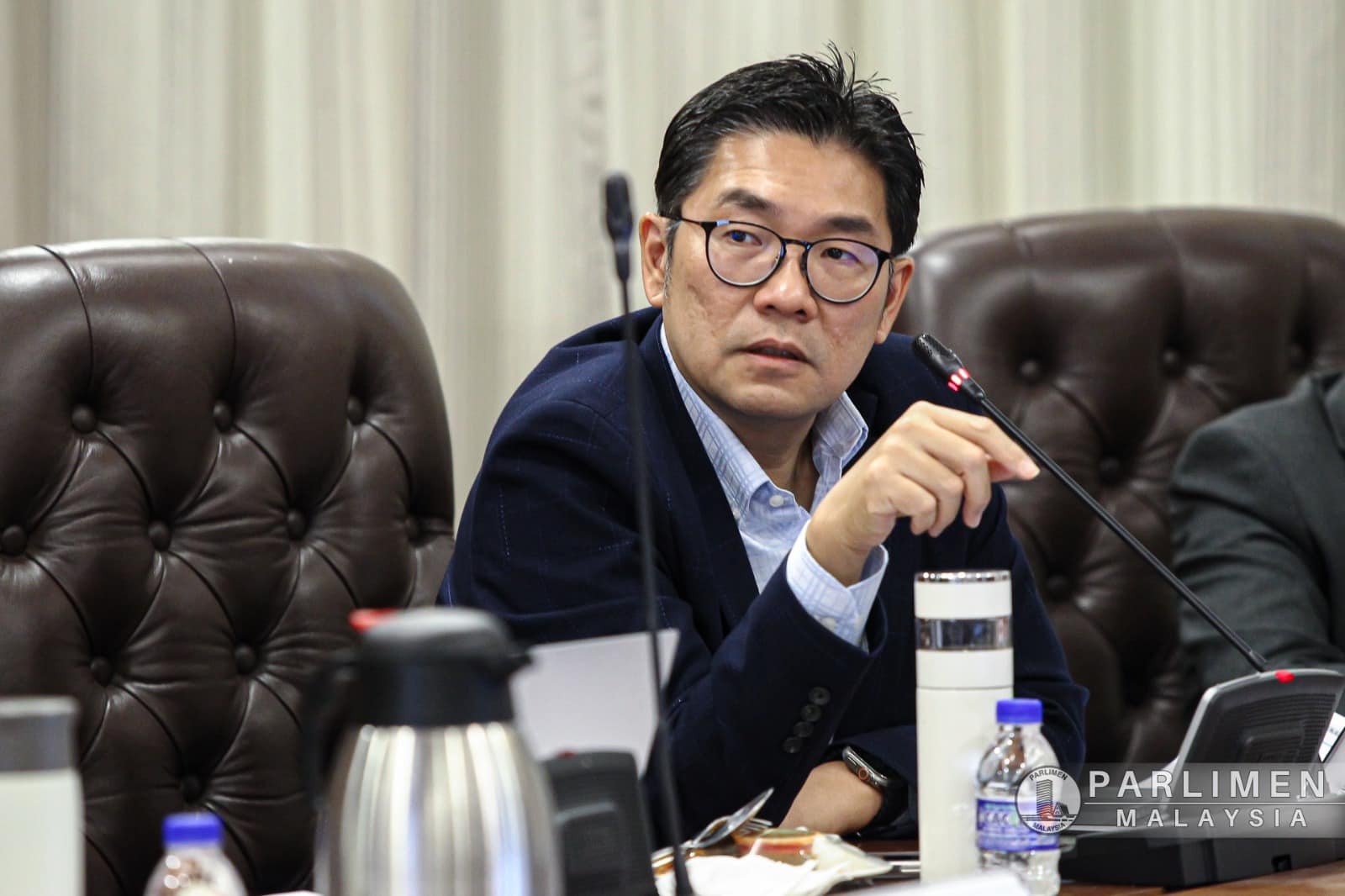
Sim Tze Tzin (PH-Bayan Baru) said an independent inquiry would allow a parliamentary committee to engage all stakeholders – including insurers, hospitals, and pharmaceutical companies – to identify and address issues across the ecosystem.
“We don’t want to listen to just one side,” Sim told CodeBlue when contacted. “The objective is to find a private health care system that is sustainable and fair to everyone. If we have a sustainable private health care ecosystem, government hospitals will not be overburdened.”
The Galen Centre for Health and Social Policy last week proposed the setting up of a parliamentary inquiry to look into the ongoing and immediate issues of health insurance premiums and hospital charges, as well as an independent statutory commission to regulate charges in the private health care sector.
Sim said the inquiry’s findings should guide whether legislative changes or a new regulatory body are needed. He argued that the Ministry of Health (MOH) and Bank Negara Malaysia (BNM), which oversees private health care and the insurance industry respectively, could be empowered through amendments to existing laws.
“We shouldn’t jump the gun. I think we need to look at the ecosystem first. The MOH should have a say in regulating private health care because that falls under their jurisdiction. Insurance should remain under Bank Negara because it is a financial institution.
“To have a third separate body, I think you’ll end up with fragmentation…You’re taking power from MOH and BNM, which I don’t think is a good idea. But we can strengthen the legislative framework and give them more power through legislation. We always think that being independent is good, but sometimes you take away power from MOH and Bank Negara, and then you create another coordinating committee — for what?
“That’s why I said the first step is to have an inquiry to understand the ecosystem and identify the gaps. Let’s say the MOH finds that they don’t have enough power, then we give them that power.
“If Bank Negara lacks power — because right now, insurance is under the Financial Services Act 2013, which may be too broad as it regulates banks and investment banks — then we could separate it. We could create a separate, independent Insurance Bill to strengthen BNM’s ability to regulate the industry. I think that should be the way forward,” Sim said.
The PKR MP suggested that the Public Accounts Committee (PAC) lead the inquiry, citing its track record of handling complex issues involving HRD Corp and Felcra Bhd. “I have suggested to PAC to start this proceeding, but we have yet to make a decision,” said Sim, who is a committee member of the PAC.
Currently, in terms of private health care charges, the MOH is empowered to regulate only doctors’ fees under the Private Healthcare Facilities & Services Act 1998 (PHFSA). The PHFSA was enacted primarily to regulate standards, not charges.
The insurance industry, including insurers that provide medical or health insurance, is regulated by BNM.
Lawmakers have also debated whether the proceedings should be livestreamed, given the current public interest in the issue and its widespread impact.
Sim highlighted the time-intensive nature of the process and the importance of producing thorough reports. He said proceedings can be held for months, with each session running three to six hours.
“The fight for sustainable private health care is a long battle,” he said. “It’s not going to be resolved overnight. Health care costs are part of a global issue, and we need to be realistic that this will take time.”
Suhaizan Kaiat (PH-Pulai) told CodeBlue that the Backbenchers Club (BBC) will invite insurance companies to present their concerns soon, without specifying an exact date.
Suhaizan, who is chairman of the Health parliamentary special select committee (PSSC), said the Health PSSC’s proposal is to have a National Health Fund that would consolidate all health care resources under the Ministry of Finance (MOF), with all operational and development expenditures drawn from this fund.
“The government must act to control rising costs to prevent burdening the rakyat,” he said. When asked if the Health PSSC will conduct the inquiry into rising health insurance premiums or if he believes PAC should take the lead, Suhaizan said, “We will wait for the briefing with the BBC first.”
Dr Ahmad Yunus Hairi (PN-Kuala Langat) said that a special parliamentary inquiry is needed, highlighting widespread dissatisfaction among Malaysians over rising health insurance premiums and private hospital fees.
“Public dissatisfaction is real. It would be good for the government to establish an independent commission, not only to address this issue but also to cover various aspects of health care services.
“The Private Healthcare Facilities and Services Act 1998 needs to be amended for this purpose, or a new law should be introduced to regulate charges in private hospitals. There is merit in separating regulation of private hospital charges from BNM to allow for more realistic and specialised oversight,” said Dr Ahmad Yunus, who heads Perikatan Nasional’s health portfolio.
The Opposition MP supported livestreaming inquiry proceedings, saying public hearings are already possible in the Selangor state legislative assembly. “Parliament should also be able to conduct livestreamed proceedings. I fully support this.”
Young Syefura Othman (PH-Bentong) agreed with a parliamentary inquiry into the increase in health insurance premiums, suggesting that the Health PSSC take charge of this.
“Engagement sessions can be held to demand explanations from insurers, private hospitals, and Bank Negara,” she told CodeBlue.
The DAP lawmaker called for a focus on legislative amendments to strengthen enforcement and regulate costs more effectively, opposing the creation of an independent commission due to potential additional costs.
“I think we should focus on revising the existing laws to make them more comprehensive, to amend enforcement measures, or to tighten control over charges. We don’t need to establish a commission because it would incur additional costs,” Young Syefura said.
On the issue of livestreamed proceedings, Young Syefura noted that MPs had previously requested livestreaming of parliamentary proceedings, but no progress had been made. She added that, in the interim, she would advocate for the faster publication of parliamentary committee transcripts and reports to enhance public access and transparency.
The Life Insurance Association of Malaysia (LIAM) recently confirmed that there will be no changes to planned medical insurance premium hikes for next year.
LIAM CEO Mark O’Dell told Business Times that insurers, however, plan to implement gradual repricing adjustments in the future. He explained that the 2025 medical insurance premium increase of 40 per cent to 70 per cent reflected a “catch-up from pre-Covid times”, as insurers delayed premium revisions during the pandemic.
In response, Lim Guan Eng (PH-Bagan) urged life insurance companies to reconsider the “excessive” 40 to 70 per cent increase, warning that such steep hikes could provoke a backlash from Malaysians. He told BNM to “prohibit” insurers from proceeding with the increase.
Many people have complained about triple-digit percentage jumps of their health insurance premiums. Sim previously cited the case of a cancer patient, who was forced to drop his medical insurance policy last August due to a whopping 262 per cent premium hike.


