

Perak deserves better. Our patients deserve better. And our frontline health care workers deserve better.
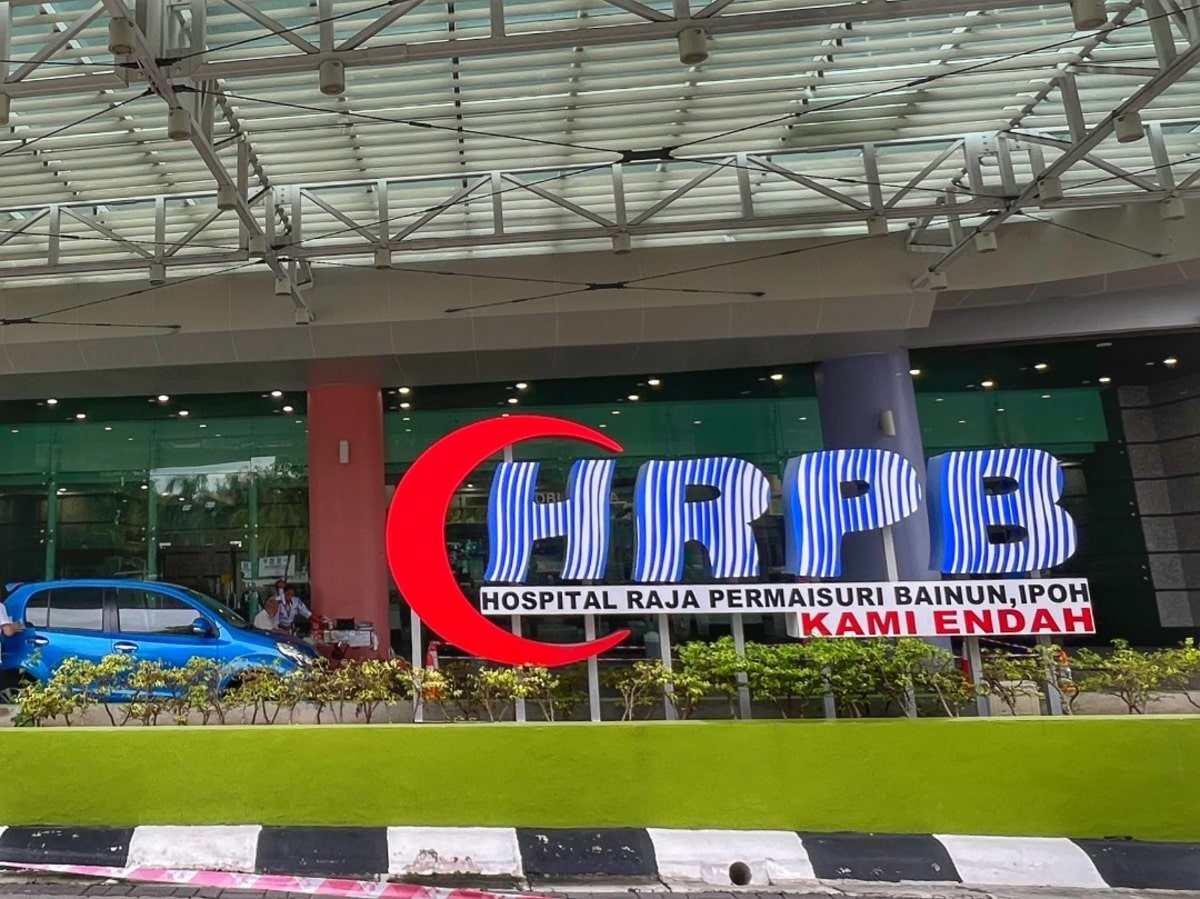
Hospital Raja Permaisuri Bainun (HRPB), Ipoh, is the main state hospital in Perak, managing a tremendous orthopaedic trauma burden.
Our team faces approximately 40 trauma cases and 70 emergency cases every week. Behind every number is a human being.
A road traffic accident victim waiting for fracture fixation. A worker hoping to return to earn a living. A parent praying that their injured child will recover. A family waiting anxiously for news that surgery can finally proceed.
Yet since late July, our orthopaedic team has been struggling with a fundamental problem: our own C-arm imaging machine has been out of service.
For those unfamiliar with orthopaedic surgery, a C-arm is an essential piece of imaging equipment that allows surgeons to see bones and implants in real time during many fracture fixation procedures. It is not a luxury. For numerous trauma operations, it is an essential tool.
When this equipment became unavailable, cases had to be diverted to other hospitals, including Taiping, Slim River, and Sri Manjung. Think about what that means.
Patients who should be receiving care within their own referral system may have to face additional transfers and delays. Families endure more uncertainty. Health care teams must reorganise their services around a missing piece of essential equipment.
Then, in September, a temporary lifeline arrived.
Through the assistance of a private company, a loan C-arm became available. Another machine was temporarily made available from the General Operating Theatre while it undergoes renovation, with the arrangement expected to end on October 27.
We are grateful for every person and organisation that has helped us keep the service running. But gratitude cannot replace a sustainable solution.
Once the temporary arrangement ends, we are facing the prospect of relying on a single loan C-arm, with no functioning hospital-owned C-arm available for our orthopaedic trauma service.
A major state referral hospital serving Perak should not have to depend on borrowed equipment indefinitely to deliver essential trauma care.
And the problem does not end there. Our orthopaedic services are also constrained by shortages in anaesthesia manpower, contributing to prolonged waiting times for patients who require surgery.
Recently, a C-arm obtained through a central purchasing process was recalled because its electrical plug was incompatible with the Malaysian electrical system. Let that sink in.
A machine was procured to address a critical clinical need, yet it could not be deployed as intended because of a basic compatibility issue.
We are not writing this to ridicule anyone. Procurement, equipment maintenance, and hospital operations can be complicated. But when an essential piece of equipment is urgently needed, basic technical compatibility and commissioning requirements must be addressed before it reaches the clinical service that depends on it.
How many more obstacles must frontline teams overcome before patients receive the resources they need?
We have raised this issue through multiple channels, including the Ministry of Health (MOH), the Perak State Health Department (JKN Perak), and hospital leadership. Despite repeated attempts to obtain a solution, the problem remains unresolved.
Meanwhile, the work continues. Our orthopaedic team still receives trauma patients. Fractures still need fixation. Emergencies still arrive. Families still ask when their loved ones will undergo surgery.
And every day, our frontline staff have to stand before patients and their families to explain delays and limitations that they did not create and cannot independently resolve.
Imagine being the doctor who has to explain why a patient cannot undergo the intended operation as planned, not because the clinical team is unwilling to help, but because essential equipment or operating theatre capacity is unavailable.
Imagine being the patient who has no idea when treatment will proceed. Imagine being a family member trying to understand why a major state hospital cannot provide a service you assumed would be available.
This is not merely an equipment problem. It is a question of patient access, service capacity, resource planning, and the sustainability of our public health care system.
We cannot continue to expect frontline health care workers to compensate for every system shortcoming through goodwill, improvisation, and personal sacrifice.
We cannot keep asking clinical teams to explain the same limitations to patients while leaving them without the tools and capacity needed to resolve those limitations.
And we must not forget that prolonged delays can have clinical consequences. The risks depend on the injury and the individual patient, but timely assessment and appropriate treatment are essential to reducing avoidable complications and supporting recovery.
So, what are we asking for?
- An urgent, reliable C-arm solution for orthopaedic trauma services at HRPB, with sufficient capacity to meet clinical demand.
- A clear and accountable timeline for permanent equipment replacement, repair or procurement, with appropriate technical compatibility checks before deployment.
- A sustainable operating theatre and anaesthesia manpower plan that reflects the emergency and trauma workload of the hospital.
- Transparent communication and follow-through from the relevant authorities, so frontline teams can plan services and give patients realistic information.
- A patient-centred review of the consequences of these constraints, including delays, transfers, and the potential impact on treatment outcomes.
This is not a demand for luxury equipment or preferential treatment. It is a call for the basic infrastructure and staffing required to provide safe, timely, and appropriate care.
We recognise that public health care resources are finite. We recognise that administrators must balance competing needs across many hospitals. But these realities make transparent prioritisation and effective planning even more important, not less.
HRPB serves the people of Perak. Its trauma burden is not theoretical. It is measured in patients arriving at emergency departments, injuries requiring urgent attention, operations waiting to be performed and families hoping for recovery.
If a major state referral hospital is struggling to sustain essential orthopaedic trauma services because of equipment and manpower limitations, this deserves urgent attention.
To the authorities responsible for health care delivery in Perak and Malaysia: please hear the people working on the frontline. Please look beyond the reports and procurement records. Look at the actual capacity available to treat patients today.
To the public: this is not about blaming individual health care workers. They are the people trying to keep the service running despite these limitations. It is about asking for a health care system that gives both patients and staff a fair chance.
We remain committed to caring for our patients with the resources available to us.
But commitment alone cannot replace essential medical equipment. Goodwill alone cannot create operating theatre capacity. And frontline dedication alone cannot indefinitely compensate for unresolved systemic shortcomings.
Perak’s patients deserve timely, appropriate trauma care. Our health care workers deserve the resources to provide it.
How long must we continue to improvise before a sustainable solution is delivered?
The author is a specialist doctor in the Ministry of Health in Perak.
- This is the personal opinion of the writer or publication and does not necessarily represent the views of CodeBlue.


