

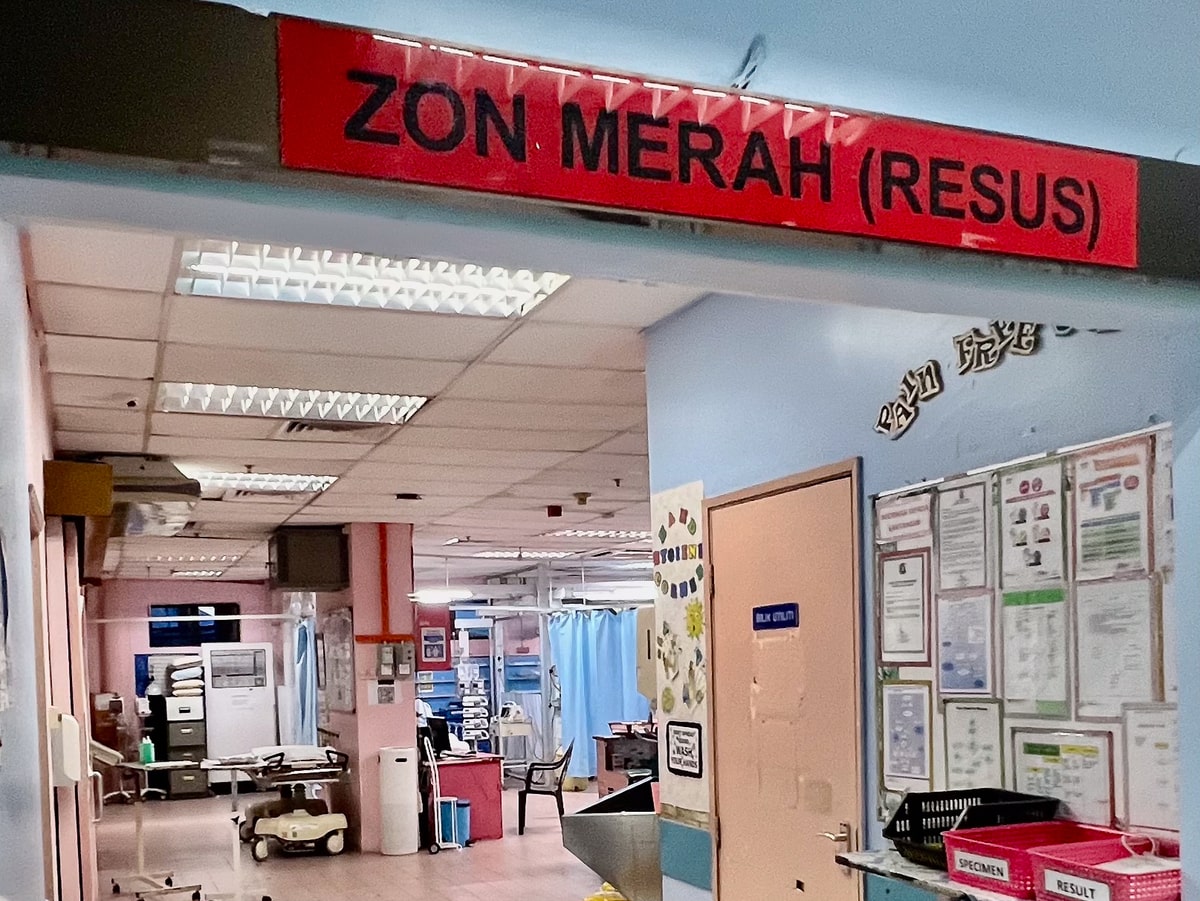
Overcrowding in the Emergency and Trauma Department (ETD) and the shortage of ward beds in government hospitals are interconnected issues stemming from the “double burden of disease”.
This refers to the rise in patients with non-communicable diseases (NCD) , such as diabetes, hypertension, heart disease, and obesity presenting with complications overlapping with waves of infectious diseases (such as dengue, influenza, Covid-19, or respiratory infections) occurring currently.
We see various initiatives implemented by the Ministry of Health (MOH) to address this overcrowding issue through diverse approaches.
Prevention Of Non-Communicable Diseases (NCDs)
MOH is implementing a multi-tiered strategy to tackle the root causes of the problem.
Agenda Nasional Malaysia Sihat (ANMS) Initiative: Empowering free early screening through programs such as Skim Perubatan MADANI and Peka B40 to detect diabetes and hypertension before they develop into severe complications. However, the majority of the public may still not be utilising these free health screenings.
Taxation and Enforcement Actions: Expanding the excise duty on sugary drinks (sugary drinks tax) and tobacco/vape products to curb unhealthy habits.
Health Clinic (Primary Care) Approach: Extending health clinic operating hours (extended hours) and strengthening NCD management at the community level so chronic patients do not need to visit Emergency Departments for routine follow-ups. But does the majority of the public know about these extended operating hours at these premises?
Prevention And Enforcement Of Infectious Diseases
Enforcement of Act 342: Monitoring and issuing compounds to premises breeding Aedes mosquitoes as well as controlling other infectious diseases.
Digital Surveillance System: Utilising data surveillance platforms to monitor outbreak patterns in real time for early intervention before hospitals become overwhelmed. The expectation is that this method is truly applied so certain diseases can be controlled before an outbreak begins.
Recent data showing an increase in dengue infections, however, might suggest otherwise. Is it truly functioning effectively?
Immunisation and Vaccination Programmes: Expanding vaccination coverage such as influenza vaccines for high-risk groups and the National Immunisation Programme (NIP).
Hospital Overcrowding And Ward Bed Management Measures
To address the overcrowding issue, MOH is implementing several operational strategies:
Emergency Zone Separation and Lean Health Care: Directing non-emergency patients (green zone) to nearby health clinics to focus Emergency Department resources on critical cases (red/yellow zones).
However, this action cannot be fully enforced as MOH has not set a mandatory policy requiring patients to go to more appropriate premises.
Short-Stay Wards: Establishing temporary observation wards for patients requiring treatment for under 48 hours without needing admission to main wards.
Outsourcing and Private Sector Collaboration: Transferring selected patients or procedures to private hospitals and other external sources to reduce the burden on government hospital beds.
Centralised Bed Management Unit (BMU): Streamlining early morning patient discharge processes to accelerate bed turnover rates.
Is It Necessary To Seek Recommendations From Foreign Experts?
Malaysia possesses a highly competent cadre of local public health experts and medical practitioners who thoroughly understand local demographics and culture.
Nevertheless, the stance on foreign experts can be viewed in a balanced manner.
Why Local Expertise is Sufficient from a Theoretical and Strategic Standpoint: Local experts are fully aware of the root causes of the problem (staffing and human resource issues, bed capacity, budget constraints, and public lifestyle factors).
The primary issue in Malaysia is usually not a lack of knowledge or policies and ideas, but rather, execution, financial allocation constraints, and shortages of facilities and manpower.
When Foreign Recommendations Can Be Beneficial: Learning from or benchmarking against best practices of countries that have successfully addressed hospital overcrowding (such as health care integration models in the United Kingdom, Singapore, or Nordic countries).
MOH remains open to collaborating with the World Health Organization (WHO) on technical aspects, outbreak guidelines, and nutrition and NCD policies.
MOH can also adopt hospital management technologies (such as digital triage and AI bed management), which are used abroad.
In conclusion, Malaysia doesn’t need to directly “import” foreign experts to manage the local system.
Instead, adapting proven international modules while providing sufficient space, authority, and funding for local public health experts to execute health care system reforms is sufficient.
However, the situation remains unchanged. The pressure on Emergency Departments continues to escalate daily. What is still missing?
The author is an assistant medical officer in the Northern Region in Malaysia.
- This is the personal opinion of the writer or publication and does not necessarily represent the views of CodeBlue.


