

The deaths of five people in the Flying Doctor Service (FDS) helicopter crash at Long Lellang, Sarawak, on September 8, 2026, should be a watershed moment for Malaysia’s approach to airborne medical services.
Pilot Captain Zainol Afiq Bee Sham, medical officer Dr Ainul Baraah Kamaruddin, assistant medical officer Alexson Adit Henry, and staff nurses Debra Moset and Jessie Paya Jok died while carrying out a service intended to bring health care to communities which are among the hardest to reach in the country. The investigation into the crash is ongoing.
However, we do not need to wait for that investigation to recognise that the system these health care workers operated in needs urgent, fundamental reform. We owe it to our five colleagues to make change happen soon.
The FDS began in Sarawak in 1973. More than half a century later, its purpose remains as important as ever.
At least 97 locations in the Sarawak interior currently require and depend on the service. It provides clinical care, medicines, vaccines, and medical evacuation for patients who might otherwise have to travel for hours or even days to reach appropriate health care.
As many health care personnel previously part of the service have testified, it frequently makes a difference in life-and-death situations.
What should concern us is that while medicine, aviation, and emergency care have transformed dramatically, how we organise and think about airborne health care still seems rooted in the 1980s.
Reports following the crash have highlighted several serious concerns. Personnel have undertaken missions without dedicated aviation safety training or clear aviation-specific insurance coverage.
The incentive for those undertaking FDS duty is RM30 for a return flight, unchanged since 1978. Shockingly, health care personnel on these medical missions are required to sign indemnity or liability release forms before flying. Whoever required this of our health care professionals should be ashamed.
Who Does A Waiver Protect?
The use of liability waivers for health care workers required to fly as part of their official duties must end. A waiver is not a safety policy
A doctor, nurse, or medical assistant boarding an aircraft to serve patients in rural Sarawak is not going skydiving or participating in a recreational activity. They are performing public service on behalf of the government.
Ethically and from an occupational safety perspective, the principle should be straightforward. The organisations responsible for providing that service must manage the risks associated with an essential public service, not transfer them onto individual health care workers. Namely, the government of Malaysia.
If we require people to fly for their jobs, then the system must protect them. It should not abandon them and their families in times of calamity.
Every member of an aeromedical team should have comprehensive aviation and occupational risk insurance covering accidental death, permanent disability, medical treatment, loss of income, and appropriate compensation for dependants.
Operators must have adequate passenger and third-party liability insurance. Families should not have to rely on discretionary ex gratia payments after a tragedy.
Accountability is necessary. No waiver or insurance policy should protect an operator, contractor, or government agency from responsibility if negligence, inadequate maintenance, deficient training, or failure to meet required safety standards is eventually established.
We Need An Aeromedical Service, Not Simply Rented Helicopters
Malaysia should stop thinking of the Flying Doctor Service primarily as a programme which sends Ministry of Health (MOH) personnel into helicopters hired from contractors.
Modern aeromedical medicine is a specialised health service. An air ambulance is effectively an emergency department or intensive care transport platform in the sky.
The surrounding service must integrate aviation operations, clinical governance, medical equipment, communications, maintenance, training, and emergency preparedness. It is not a taxi.
A modern aeromedical service requires specialist pilots, flight nurses, retrieval physicians and paramedics who train and work together.
Health care personnel should receive mandatory aviation familiarisation and recurrent training covering emergency evacuation, rotor and propeller hazards, fire, hard landings, crash procedures, patient loading, and in-flight medical emergencies. These are not optional or nice-to-have items.
Malaysia Should Learn From The United Kingdom And Australia
The MOH cannot be expected to go at this alone. The private sector should and must step up.
The UK offers a particularly interesting model for public-private partnership: 21 independent air ambulance charities operate across the country.
Collectively, they undertake more than 48,000 missions annually, almost entirely supported through public-private partnerships. They operate alongside hospitals and ambulance services.
Australia provides another useful example. The Royal Flying Doctor Service (RFDS) is a charitable, not-for-profit health organisation delivering 24-hour emergency aeromedical retrieval and health care across vast rural and remote areas.
In 2023-24 alone, its aeromedical teams transported almost 33,000 Australians.
The RFDS is neither completely government-run nor left entirely to charity. The Australian government has a long-term strategic funding partnership.
State governments, businesses, corporate partners, donors and communities also contribute. This model has been shown to work.
Malaysia Needs A New Model
We should consider establishing a Malaysian Aeromedical Service as a professional service through a public-private approach.
Its mission should be broader than the existing Flying Doctor Service. It should provide emergency medical evacuation, critical care retrieval, inter-hospital transfers, medical repatriation, disaster response, and scheduled outreach services throughout Malaysia.
The greatest need will naturally remain in Sabah and Sarawak, but such capability also has relevance to Orang Asli communities and remote areas of Peninsular Malaysia, offshore islands, maritime emergencies and major disasters.
The federal government would provide an assured baseline payment for essential services, based on coverage, readiness, and agreed performance standards. The Sabah and Sarawak governments could co-finance expanded regional capability.
Banks, telecommunications providers, energy companies, plantation businesses, mining and infrastructure companies (especially those whose operations depend upon rural and remote Malaysia), and even supermarket chains should become long-term corporate partners. Tesco in the UK heavily supports local and regional air ambulance services through partnerships and grants.
The Australian RFDS specifically identifies corporate partnerships, sponsorships, workplace giving, donations and even funding individual aircraft or specialised equipment as part of the ecosystem which sustains its work.
We have some of Southeast Asia’s largest private hospital groups. We have major insurers, banks, aviation companies, telecommunications companies, energy firms, and government-linked corporations with enormous technical and financial capacity.
The private sector needs to step up.
The wrong response to Long Lellang would be to investigate the crash, revise an allowance, purchase or lease several newer helicopters, amend an indemnity form, and then declare the problem solved.
The Aircraft Matters, But The System Matters More
This tragedy should not result in the abandonment of the FDS. Quite the opposite: it demonstrates why the service is too important to remain as it is. We need a modern aeromedical service.
People living in Long Lellang, Baram, Kapit, Limbang, and dozens of other remote communities in Peninsular and East Malaysia deserve the same expectation of timely, safe, high-quality care as someone living within minutes of Hospital Kuala Lumpur.
The health care workers who volunteer or are assigned to reach them deserve exactly the same commitment to their safety.
We need to ensure that the next generation of Malaysian doctors, nurses, medical assistants and pilots who take to the air to serve rural communities do so as members of a properly trained, insured, equipped, professionally governed, and adequately funded aeromedical service.
We owe that to the five people who lost their lives at Long Lellang.
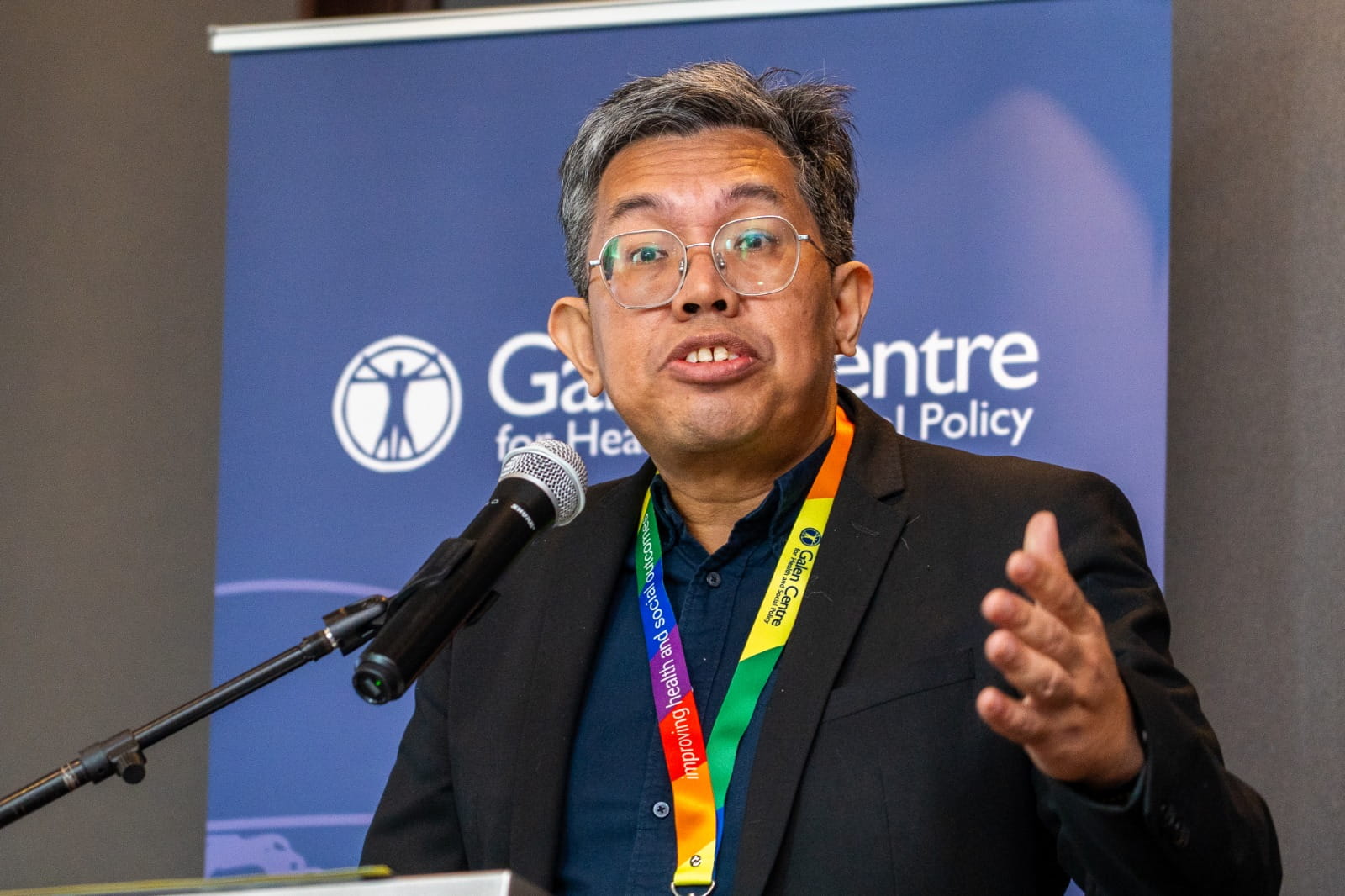
Azrul Mohd Khalib is chief executive of the Galen Centre for Health and Social Policy.
- This is the personal opinion of the writer or publication and does not necessarily represent the views of CodeBlue.


