

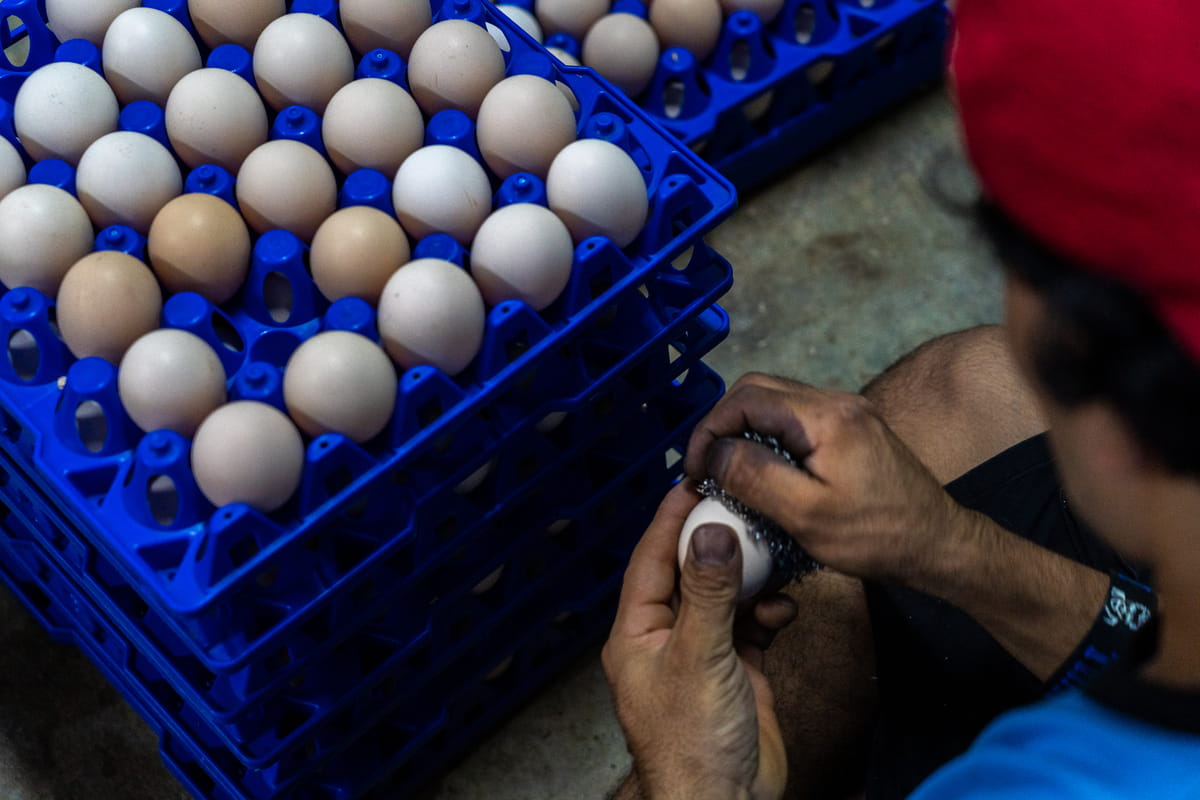
KUALA LUMPUR, Sept 30 — Local livestock farmers are spending more to keep their animals cool and productive amid prolonged hot weather and haze, with some reporting lower egg, poultry and milk production.
The combination of heat, poor air quality, water shortages and feed costs is putting additional pressure on farmers, although veterinarians caution that it is difficult to determine whether falling productivity is caused by haze alone.
South China Morning Post (SCMP) reported last Monday poultry breeder and Malaysian Poultry Association (MPA) head Zaiful Zakaria as saying that his association had received reports of breeders losing large numbers of birds during the hot and hazy period.
Zaiful, who runs a small-scale poultry operation in Selama, Perak, said smallholders were particularly vulnerable as many kept birds in basic, open-sided sheds without the climate-control systems and veterinary support available to larger commercial farms.
The MPA head said he had installed ventilation fans and a water-misting system, costing about RM500 per shed, to help protect his birds from heat.
Another heritage chicken breeder, Mohd Hazarulhizam Mohd Shafie in Alor Setar, Kedah, spent about RM50,000 renovating his poultry shelter with exhaust fans, solar panels, and automatic misting systems.
“The figures are not final, but the haze and the weather were definitely reasons I rebuilt my reban [coops] to better protect my birds,” Mohd Hazarulhizam said, as quoted by SCMP.
Livestock veterinarian Vijay Jayam said larger cattle, dairy, and goat farms generally had better ventilation and biosecurity, while smallholders had fewer resources to manage heat stress.
“Farmers should prioritise ventilation and clean drinking water,” Vijay told SCMP. He also cautioned against attributing lower milk yields or animal growth to haze alone without considering factors such as feed, housing, disease and the animal’s growth stage.
Dairy and goat farmer Ari Ramash Supramaniam said milk production from five of his 23 cows had fallen by four to six litres a day, which he estimated had reduced his daily earnings by up to RM60.
Ari attributed the decline to cattle grazing less during the daytime heat. To compensate, he has been bringing grass back to the barn and giving his cattle clean water mixed with molasses and ice, while increasing concentrate feed and mineral supplements.
The additional measures have raised his operating costs. Ari said he uses about 5kg of molasses daily and buys eight 30kg bags of fresh grass each day to feed his animals at night.
Jeffrey Ng, an adviser to the Federation of Livestock Farmers’ Associations of Malaysia (FLFAM), said the organisation had begun recording weaker production about two months ago.
Some broiler producers reported that birds took up to an additional week to reach their normal sale weight, he said, describing the heat and haze as overlapping pressures.
However, Ng said the federation had not received reports of increased poultry deaths linked to the current haze season.
Domestic Trade and Cost of Living Deputy Minister Fuziah Salleh was also reported as saying that hot weather had increased mortality among laying hens, contributing to lower egg production.
With egg demand remaining unchanged, the reduced supply has contributed to higher egg prices, although Fuziah said the price increase remained under control.
The potential impact of haze on poultry production remains difficult to isolate.
Researchers at Thailand’s Chiang Mai Rajabhat University have modelled that three days of exposure to PM2.5 concentrations of 150 micrograms per cubic metre could reduce average daily weight gain in broiler chickens by 5.2 per cent.
However, veterinarian and research supervisor Kulisara Marupanthorn stressed that these were modelled predictions rather than observed farm losses.
Her team’s separate fieldwork found poorer respiratory, immune, and production outcomes among birds exposed to higher PM2.5 levels, although the researchers could not attribute the outcomes to PM2.5 alone because temperature, humidity, and rainfall also differed.
Kulisara advised small-scale farmers to maintain clean drinking water and reduce dust, while warning that closing poultry-house curtains to keep out smoke could worsen heat and humidity if ventilation was inadequate.
The haze affecting parts of Malaysia followed weeks of hot and dry weather, with fires in Indonesia contributing to smoke pollution in parts of the country.


