

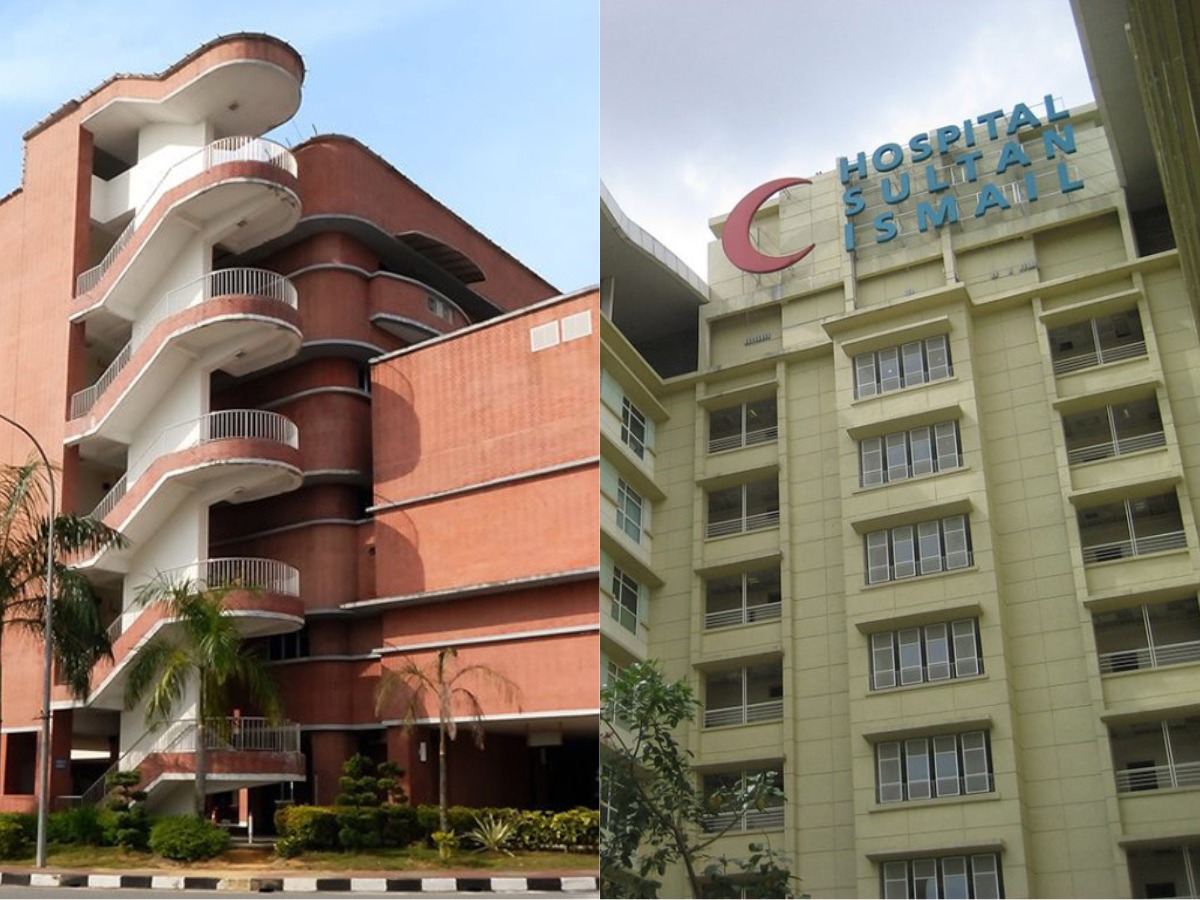
The cardiothoracic service in Johor was established in 1997. Over nearly three decades, it has grown into one of the Ministry of Health’s (MOH) busiest tertiary referral centres, providing cardiac and thoracic surgical care for Johor and neighbouring states.
I write anonymously not to criticise any individual, but because I believe the public should understand the realities faced by those delivering this service every day.
In November 2023, our department was relocated from Sultanah Aminah Hospital (HSA) to Sultan Ismail Hospital (HSI). We were informed that this would be a temporary arrangement and that the service was expected to return to HSA by the end of 2026.
Today, with only months remaining, there has been little visible progress towards that objective, leaving many staff uncertain about the future.
At present, our service is divided between two hospitals approximately 20km apart. Clinics, inpatient consultations, and referrals from peripheral hospitals continue to be managed at HSA, while all cardiac and thoracic operations are performed at HSI.
At HSI, we run two cardiothoracic operating theatres daily while managing a six-bedded cardiothoracic intensive care unit (CICU) together with a high dependency unit (HDU).
To our knowledge, this is the only cardiothoracic surgical service in Malaysia where the operating theatres and intensive care facilities are physically separated from the cardiology service by such a distance.
Our medical officers and specialists travel repeatedly between the two hospitals while remaining responsible for outpatient clinics, emergency referrals, ward rounds, major operations and critically ill postoperative patients.
Despite these extraordinary logistical challenges, our department has continued to achieve remarkable results.
For two consecutive years, our unit has recorded the highest number of open-heart and closed-heart operations performed in the past 17 years. This success wasn’t achieved because we had more resources than other centres.
It was achieved because every member of the department — consultants, specialists, medical officers, nurses, perfusionists, anaesthetists and allied health professionals — consistently went beyond what should reasonably be expected.
Unfortunately, these achievements came at a significant personal cost.
The workload continues to increase while manpower has remained limited. Double duties, overnight calls, and extended working hours have become routine.
In the past month alone, two members of our department were involved in separate road traffic accidents after prolonged work with inadequate rest. Thankfully, neither incident resulted in a fatality, but these events should remind us that fatigue in health care workers is also a safety issue.
Ironically, because our department continues to function and patients continue to receive treatment, there are relatively few complaints. Many of us worry that this creates the impression that the service is coping well.
In reality, it continues to function because staff repeatedly sacrifice their own time, health and family life to ensure patients receive the care they deserve. The absence of complaints should never be interpreted as the absence of problems.
Our infrastructure is another growing concern. Much of the equipment used in our operating theatres and critical care areas has been in service for many years and is approaching the end of its expected lifespan.
While our biomedical engineering teams work tirelessly to keep these systems functioning, maintenance alone cannot replace the need for modern equipment in a high-volume tertiary cardiothoracic centre.
Despite being among the busiest cardiothoracic centres in the MOH — and, based on our departmental records, the third busiest by surgical volume — we continue to function without an in-house Extracorporeal Membrane Oxygenation (ECMO) service and without a dedicated endoscopic tower for minimally invasive thoracic surgery. These are increasingly regarded as important components of a modern cardiothoracic programme.
The recent procurement of cardiothoracic operating theatre lights has also affected staff morale. Our Head of Department formally communicated the department’s technical recommendations to hospital management and higher authorities, outlining the clinical requirements for specialised cardiothoracic surgery.
These concerns were subsequently discussed with the state health director, who acknowledged the department’s concerns and apologised for the circumstances surrounding the procurement process.
Nevertheless, the procurement proceeded with a different solution than the one recommended by the department, leaving many frontline clinicians disappointed that their technical input did not ultimately shape the outcome.
Administrative policies have also affected staff morale. Many of us feel that local internal controls (“kawalan dalaman”) governing travel and course claims are more restrictive than the practices applied in many other MOH hospitals.
Continuous professional development is essential in a highly specialised field such as cardiothoracic surgery. Consistent and transparent application of ministry policies would help ensure equitable access to training and professional development for all health care workers.
This article is not about assigning blame.
It is about recognising that one of the MOH’s busiest cardiothoracic services cannot continue relying on goodwill and personal sacrifice alone.
We are proud of what we have achieved. Despite operating across two hospitals, manpower shortages, ageing equipment, and limited resources, we have continued to deliver record surgical volumes and provide life-saving care for thousands of patients.
But we do not know how much longer this can continue.
A department performing at this level should not have to depend on exhausted staff, ageing infrastructure, and temporary arrangements to maintain its standards. Our patients deserve a service supported by adequate manpower, modern equipment and a clear long-term direction.
Our health care workers deserve a safe, sustainable working environment that allows them to continue delivering the highest standard of care.
We respectfully appeal to the MOH to review the long-term future of the cardiothoracic service in Johor Bahru, strengthen staffing, replace ageing equipment, invest in essential technologies such as ECMO and minimally invasive thoracic surgery equipment, and ensure that frontline clinicians have a meaningful role in decisions affecting specialised patient care.
We remain proud to serve. We simply hope that meaningful action is taken before years of dedication and sacrifice are overtaken by a system that asks too much for too long.
The author is a medical officer from Johor Bahru’s cardiothoracic surgery department. CodeBlue is providing the author anonymity because civil servants are prohibited from writing to the press.
- This is the personal opinion of the writer or publication and does not necessarily represent the views of CodeBlue.


