

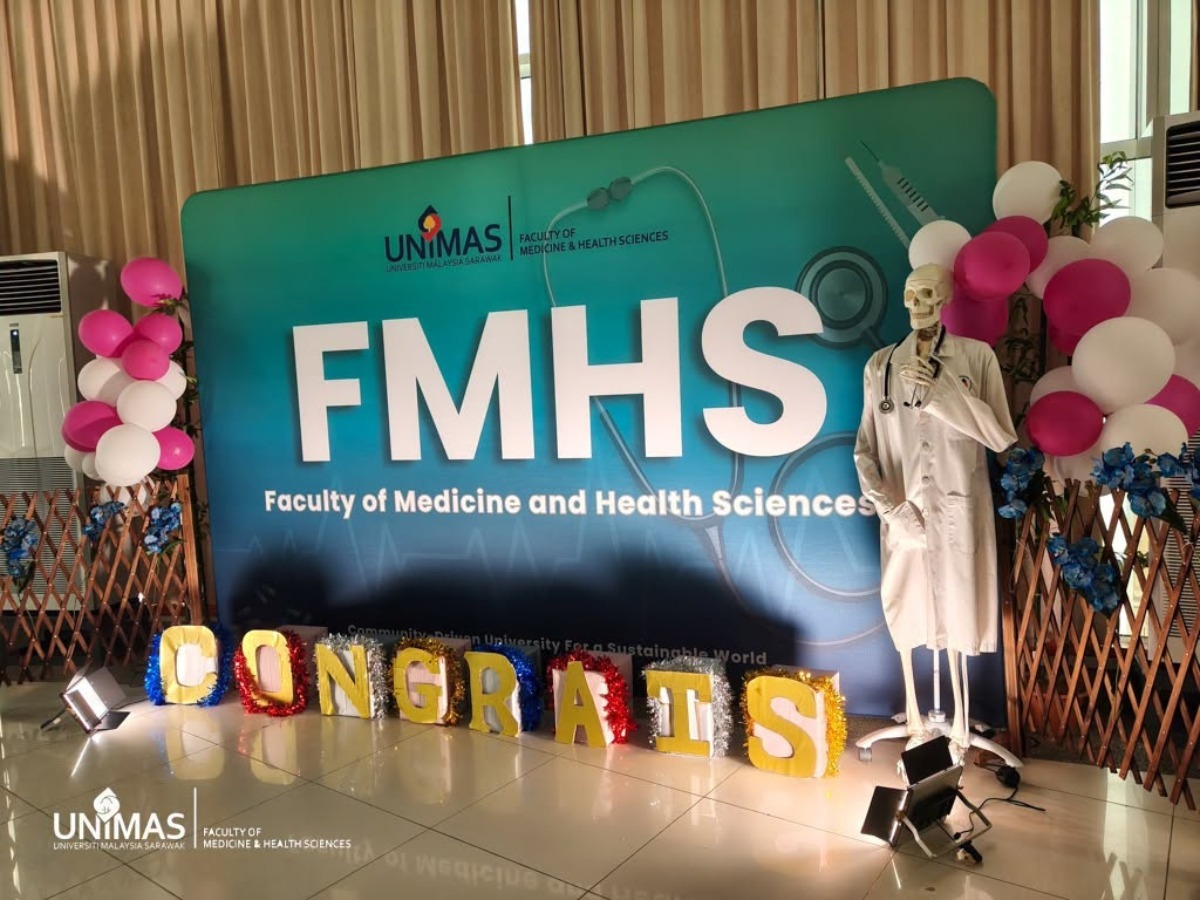
KUALA LUMPUR, Sept 23 — Universiti Malaysia Sarawak (Unimas) said its Master of Internal Medicine trainees must fulfil clinical training requirements, after a medical officer complained that hospital duties were preventing them from attending postgraduate classes and examinations.
Unimas Faculty of Medicine and Health Sciences dean Prof Dr Asri Said said the programme follows the National Postgraduate Medical Curriculum for Internal Medicine Training, which is competency-based and centred on clinical practice.
“It is therefore principally delivered through supervised clinical practice, including ward rounds, bedside teaching, case discussions, procedures, clinical decision-making and apprenticeship under specialists, rather than through prescribed classroom lectures,” Dr Asri said in a response to CodeBlue.
CodeBlue had requested comments from Unimas on the trainee’s complaint sent to CodeBlue earlier.
The trainee complained that official teaching sessions were held almost every Tuesday, but trainees were not given protected time to attend them.
The medical officer, whose identity CodeBlue is withholding because civil servants are prohibited from writing to the press, cited a Bleeding Disorder Workshop at Sibu Hospital on July 23, 2024. Some trainees allegedly arrived late because they were still completing urgent clinical work after morning ward rounds.
The trainee questioned why academic leave could not be given for a mandatory workshop.
Dr Asri said Unimas had arranged for trainees to attend existing Continuing Medical Education sessions, lectures, workshops, and online teaching activities at Ministry of Health (MOH) hospitals.
But he said day-to-day clinical deployment, ward duties, rosters, and release from clinical work are handled by the respective hospitals.
“Matters such as teaching time, examinations, rotations and transfers therefore require coordination between multiple parties,” Dr Asri said.
The medical officer also alleged that research classes were held without protected time.
During the second year, physical research classes were scheduled at Unimas from 2pm to 4pm, the trainee said, but doctors were not given the afternoon off despite having to travel from their hospitals.
Research examination days were also counted as academic leave, according to the trainee.
The medical officer said this meant trainees had to use their limited leave entitlement to be released from clinical duties or work in the morning before rushing to the examination venue.
“What if a medical emergency happens in the ward?” the trainee wrote. “Do we just leave a patient gasping and dying, saying, ‘Sorry, I have an exam to sit’?”
Dr Asri said official university examinations are compulsory and that arrangements must ensure patient safety and proper clinical handover.
“The Faculty will review the administrative arrangements surrounding examination days and clarify the appropriate mechanism for release from clinical responsibilities with the relevant training centres,” he said.
The trainee also alleged that academic leave was capped at 28 days a year, or 14 days a semester, and included medical and emergency leave. Unimas did not specifically confirm whether this was indeed policy.
Instead, Dr Asri said trainees must complete a prescribed period of clinical exposure and achieve the required competencies.
“Significant absence may affect a trainee’s ability to complete these requirements within the specified training period,” he told CodeBlue.
The faculty said prolonged absence arising from genuine medical or other significant circumstances could be accommodated through an extension of training.
The medical officer also raised the case of a trainee whose father was hospitalised for more than two weeks.
That trainee allegedly took emergency leave to care for his father and later deferred the semester after his request to transfer to a training hospital in his hometown was rejected.
He appealed again during the deferment period but was allegedly told the transfer would involve “so many layers”. The doctor eventually quit the programme, the medical officer said.
Dr Asri said transfers require coordination with MOH’s Bahagian Pengurusan Latihan, the relevant Head of Service, and the hospitals involved.
The receiving hospital must also have suitable training capacity and supervisors in the required subspecialties.
“Consequently, a transfer cannot necessarily be implemented immediately, even when there are understandable personal reasons for making such a request,” said Dr Asri.
The medical officer further questioned why the transfer could not be accommodated when other Unimas trainees were undertaking training at Queen Elizabeth Hospital, Melaka Hospital, and Kulim Hospital.
In conclusion, Dr Asri said the complaint highlighted by CodeBlue reflected the experience of one trainee and “may not necessarily reflect the experience of all trainees”.
The dean nevertheless said the faculty would engage with the programme coordinator, academic staff, trainees and relevant training hospitals to clarify the concerns.
Dr Asri added that Unimas recognised the responsibilities carried by doctors undergoing specialist training while continuing to provide clinical services.
“Rigorous training and trainee welfare should go together.”


