

KUALA LUMPUR, July 7 — Despite the Ministry of Health’s (MOH) generic-first policy, nearly 60 per cent of the government’s pharmaceutical budget last year went to innovator drugs, according to Pharmaniaga Berhad.
An analysis by the government pharmaceutical concessionnaire showed that of the government’s RM3.5 billion pharmaceutical spending in 2025, innovator medicines accounted for RM2.06 billion or 59 per cent of total spending, compared with RM1.44 billion spent on generics.
Imported medicines made up about two-thirds of overall pharmaceutical spending, comprising patented innovator medicines (RM1.52 billion), off-patent originator medicines (RM541 million), and imported generics (RM244 million). Locally manufactured generics accounted for RM1.21 billion, or about 34 per cent of total spending.
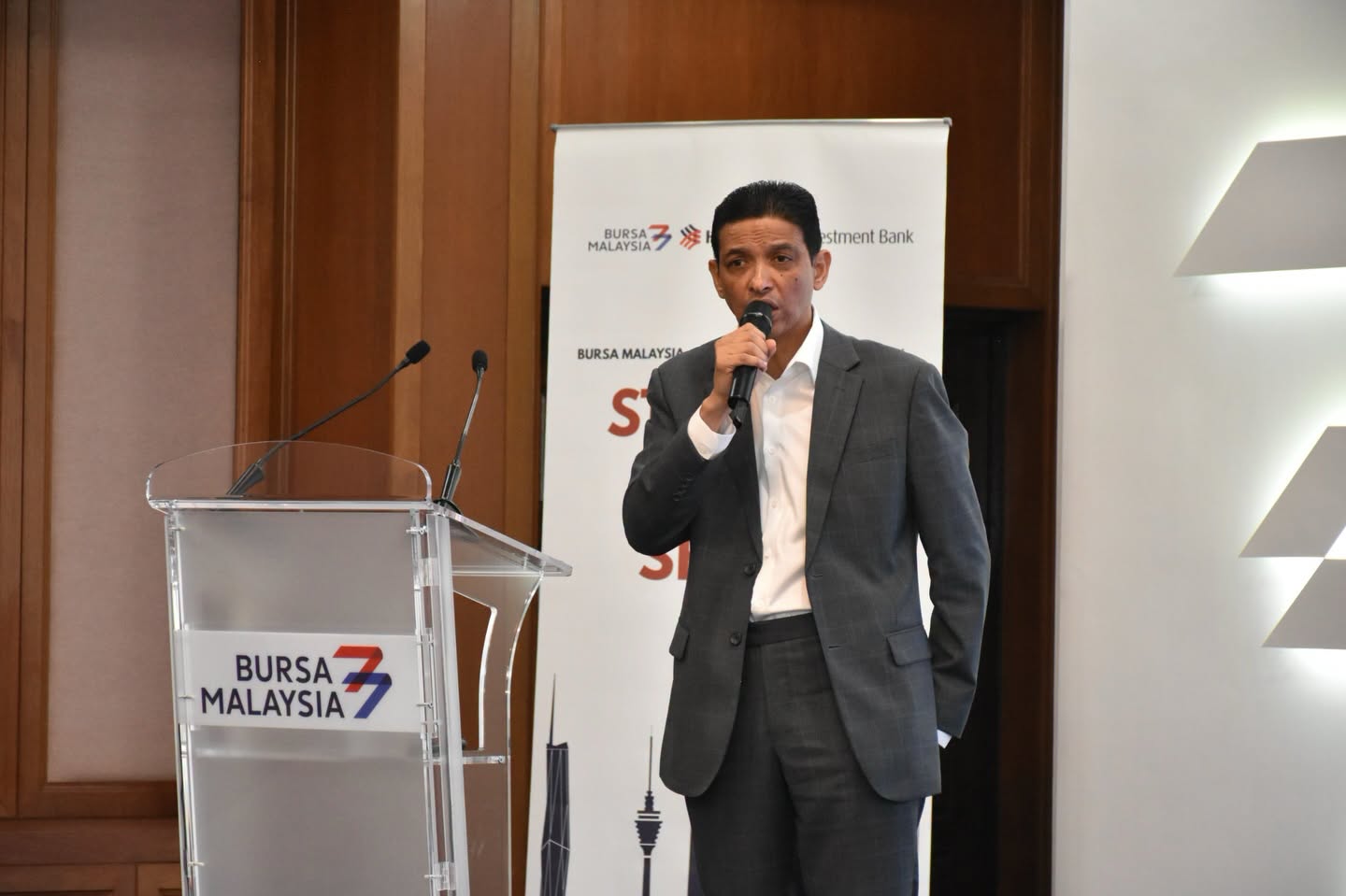
Pharmaniaga managing director Zulkifli Jafar said his company was uniquely positioned to analyse government pharmaceutical spending because it manages the MOH’s medicine procurement and distribution under a long-running concession.
“We are part of the concession agreement. Every single purchase made by the government goes through our system,” said Zulkifli during the 21st Bursa Malaysia-Hong Leong Investment Bank Stratum Focus Series at Bursa Malaysia’s office here last Thursday.

Zulkifli said the figures reflected Malaysia’s continued preference for originator medicines, even as policymakers sought to contain rising health care costs through wider use of generic medicines.
“Generally, if you’re not well, immediately you go to a private hospital, and the SOP is they prescribe originator medicines. Only if there is no originator available or it’s too expensive do they move to generics,” he said.
However, he said insurers had begun encouraging greater use of generic medicines to help contain rising health care costs.
Zulkifli cited AIA Berhad’s request to its panel hospitals earlier this year to substitute branded medicines with generics, saying the insurer had described Bank Negara Malaysia’s (BNM) premium repricing measures as imposing a “great cost to the industry”.
He also pointed to remarks by Amirul Feisal Wan Zahir, managing director of Khazanah Nasional Berhad, who represents IHH Healthcare Berhad as a shareholder, that hospitals were working with insurers to use “more generic drugs” to help manage health care costs.
It’s unclear how the MOH spent RM3.5 billion on drugs in 2025. According to the 2025 Estimated Federal Expenditure document, the MOH was allocated RM2 billion under the “privatisation concession for medicine laboratory and store”, plus another RM391 million for public health pharmacy and supplies.
Generic Uptake Expected To Accelerate
Citing IQVIA projections, Zulkifli said Malaysia’s pharmaceutical market was expected to grow by about 8 per cent annually through 2030, slower than the 11 per cent annual growth recorded between 2020 and 2025.
He attributed the moderation not to weaker demand for medicines, but to greater uptake of lower-cost generic medicines driven by affordability concerns and government policies encouraging generic substitution.
“As generic usage increases, the market value is expected to grow slightly slower because generic medicines are priced lower than innovator drugs,” Zulkifli said.
Generic medicines are projected to account for 28.4 per cent of Malaysia’s pharmaceutical market, or RM12.2 billion, in 2026, up from 26.8 per cent, or RM9.4 billion, in 2024.
Supply Disruptions Spur Push For Local Manufacturing

Following its PN17 exit, Pharmaniaga is focused on expanding domestic biopharmaceutical manufacturing to reduce Malaysia’s dependence on imported medicines.
Zulkifli argued that a series of supply disruptions in recent years had exposed vulnerabilities in Malaysia’s pharmaceutical supply chain.
During the Covid-19 pandemic, wealthier countries secured vaccine supplies first, delaying access for Malaysia and many other developing nations. Zulkifli said governments were forced to make procurement decisions amid severe global supply uncertainty.
In 2024, supply shortages of plasma-derived blood products in a constrained global market pushed manufacturers to prioritise higher-paying European markets. Zulkifli said some suppliers subsequently failed to meet contractual obligations, forcing the government to ration supplies across hospitals before turning to more expensive local purchase orders.
“The government has no choice but to buy at a higher price,” he said.
Malaysia’s 2024 human insulin supply disruption was triggered by production issues at a key supplier, exposing the country’s heavy reliance on a highly concentrated supply base. Average monthly supplies of recombinant synthetic human insulin fell by 21 per cent in 2024. That manufacturer, according to Zulkifli, “gave priority to other countries, resulting in supply security”.
“Conditions were particularly severe in Selangor, with further shortages in Kuala Lumpur, Johor, Melaka, and Kedah,” according to Zulkifli’s slide.
Zulkifli said the massive shortage forced the government to switch a whopping 2.4 million patients from subsidised human insulin to costlier insulin analogs, with Putrajaya purchasing insulin glargine for that population for two years from 2026 to 2027.
“The government had no choice but to move some patients to analog insulin because there wasn’t enough human insulin,” he said. “But once you move them from human insulin to analog insulin, we cannot reverse it back.”
He said the government had since initiated studies in several public hospitals to assess whether some patients could safely transition back to human insulin as part of efforts to reduce long-term treatment costs, noting that insulin glargine was “so expensive for the government to sustain”.
Two-Thirds Of Malaysia’s Drugs Are Imported, Among Highest In Region

Malaysia remains heavily reliant on imported medicines, with locally manufactured medicines accounting for just 37 per cent of the market by value, according to 2023 industry data.
By comparison, local manufacturers account for 85 per cent of Indonesia’s pharmaceutical market, 75 per cent in China, 55 per cent in Japan, and 50 per cent in Singapore. Malaysia’s share is only slightly higher than Thailand’s 35 per cent, Australia’s 31 per cent, and Taiwan’s 23 per cent.
“Preference on originator is impacting our value chain; about two-thirds of our drugs are imported. We are amongst the most import-reliant country in the region,” said Zulkifli, according to his slide.
Multinational companies continue to dominate the industry in Malaysia, with only two local firms – Duopharma Biotech Berhad and Pharmaniaga – ranking among the country’s top 10 pharmaceutical companies.
Zulkifli attributed the imbalance to doctors’ preference for branded medicines and price competition from imported generic drugs, particularly from India and China, which are at least 20 per cent cheaper than locally manufactured products, according to industry studies.
Local manufacturers are squeezed from both ends: “Losing premium share to originator brand and losing volume share to cheaper imported Indian and Chinese generics”.

As part of its localisation strategy, Pharmaniaga has invested more than RM300 million in domestic biopharmaceutical manufacturing. The company currently operates four manufacturing plants and employs about 70 in-house scientists and researchers working on vaccines, insulin, and other biologic products.
Among its priorities is local production of recombinant human insulin, with small-scale manufacturing targeted by the end of 2026 before full commercial production in 2027.
Pharmaniaga is also localising several vaccines under the National Immunisation Programme (NIP), including the pneumococcal conjugate vaccine (PCV-13) and the six-in-one hexavalent vaccine for children.
Zulkifli said Pharmaniaga’s localisation strategy was intended not only to strengthen Malaysia’s pharmaceutical supply chain, but also to improve long-term affordability and ensure sufficient medicine supplies.
“We want to make sure all pharmaceutical products are affordable, that medicines are affordable for the country, and we make sure there’s enough supply for the country,” he said. “That is our obligation and that is how we can bring down the cost of medicine in the country, taking into consideration the current inflation rate.”
Product Pipeline Targets High-Cost Medicines
Zulkifli said Pharmaniaga identifies high-cost medicines for development or localisation through a product pipeline aimed at reducing the government’s pharmaceutical spending.
Zulkifli cited hepatitis C treatment as an example of how generic medicines could substantially reduce government spending. “For hepatitis C, we worked with Drugs for Neglected Diseases initiative (DNDi) to develop a generic version. From RM300,000, the medication cost came down to RM3,000,” he said.
He said Pharmaniaga’s Product Management Committee meets every month to identify medicines for localisation by assessing treatment costs, disease burden, patent expiries and supply security.
“We identify products by looking at what costs the government the most, when the patent expires, and where localisation can reduce the burden,” he said.
The company currently has about 91 products in its pipeline, including medicines for cardiovascular disease and oncology, which Zulkifli described as among the government’s most expensive treatment areas.
Looking ahead, Zulkifli said Pharmaniaga plans to expand the government’s Approved Product Purchase List (APPL) from the current 841 products to about 1,200 by 2030, while navigating challenges posed by trade agreements such as the Comprehensive and Progressive Agreement for Trans-Pacific Partnership (CPTPP).
“We need to strengthen local pharmaceutical capabilities before the next crisis happens,” he said.
Editor’s note: This article was updated to reflect the 2.4 million patients converted to insulin glargine for 2026 to 2027.


