

First, do no harm. This ancient maxim, etched into the conscience of every physician, is not merely a clinical injunction. It is a moral compass.
Malaysia’s health care financing structure stands on the precipice of a monumental shift. Yet as Malaysia prepares to roll out its Diagnosis-Related Group (DRG) payment system – a fixed-fee, diagnosis-based hospital billing model scheduled for phased implementation beginning January 2027 – the government risks inflicting a profound and entirely avoidable harm upon the very profession that sustains the nation’s health care system.
When the Public Accounts Committee (PAC) tabled its long-awaited report in Parliament on June 24, 2026, the committee’s finding was unambiguous: the primary driver of medical inflation is not doctors’ professional fees – which have been strictly regulated since 2006, with only a minor adjustment in 2013 – but the surge in unregulated non-professional charges imposed by private hospitals.
However, a fundamental policy design flaw looms large: the potential inclusion of doctors’ professional consultation and procedural fees within this single consolidated bundle.
Incorporating independent clinical fees into a fixed hospital tariff ignores the actual drivers of health care cost expansion and risks destabilizing the patient-physician relationship.
Unmasking The True Driver: The PAC Verdict
The strongest argument against integrating clinical fees into the DRG system lies in the empirical evidence compiled by the PAC. The cross-party committee explicitly concluded that the ongoing spike in private hospital charges and insurance premiums is driven primarily by unregulated non-professional charges.
These include the soaring costs of surgical supplies, implants, laboratory tests, advanced diagnostic imaging, and highly marked-up pharmaceutical products.

| Healthcare Fee Component | Current Regulatory Status (As of 2026) | PAC Identified Inflation Risk | Recommended DRG Strategy |
| Doctors’ Professional Fees | Regulated since 2006 under PHFSA Act 586 | Low (Stagnant fees absorbed by clinicians) | Exclude entirely from DRG; maintain separate fee schedule |
| Pharmaceuticals & Drugs | Unregulated; high reliance on single-distributor imports | Very High (Steep supply-chain and generic markups) | Include in DRG to force institutional cost containment |
| Medical Consumables & Lab Tests | Unregulated; prone to “unbundled” individual billing | Very High (Creative itemized charges for basic items) | Include in DRG to mandate transparent, inclusive pricing |
The Fee That Time Forgot
A mill cannot grind with water that is past. The same applies to fees frozen in a bygone era.
The PAC’s findings are forensic in their precision. Since 2006, doctors’ professional fees have remained strictly capped under Schedule 13 of the Private Healthcare Facilities and Services Act (PHFSA) 1998 (Act 586), with only a minor adjustment in 2013.
For over a decade, physicians have absorbed rising operational costs while their maximum legal billing rates remained flat.
The DRG system was designed for hospital charges, not professional fees. It does not adequately reflect the skill, expertise, and time invested by doctors in patient care, the variabilities in patient conditions and individual treatment plans, nor the cognitive and decision-making roles of doctors that are not captured by procedural codes alone.
To fold these already suppressed, tightly regulated fees into a new hospital-controlled DRG bundle would penalise the very professionals keeping the system afloat. In a rush to curb institutional billing excesses, the government must not inadvertently dismantle the professional livelihood of its medical workforce.
The Peril Of Hospital-Controlled Clinical Practice
Inclusion of professional fees in a unified DRG payout structure alters the balance of power between independent clinicians and corporate hospital administrators. Under a bundled DRG model, the hospital receives a single lump sum from an insurer or third-party payer for a specific diagnosis.
If clinical fees are trapped inside that bundle, the hospital administration is left to decide how much of that fixed allocation is disbursed to the operating specialist.
This dynamic introduces an immediate, systemic conflict of interest. Private hospital operators, facing escalating utility costs and corporate growth targets, will be economically incentivized to compress the physician’s share of the bundle to protect facility profit margins.
When clinical compensation is dictated by corporate executives focused on the bottom line, professional autonomy is eroded. Doctors could find themselves pressured to adopt cheaper, lower-quality implants, or expedite patient discharges to minimize hospital resource use.
No man can serve two masters. A physician’s primary loyalty must always belong to the vulnerable patient lying on the operating table, not to the financial survival of a hospital’s quarterly balance sheet.
Separating professional fees from the hospital DRG preserves this essential ethical boundary.
Dismantling The Incentive For Complex Patient Care
The core operational mechanism of any DRG model relies on statistical averages; it calculates the cost of treating an “average” patient with a specific condition. However, human biology does not conform to standardised averages.
A procedure performed on an elderly patient with multiple chronic comorbidities requires significantly more time, cognitive effort, and surgical precision than the exact same procedure performed on a young and otherwise healthy individual.
If professional fees are fixed within a rigid DRG tariff, physicians receive identical compensation regardless of case complexity or time investment. This structural change risks creating a dangerous disincentive for taking on high-risk, complicated cases.
Faced with fixed compensation for disproportionate risk, specialists may feel compelled to refer complex patients away from the private sector entirely, redirecting them to an already backlogged public health care system.
By removing the financial viability of complex care, the system risks compromising patient outcomes. We should not be penny wise, pound foolish.
Capping clinical fees to achieve short-term administrative cost savings can inadvertently generate massive, long-term costs in the form of surgical complications and systemic strain.
Mitigating The Threat Of Brain Drain
Malaysia’s private health care sector has long been recognised as a world-class hub for medical tourism, largely driven by the high calibre of its clinical specialists. The expertise of these professionals requires over a decade of rigorous academic training, specialist fellowships, and ongoing technical development.
Should the DRG model devalue this expertise by treating clinical labor as a uniform commodity, the local medical ecosystem faces a severe risk of talent flight.
Specialist physicians possess highly globalised skill sets and can easily relocate to regional health care hubs offering flexible, fee-for-service compensation structures.
If local financial returns are compressed by an aggressive, over-inclusive DRG model, Malaysia risks a major brain drain of top-tier surgical and diagnostic talent. The nation would learn the bitter truth.
Preserving an independent, transparent professional fee schedule outside the DRG framework ensures that Malaysia remains competitive and capable of retaining its finest clinical minds.
Conclusion: A Balanced Path Forward
The Public Accounts Committee’s landmark report has provided the Ministry of Health with a clear roadmap for health care reform. The evidence shows that medical inflation cannot be resolved by squeezing the clinical fees of doctors, which have already been capped for over a decade.
Instead, cost-containment measures must target the unregulated operational charges, drug supply chain markups, and creative facility billing structures that directly inflate patient expenditures.
Keeping professional clinical fees separate from the DRG ensures that medical practitioners retain the autonomy needed to prioritize patient welfare over corporate financial targets.
A comprehensive review of doctors’ fees, long overdue, would prevent the erosion of medical professionalism and ensure that Malaysia retains its best and brightest in the service of its people.
As Malaysia transitions toward sustainable health care financing, policymakers must act with precision rather than blunt force. Designing a system that respects the distinct roles of institutional facilities and clinical experts will allow the country to protect public affordability without compromising patient safety or clinical excellence.
Health care is not a commodity. It is a sacred trust between doctor and patient. And that trust cannot be sustained if the very doctors who uphold it are systematically undervalued, underpaid, and ultimately driven away.
The PAC has spoken. The question is whether the government has the wisdom to listen.
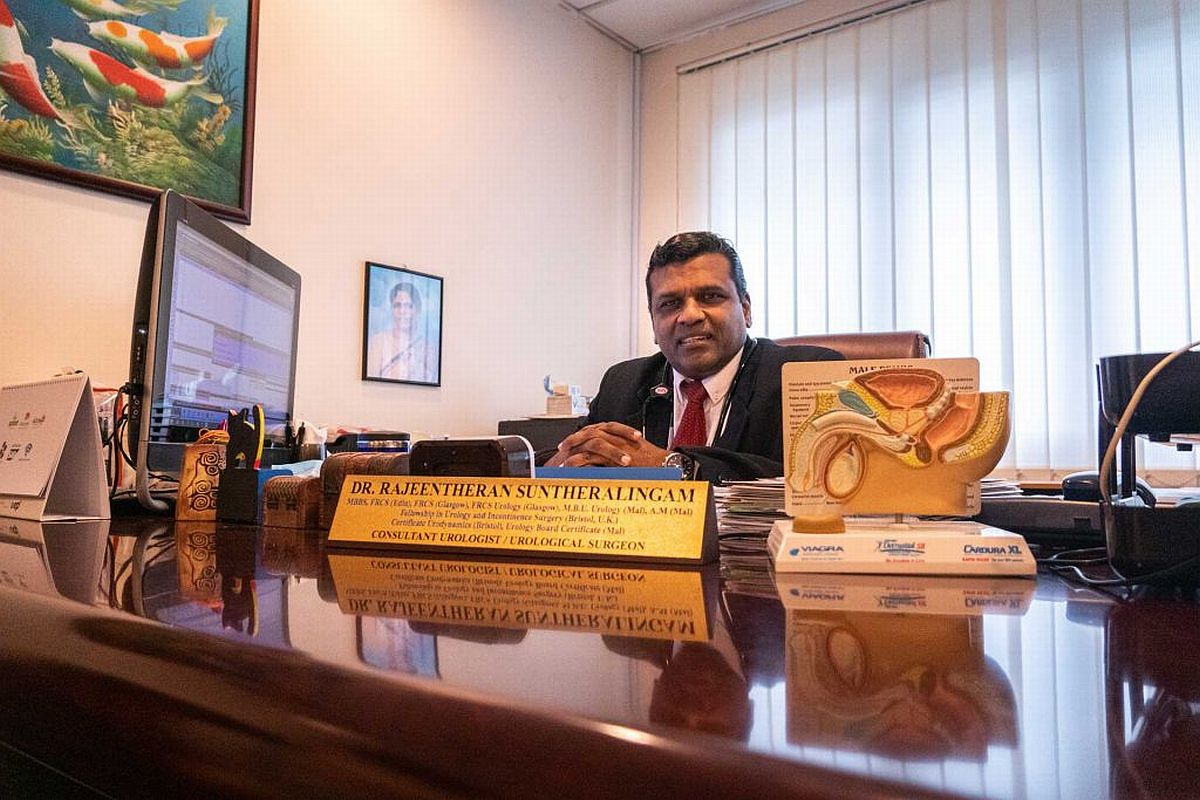
The author is a senior consultant urologist and urological surgeon at Damansara Specialist Hospital.
- This is the personal opinion of the writer or publication and does not necessarily represent the views of CodeBlue.

