


“Learning has no age limit. Neither should living.”
Imagine being 75 years old. Would you want your future defined by frequent hospital visits, social isolation and dependence on others?
Or would you rather wake each morning in a vibrant community where you stroll through shaded gardens, meet friends for exercise, attend a lecture on Artificial Intelligence (AI), mentor young entrepreneurs, volunteer at a community kitchen, pray with neighbours, and return home knowing that health care support is available whenever you need it?
The question facing Malaysia is no longer simply where our older people will live. It is how they will live.
As Malaysia rapidly transitions into an aged nation, our discussion has focused overwhelmingly on health care expenditure, pensions, and nursing homes.
While these remain important, they are only part of the solution. Healthy ageing is not achieved merely by treating disease or extending life expectancy. It is about enabling people to continue living with purpose, dignity, independence, and fulfilment.
The World Health Organization (WHO) defines healthy ageing as developing and maintaining the functional ability that enables well-being in older age. This requires much more than hospitals and clinics.
It demands communities intentionally designed to optimise physical health, cognitive function, mental well-being, social connectedness, and spiritual fulfilment. Malaysia should therefore begin planning for a new generation of Healthy Ageing Communities.
These communities should not resemble traditional institutions that quietly accommodate older people after they have become frail. Instead, they should become places where older adults continue to grow, contribute, learn and thrive.
Importantly, Malaysia should develop two complementary models. The first is residential healthy ageing communities, serving older persons who choose supported living or require assistance.
They should never resemble the institutional “old folks’ homes” many people fear, but should be thoughtfully designed neighbourhoods or village-style campuses where residents keep maximum independence while accessing health care, rehabilitation, nutritious meals and social activities whenever required.
The second comprises non-residential healthy ageing communities, where older persons continue living at home but spend their days at nearby centres offering health promotion, exercise, lifelong learning, recreation, rehabilitation, and volunteering. Such centres preserve family bonds while preventing one of the greatest threats to healthy ageing, which is loneliness.
These communities should be designed around four pillars.
The first is physical health. Our surroundings profoundly influence daily behaviour. Communities inspired by the world’s Blue Zones, where people consistently live longer and healthier lives, encourage movement naturally rather than through obligation.
Walkable pathways, community gardens, exercise facilities, and universal design should be standard rather than luxuries, alongside integrated preventive services such as screening, physiotherapy, nutrition counselling, chronic disease management and telemedicine. health care must move beyond treating illness towards preserving function and independence.
The second is cognitive health. Retirement should never mean intellectual retirement. Evidence consistently shows that lifelong learning strengthens cognitive reserve and may delay cognitive decline.
Every community should therefore include libraries, digital learning centres, language classes, artificial intelligence literacy programmes, music, arts, and university lectures. Many universities already have the expertise to deliver structured learning for older adults. Learning has no expiry date.
The third is mental and social well-being. Perhaps the greatest epidemic associated with ageing is not dementia or frailty, but loneliness, which increases the risk of depression, cardiovascular disease, cognitive decline and even premature mortality.
Yet, it is preventable when communities are designed to foster relationships, through cafés, walking groups, gardening clubs, volunteer organisations, and mentoring programmes where older persons keep contributing to younger generations. People do not simply need activities. They need reasons to wake up each morning.
The fourth is spiritual well-being. Growing older encourages reflection upon meaning, purpose and legacy, and spiritual health provides resilience during life’s inevitable challenges.
Accessible places of worship, meditation gardens, quiet reflection spaces, grief counselling, and community service matter as much as any clinical service. Caring for the human spirit is every bit as important as caring for the human body.
Such communities should also enable continued economic participation through home-based businesses, handicrafts, consultancy and tutoring. Older persons should contribute because they choose to, not because they have no alternative.
Technology has a supporting role, but must complement human relationships rather than replace them. And we must stop separating generations, placing schools, child care centres and playgrounds alongside facilities for older adults.
This is the right destination. The harder question, and the one our sector has avoided for a decade, is how Malaysia gets there, at what cost, and who pays.
The first uncomfortable fact is that Malaysia is growing old faster than it is growing rich. Japan, Singapore, and much of Europe reached aged status with mature pension systems, long-term care insurance and far higher incomes.
We approach the same threshold with none of that, and with most workers holding retirement savings that would not sustain even a modest old age. Whatever we design must work at a price ordinary families can actually pay. Premium retirement villages cannot be the national answer.
Which is why we should stop waiting for greenfield developments. Purpose-built villages take seven to ten years and enormous capital, and will not arrive in time for the cohort turning 75 in the next decade. Malaysia already owns the buildings it needs: underutilised hotels, ageing commercial premises, unsold residential stock, institutional and wakaf landbank.
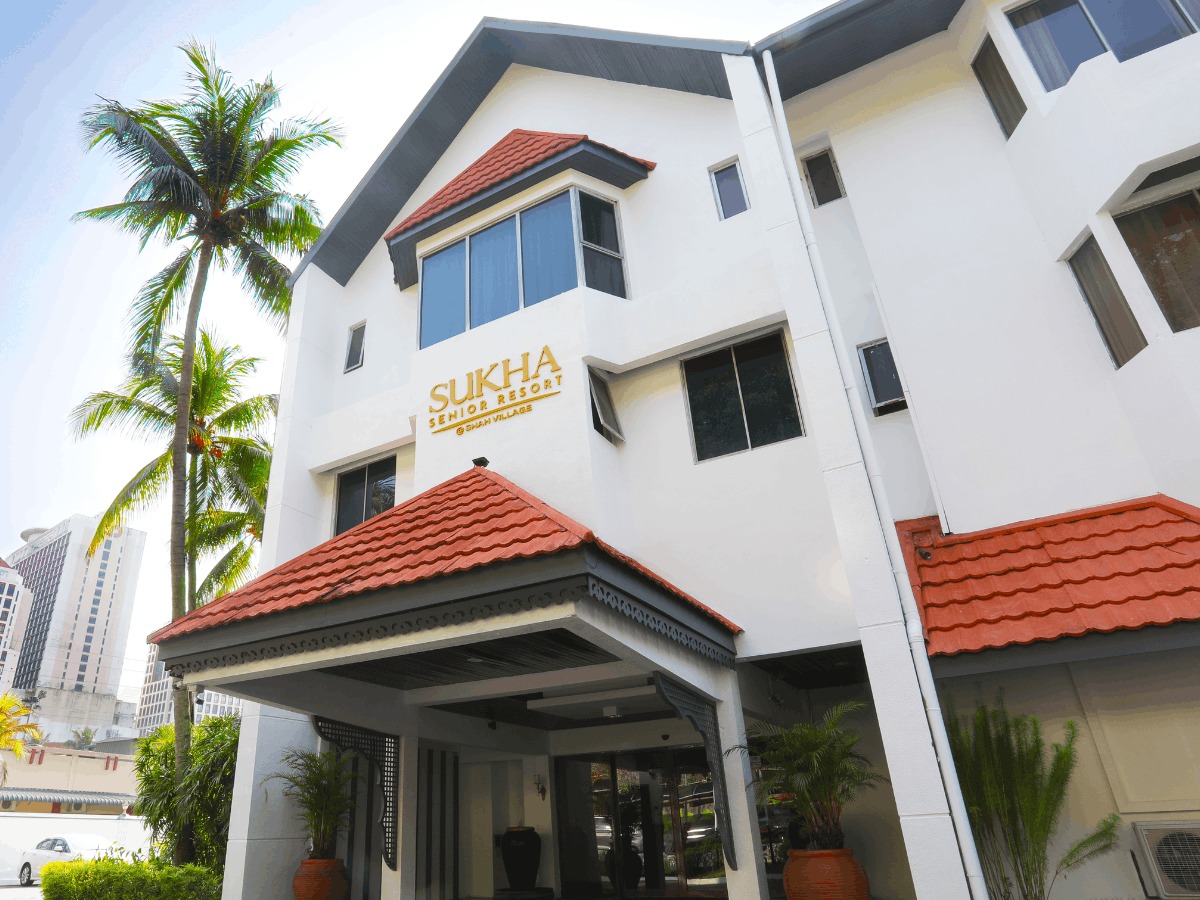
Converting them can open a community in months rather than years. Sukha’s flagship community, Sukha Senior Resort in Petaling Jaya is the retrofit of an iconic Petaling Jaya hotel, a landmark that had stood for decades and already came with rooms, kitchens, housekeeping, and fire compliance.
What it lacked was care, programming and a reason for people to be there. That is far easier to add than concrete, and it gave a building the town had grown up with a second life.
It also tells us something about design: care should be layered onto hospitality, not the reverse. A home that feels like a ward will always be a place people are sent to, never a place they choose.
The next obstacle is regulatory. Aged care here is still governed in practice by the Care Centres Act 1993, while the Private Aged health care Facilities and Services Act 2018 remains gazetted with its regulations not yet in force.
Worse, there is no licensing category at all for the models advocated here. Independent living, assisted living and day centres fit neatly into neither statute, leaving operators routed between welfare, health, local authority, fire and land offices, while land title conditions often prohibit the very use we are encouraged to provide. We do not need more legislation.
We need regulations completed, and a single-window pathway allowing new models to be tested under supervision rather than blocked by silence.
Then, there is workforce. Malaysia can build capacity faster than it can staff it. Caregiving is still treated as unskilled labour and paid accordingly, producing turnover, inconsistent quality and occasionally the neglect that makes the news.
A recognised caregiver qualification with a real career ladder and published pay progression is not a welfare measure. It is the precondition for quality at scale.
Finally, who pays? Employer-funded elder care benefits, long-term care insurance, and takaful products, and the release of state, institutional and wakaf land at concessionary rates in exchange for firm affordability quotas are the three unlocks within reach today.
Land contributed as social capital, matched with private operating capability, is the fastest route to scale available to us.
Healthy ageing is not about building places where older people wait quietly for the end of life. It is about creating environments where they continue living fully.
This requires collaboration across ministries, local authorities, universities, civil society, religious institutions and private operators. But it will not happen through committees alone. Someone must operate the buildings, meet the payroll and answer the family at two in the morning. Policy and operators have to build this together.
Ultimately, the measure of a nation’s progress is not simply how long its people live, but whether they live those additional years with dignity, purpose, curiosity and hope.
One day, every one of us hopes to grow old. The communities we build today will become the communities we ourselves inhabit tomorrow.
Let us stop thinking only about nursing homes and institutions, and begin creating Healthy Ageing Communities where every older Malaysian can continue to learn, contribute, worship, connect, laugh, and embrace each new day with confidence.
Because learning has no age limit. Neither should living.
Dr Zarihah Zain is a public health physician who retired from the Ministry of Health in 2012 and is now a part-time lecturer in community medicine and medical ethics. N. Raaj Selvarajan is chairman of the Hemrish Group and Sukha Golden, which operates hospitality-led senior living communities in Malaysia and the region.
- This is the personal opinion of the writer or publication and does not necessarily represent the views of CodeBlue.


