

The recent discussions surrounding the Ministry of Higher Education (MOHE) and the Ministry of Health (MOH) on the recognition of pharmacy graduates from one overseas university have brought a longstanding question to the surface: are we, as a nation, paying sufficient attention to the remarkable progress our own pharmacy institutions have made?
This is not a straightforward matter, and the students affected deserve both fairness and transparency.
A Profession Transformed: Globally And At Home
Pharmacy is not what it was decades ago. Globally, pharmacists’ clinical responsibilities have been on a progressive rise, with the profession adopting a more person-centred approach and experiencing increased involvement in health care teams across all settings.
The shift from traditional dispensing functions to integral roles in patient care, medication management, and health care policy has reshaped what a pharmacy degree must deliver.
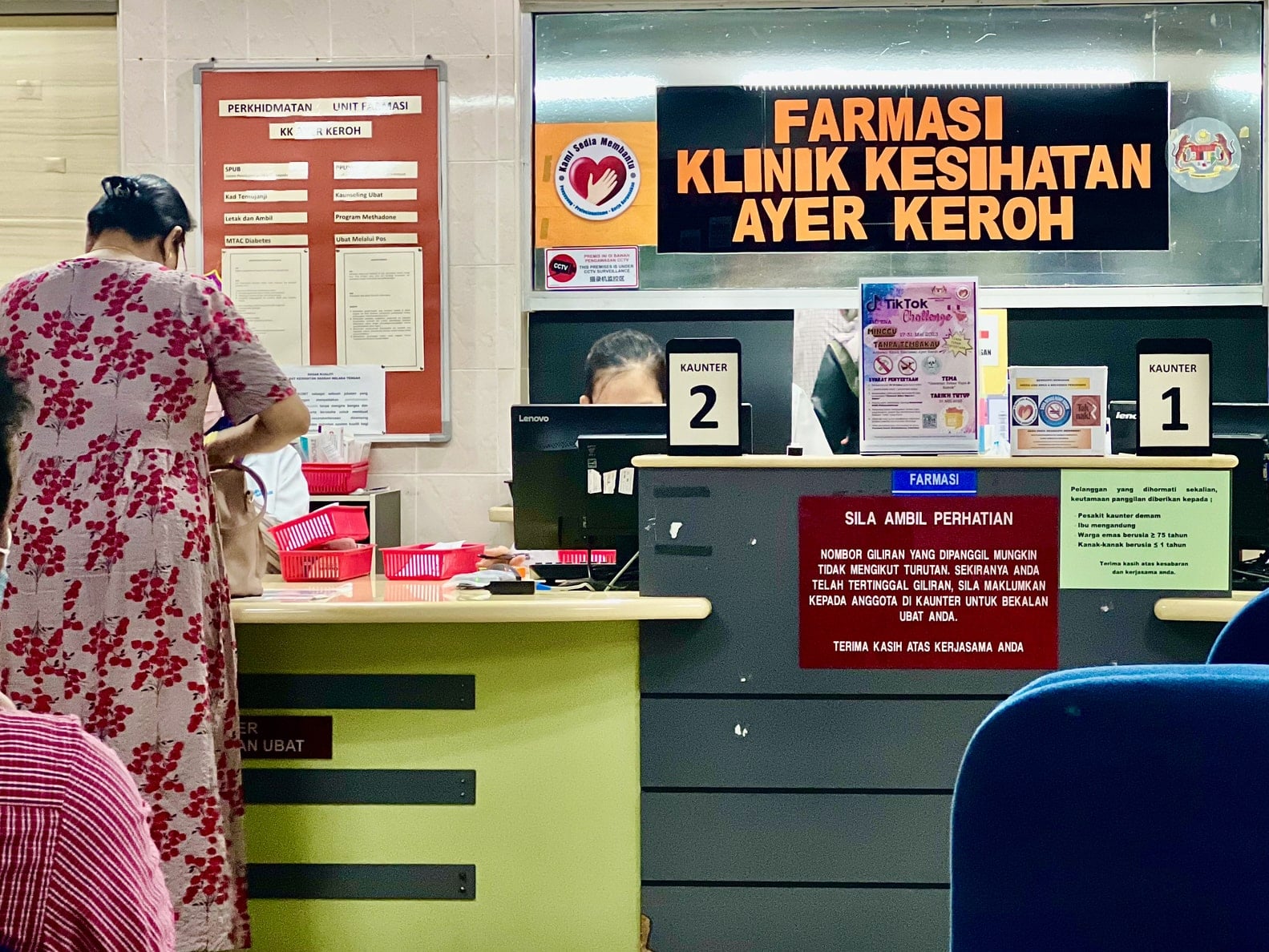
Malaysia has not been a passive observer of this transformation. The MOH’s Pharmaceutical Services Programme has steadily expanded the clinical pharmacist’s role in public hospitals, from Medication Therapy Adherence Clinics (MTACs) covering diabetes, stroke, and respiratory diseases, to full ward round participation in therapeutic drug monitoring and discharge counselling.
Clinical pharmacists in Malaysian government hospitals today join medical teams on ward rounds, conduct therapeutic drug monitoring, provide medication counselling, and ensure optimal patient treatment outcomes.
This is a sophisticated, evolving clinical environment, and it demands graduates trained specifically for it.
The question worth asking, then, is whether an overseas pharmacy degree, particularly from a country with a different health care system and a different language of instruction adequately prepares a graduate for this environment. Increasingly, the evidence suggests it often does not.
The Numbers Are Worth Examining
Under the First Schedule of the Registration of Pharmacists Act (ROPA), Malaysia currently recognises pharmacy degrees from more than 70 foreign universities, spanning the United Kingdom (18 institutions), the United States (12), Australia (eight), Indonesia (six), Egypt (four), and a dozen other countries such as Jordan, Saudi, the UAE, compared to just 21 local institutions.
At the same time, local universities have moved decisively up the global rankings. In the QS World University Rankings by Subject 2026, Universiti Sains Malaysia’s Pharmacy and Pharmacology programme ranks 48th globally, second in Southeast Asia, and 9th in Asia.
Eight Malaysian universities now hold positions in the global top 400 for pharmacy. These are not modest achievements. They reflect decades of deliberate investment in pharmacy education, research infrastructure, and clinical training partnerships with government hospitals.
What Local Training Actually Delivers
The strength of local pharmacy education lies not just in rankings but in curriculum design, clinical integration, and language of instruction, three factors that directly determine how well a graduate performs in the Malaysian health care system.
Under the 2024 Standards for Undergraduate Pharmacy Programmes, all accredited Malaysian programmes must include a minimum six-week integrated clinical placement covering industrial pharmacy, community pharmacy, hospital pharmacy, and clinical services.
Many institutions go considerably further. Universities provide hands-on placements in hospital and community pharmacies, alongside simulation training in clinical skills laboratories, mock pharmacies, and aseptic suites.
Crucially, all accredited Malaysian pharmacy programmes use English as the medium of instruction throughout the programme.
Consider the Indonesian example. Pharmacy education in Indonesia is delivered primarily in Bahasa Indonesia. Six Indonesian universities are currently on the Pharmacy Board’s recognised list.
Malaysian students who return from these programmes often face a difficult adjustment period, having spent four years studying clinical pharmacology, drug interactions, and patient counselling in a language that does not translate directly into their working environment in Malaysia.
Studying pharmacy at a Malaysian university costs between RM25,000 and RM50,000 per year in tuition. For a four-year degree at a well-regarded public (open channel) or private institution, the total bill typically falls between RM100,000 and RM180,000.
Other perks include proximity to home, with students able to return home during semester breaks and the parents able to monitor their well-being.
Compare that with the overseas alternatives. For Malaysian families sending children to the UK or Australia, the total cost of a pharmacy degree there starts at a minimum of RM600,000.
Many parents turn to more economical options in countries like Indonesia or Egypt, thinking these represent a middle path. But cheaper is not the same as value.
Indonesia is one of Malaysia’s closest neighbours, and six Indonesian universities are currently on the Pharmacy Board’s recognised list. The reality parents should know is that pharmacy education in Indonesia or Egypt is delivered mostly in Indonesian or Arabic languages, with most undergraduate programmes following a curriculum framework set by its local bodies.
The students will spend four years studying pharmacology, drug interactions, and clinical sciences in foreign language and then return to Malaysia expected to consult patients, communicate with doctors, write clinical notes, and pass professional examinations entirely in English.
Research has shown the real challenges these students face are using English for medical purposes, given that it is not the primary medium of their training. That is a gap that does not close easily, and it shows up in clinical practice.
Not A New Problem
It is worth acknowledging that the challenge of graduates returning with unrecognised or subsequently delisted overseas qualifications is not new to the Pharmacy Board or to those of us who have worked in pharmacy education for many years. We have seen students from institutions that were never on the ROPA First Schedule at all.
What typically happens to these graduates? They are not without options. A pharmacy degree opens doors to roles in pharmaceutical manufacturing, research and development, quality control, regulatory affairs, and pharmaceutical sales: none of which require registration with the Pharmacy Board.
Many graduates from unrecognised programmes have gone on to contribute meaningfully to the pharmaceutical industry, medical device companies, and academic institutions. Their qualifications are not wasted, they merely cannot practise as registered pharmacists in a clinical or community setting.
This outcome, while not catastrophic, represents a profound mismatch between a student’s career aspirations, and the professional reality they encounter upon graduation. And the uncomfortable truth is that this mismatch was, in many cases, avoidable.
The Malaysian Pharmacists Society (MPS) has long advised that students wishing to study pharmacy abroad should first verify that the degree from their chosen university is accredited by the Pharmacy Board before enrolment and that they should recheck this status closer to graduation, as recognition can change.
The Pharmacy Board publishes its recognised degree list openly on its official website, updated on a rolling basis. The responsibility to verify it rests, in the first instance, with the student, ideally before any application is submitted, not after four years of study are completed.
The recent case deserves a measured response one that is fair to the affected graduates while being firm on professional standards. Evaluating this carefully is not a hostile act toward the graduates concerned. It is precisely what a responsible professional regulator should do.
Extending automatic recognition without scrutiny would set a problematic precedent that weakens the entire recognition framework over time. All pharmacy graduates, not just those affected, deserve a transparent, criteria-based assessment process, not an outcome determined by political timing.
Perhaps the most important structural issue raised by this episode is one that rarely receives direct attention: the fundamental asymmetry in how local and overseas pharmacy programmes are evaluated.
A Malaysian university wishing to offer a pharmacy degree must submit a detailed programme application to the Pharmacy Board Malaysia, undergo evaluation by a panel of external evaluators, demonstrate compliance with the 2024 Standards for Undergraduate Pharmacy Programmes, and satisfy the Malaysian Qualifications Agency (MQA) before it may enrol a single student.
The MQA’s own accreditation process involves both Provisional Accreditation to confirm minimum requirements are met and Full Accreditation following a comprehensive programme audit. Local institutions invest years of preparation, significant financial resources, and ongoing compliance effort to maintain this standing. They are subject to periodic re-evaluation.
Their curricula, staffing ratios, clinical placement arrangements, and facilities are all scrutinised.
Contrast this with the process for adding an overseas university to the ROPA First Schedule. The guidelines for approval and recognition of overseas pharmacy programmes are published by the Pharmacy Board, but the evaluation of foreign institutions does not typically involve on-site visits, local site inspections, or regular revalidation on the same cycle as domestic programmes.
In practice, recognition of an overseas programme can remain on the First Schedule for years or even decades without the same level of active review that a Malaysian institution would face. The Egyptian university situation is a direct consequence of this gap.
This is not equitable, and it is not in the public interest. If we expect Malaysian universities to clear a high bar to offer pharmacy education which we do, the same standard of evidence should be required for any overseas programme seeking a place on the recognised list.
This is not protectionism. It is consistency. It is the application of a single quality standard, regardless of where the degree was issued.
Local institutions should not be penalised for their compliance rigour while overseas programmes benefit from a lighter-touch recognition process.
A Constructive Path Forward
The goal here is not to close doors, but to align our recognition policy with the reality of where Malaysian pharmacy education has arrived.
MOHE and MOH would be well-served by initiating a structured, evidence-based review of the ROPA First Schedule that examines each recognised overseas programme against current benchmarks: curriculum content, clinical placement hours, medium of instruction, and alignment with Malaysian health care practice.
This review should be prospective in its effect, protecting graduates already in training while establishing clearer criteria for future recognitions.
The International Pharmaceutical Federation (FIP) has itself called for national systems to align pharmacy education more closely with local health care needs and workforce requirements. Malaysia can now respond to that call from a position of genuine strength, not defensiveness.
Training pathways for clinical pharmacy careers vary considerably worldwide, and the clinical component of pharmaceutical education has grown and improved globally though its implementation varies significantly between countries.
Malaysia has built one of the more rigorous implementations of that clinical component in this region. Our recognition policy should reflect that fact.
Our universities have earned global recognition. Our graduates are trained for the hospitals they will work in. It is time our policy frameworks gave that the weight it deserves.
Assoc Prof Chan Siok Yee is from the School of Pharmaceutical Sciences, Universiti Sains Malaysia.
- This is the personal opinion of the writer or publication and does not necessarily represent the views of CodeBlue.


