

The monitors are screaming. Malaysia’s public health care system, once the envy of the developing world, is crashing.
In January 2026, only 10.5 per cent of housemanship slots were filled. A specialist shortage of nearly 13,000 looms by 2030. Nursing vacancies stand at 18 per cent.
And now, the Treasury has proposed a RM4.65 billion budget cut — a 10 per cent reduction to the Ministry of Health’s (MOH) funding — to pay for fuel subsidies ballooning to RM58.4 billion.
This is not a system under strain, but a system in cardiac arrest.
For the 32 million Malaysians who depend on this system, the warning signs are no longer subtle. They are the six-hour waits in emergency departments, the postponed surgeries for cancer patients, and the quiet exodus of the very specialists who hold the scalpel to the nation’s wellbeing.
To understand what is broken is to confront an uncomfortable truth: without radical, immediate intervention, the social contract of universal health care in Malaysia will terminally rupture.
The proverb “bagai telur di hujung tanduk” (like an egg perched on the tip of a horn) captures the precariousness. One wrong move, one misplaced cut, and the entire edifice shatters.
Yet, “necessity is the mother of invention”, and offers a different counsel. Crises, however dire, force innovation.
The Surgeon’s Dilemma: Healing Malaysia’s Ailing Health Care System Without Killing The Patient
“We must cut to cure, but cut too deep, and the patient bleeds out on the table.”
This is the grim arithmetic confronting Malaysia’s health care system in May 2026. On one side of the knife lies a Treasury demanding RM4.65 billion in operating cuts, a 10 per cent reduction to the MOH’s RM46.5 billion budget.
On the other lies a worker shortage so severe that only 10.5 per cent of training positions for new doctors were filled in January 2026, and a gap of nearly 13,000 senior doctors looms by 2030.
The Malay proverb “kerana nila setitik, rosak susu sebelanga” (a single drop of indigo spoils the whole pot of milk) captures the danger. One wrong policy decision, one ill-considered cut, and decades of health care progress could be irrevocably spoiled.
Crises, however dire, force innovation. Let’s not to dwell on diagnosis alone, but to chart a careful path forward, one that accepts financial reality without sacrificing human lives to the altar of austerity.
The path forward cannot be blind austerity. Neither can it be a blank cheque. What is required is a three-phase rescue plan, immediate, intermediate, and late late-term structural reform measures, each calibrated to the urgency of the moment.
Reform Imperatives: A Detailed Prescription
“Kalau tidak dipecahkan ruyung, manakan dapat sagunya?” (if you do not break the bamboo container, how will you get the sago?) reminds us that old structures must be broken to access the nourishment within. The contract system, the recognition bureaucracy, and the annual budget battles that pit health against fuel, all must be broken.
The May 15 deadline for budget submissions is not an ending. It is a beginning. The surgeon’s hand must be steady. Cut too deep, and the patient bleeds out. Cut too shallow, and the cancer remains. But cut with precision, with three phases in mind, and Malaysia’s health care system can not only survive, but can emerge stronger.
The following three-phase rescue reform measures are suggested:
Immediate measures (next 90 days): Focus on stopping the bleed: rejecting the blanket budget cut in favour of smart savings, ring-fencing clinical spending as untouchable, unfreezing the nursing allowance, and operationalizing the newly announced Sabah task force with concrete deliverables.
The MOH can find savings in non-critical areas:
- Postpone unnecessary conferences, seminars, and workshops, as the Treasury directive already encourages.
- Cut back on overseas study trips and administrative travel.
- Combine purchasing across hospital groups to get bulk discounts.
Intermediate measures (six to 12 months): Address structural fractures: legal recognition of systemic negligence to hold hospital management accountable, parallel pathway recognition for foreign-trained specialists to inject hundreds of qualified doctors within months, and accelerating the Health White Paper’s shift from “sickness service” to “wellness service.”
Late measures (one to three years): Build lasting immunity: ring-fencing health care funding from fuel subsidy volatility through a dedicated financing stream, implementing a national electronic records system, and establishing a Parliamentary Health Select Committee for cross-party oversight.
A central tenet of the Health White Paper Plan is the shift from “sick care” to prevention and wellness, fundamentally altering the mindset from merely treating illnesses to preserving health.
The Health White Paper’s shift from “sickness service” to “wellness service” must be sped up, but without starving emergency care. It is better to build fences than to station doctors at the bottom of the cliff.
Conclusion: The Surgeon’s Final Word
Every surgeon knows the moment when the knife hovers over the cut. Cut too deep, and the patient bleeds out. Cut too shallow, and the cancer remains. The skilled surgeon does neither. The skilled surgeon knows where the vital pathways run and cuts around them.
The Treasury’s proposed RM4.65 billion cut is a saw swung by an amateur, not a knife held by a professional. It cuts through everything — patient care, prevention programmes, training pipelines, nurse allowances — without distinction.
The careful approach outlined above offers an alternative: smart restraint, system reform, strategic investment. It recognises that the fuel subsidy crisis is real and requires a response. It also recognises that health care is not a nice-to-have, but the very foundation of national strength.
“Kalau tidak angin, masakan pokok bergoyang” (without wind, the trees would not sway) reminds us that crises have causes. The wind here is the West Asia conflict and the fuel subsidy shock.
But trees that sway without breaking are those with deep roots and flexible trunks. Malaysia’s two-tiered health care system has deep roots in more than three decades of service, but it must now prove its flexibility.
The time for half-measures has passed. The patient is on the table. The surgeon must not flinch. But neither must the surgeon swing blindly.
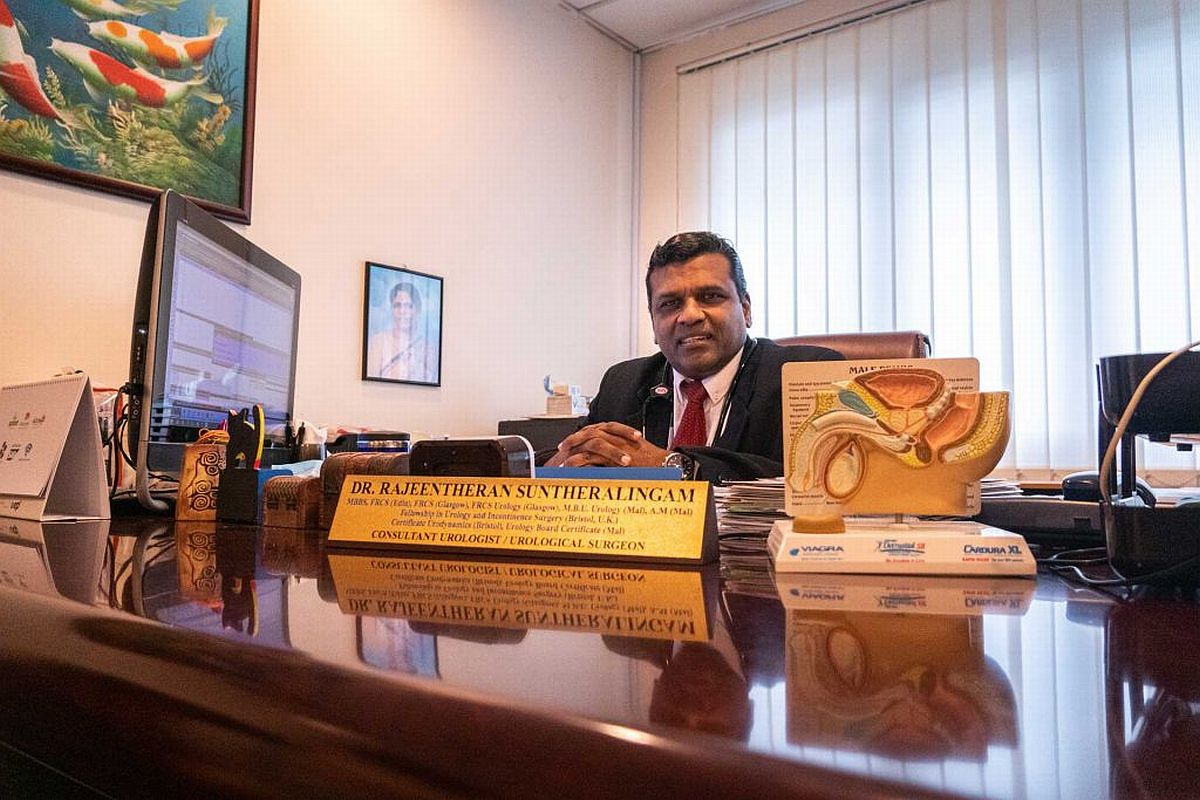
The author is a senior consultant urologist and urological surgeon at Damansara Specialist Hospital.
- This is the personal opinion of the writer or publication and does not necessarily represent the views of CodeBlue.


