

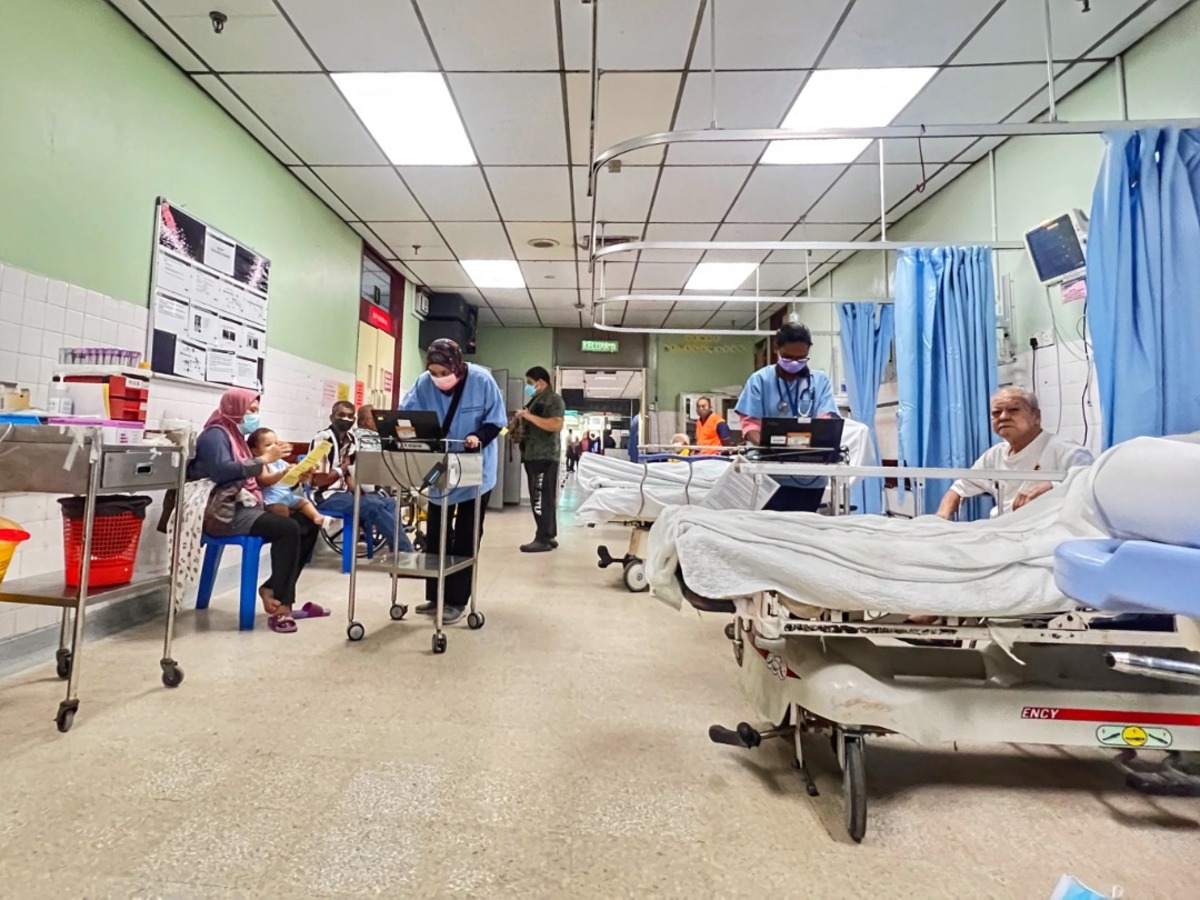
KUALA LUMPUR, May 11 — The Malaysian Medical Association (MMA) has called for a transition to a maximum 48-hour work week, and eventually 45 hours, for all health care workers beyond house officers.
MMA president Dr R. Arasu also stressed that Health director-general Dr Mahathar Abd Wahab’s new circular, which limits house officers’ working hours to 60 to 62 hours a week, must be enforced, with hospital directors held accountable.
“The circular also reminds hospitals to honour housemen’s leave entitlements. This should not need reminding. Annual leave and sick leave are not privileges — they are rights under existing regulations. Denying or substituting them is not acceptable,” said Dr Arasu in a statement.
“But we also need to be honest about the longer term. A 60-hour week is still a heavy load for any health care worker. MMA’s position has been consistent — Malaysia must move toward a maximum of 48 hours, and eventually 45 hours.
“To get there, we must address the systemic issues that make long hours persist: the chronic shortage of doctors, inadequate staffing ratios, and a system that has never been properly resourced to function within humane working hours.”
Dr Mahathar issued his circular last May 8 after the Malaysian Medics International (MMI), a group of medical students, complained that junior doctors (housemen and medical officers) work 65 to 85 hours a week, compared to a legal maximum of 40 hours in the United Kingdom.
Unlike an official cap on trainee doctors’ working hours in Malaysia’s public service, medical officers do not have such legal protections and frequently work 33-hour on-call shifts.
In a separate statement, former Senator Dr RA Lingeshwaran criticised the Health DG’s directive that mandates implementation of three flexible work shifts (morning, evening, night) without considering the number of housemen available.
“The directive stipulates that in the event of a shortage of house officers, the clinical workload for evening and night shifts must be borne entirely by medical officers and specialists to ensure compliance with house officers’ rest periods,” he said.
“This rigid approach appears to ignore the realities of frontline workload and may strain working relationships between senior and junior doctors.”
The former senator also questioned the feasibility of a shift system, given the declining number of trainee doctors.
“The shift system was originally introduced to manage the oversupply of house officers and to ensure sufficient night-shift exposure, but it is now seen as hindering continuity in learning. The time has come for the government to reassess the need to return to the on-call system,” said Dr Lingeshwaran, who was formerly Sungai Bakap hospital director.
“Based on my own personal experience, the on-call system was highly beneficial in shaping my medical practice to this day because it demanded resilience and provided deeper continuity of patient care.”


