

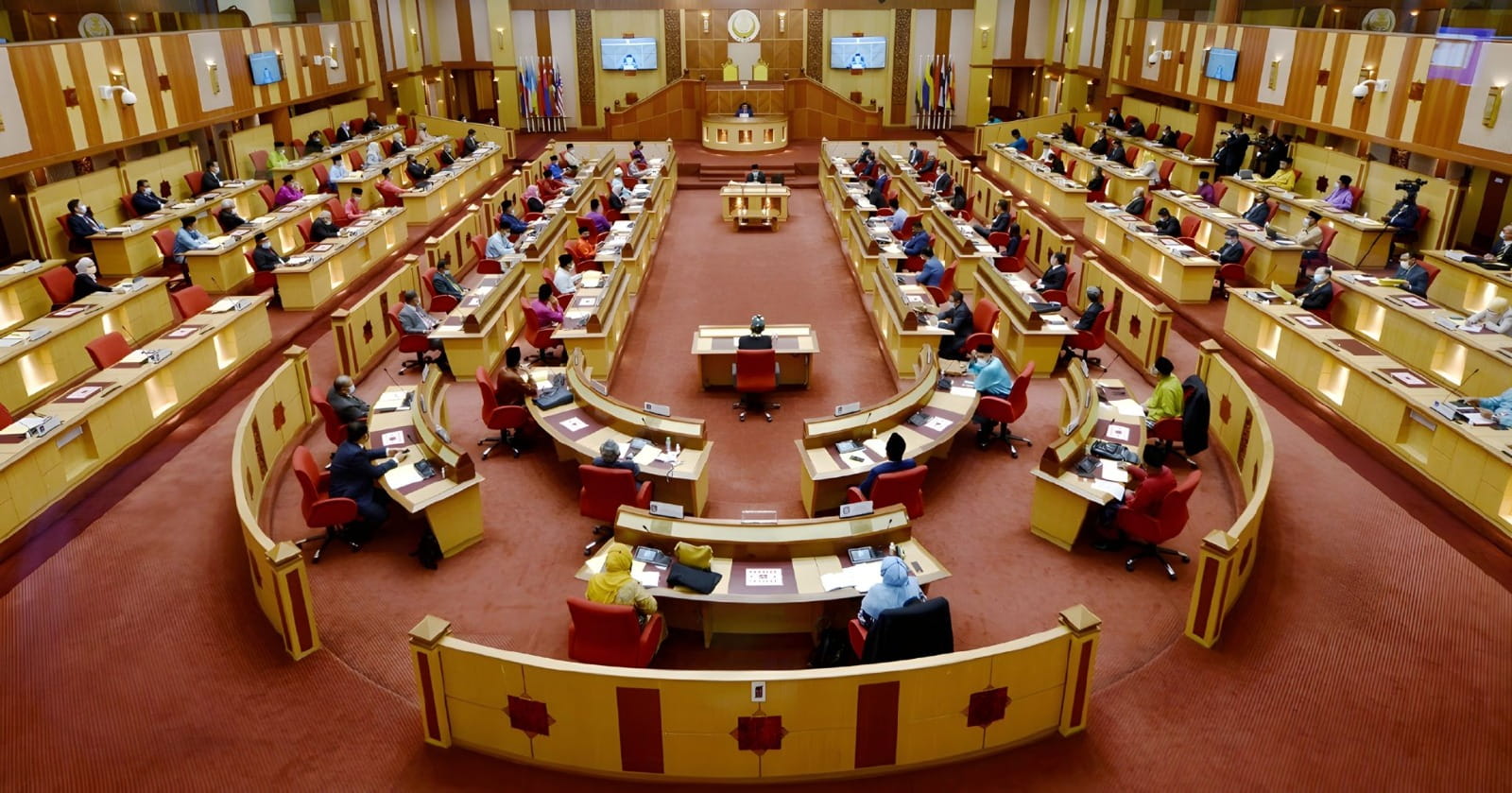
When the Perak state legislative assembly was told that Perak only has one doctor for every 466 people, compared with the national average of one doctor for every 403, and that 106 permanent medical officer posts in Perak were still vacant as of the end of February 2026, the figures were important.
But the House is not a reading room for statistics. A Dewan Undangan Negeri is where elected representatives are supposed to translate numbers into policy, urgency, and solutions. If lawmakers stop at merely reading out ratios, vacancies, and reports, then the public is left with a diagnosis but no treatment.
Malaysia’s health care crisis has already moved beyond the stage of abstract data. Even the Ministry of Health (MOH) has acknowledged persistent workforce constraints, saying it is trying to move beyond “stop-gap” measures toward structural reform.
As of February 2026, only 6,500 out of 12,198 house officer slots nationwide were filled, leaving a shortage of 5,698 trainee doctors. The wider specialist pipeline is also alarming: the public sector is projected to need 22,435 specialists by 2030, but had only 9,040 in service as of the end of 2025. In other words, what was read in Perak is not just a local inconvenience. It is part of a national emergency in slow motion.
That is precisely why state assemblymen (ADUNs) cannot behave like passive messengers from Putrajaya. Yes, health care manpower is heavily shaped by federal policy, Public Service Department (JPA) approvals, and MOH postings. But that does not absolve state governments of responsibility.
Policymaking is not only about legal jurisdiction; it is about political will, negotiation, co-funding, administrative creativity, and moral pressure. If an assemblyman can raise the issue, the assembly can also demand timelines, propose incentives, form state task forces, mobilise volunteers, fund support systems, and publicly pressure the federal government until action follows.
The job of a policymaker is not to say, “This is the number”. Their job is to ask, “What are we doing next Monday morning?”
Johor has already shown what that looks like. When hospitals there became overstretched, the state did not merely recite staffing shortages and move on. The Johor government met Health Minister Dzulkefly Ahmad, agreed on urgent staffing and infrastructure measures for Sultanah Aminah Hospital, Sultan Ismail Hospital, and Kulai Hospital, and set up a special task force to coordinate short-, medium-, and long-term action plans.
They also agreed that Pasir Gudang Hospital and Klinik Kesihatan Cendana needed extra manpower and equipment before opening. Beyond that, Johor moved to deploy Johor Southern Volunteers to carry out non-clinical and administrative duties in busy hospitals so doctors and nurses could focus on patients.
The state raised its health care worker incentive payment from RM100 to RM500 and began exploring housing rental subsidies. That is what problem-solving looks like: not denial, not ceremony, but intervention.
Sabah, too, did not pretend that a crisis can be solved by reading out a ratio and sitting down. Sabah Women, Health and People’s Wellbeing Minister Julita Majungki openly said the state has only about 2,884 doctors against an estimated need for around 9,000, as she pressed Sabah’s priorities directly with MOH while also raising them through the MA63 technical committee.
More importantly, she argued for concrete retention tools: restoring the Regional Incentive Payment (BIW) to its previous form and improving rural cost-of-living support for doctors serving under difficult conditions. That is the right instinct. A staffing crisis in a difficult posting environment is not solved by patriotic slogans alone. It is solved when policymakers acknowledge hardship honestly and compensate it seriously.
Sarawak has gone even further in thinking beyond the usual bureaucratic script. Sarawak leaders have repeatedly raised manpower shortages with the federal authorities under the MA63 framework, with Deputy Premier Dr Sim Kui Hian saying the state still faces around 11,000 vacant posts in doctors and medical officers.
But Sarawak is also exploring longer-term retention tools: offering permanent residency to doctors who serve in the state for a specified number of years, expanding medical sponsorships at Unimas from 40 to 80 students annually, and pushing broader health autonomy and local training capacity. These ideas matter because the old assumption that permanent posts alone will solve the problem is no longer credible.
MOH data showed that in 2025, only 432 out of 764 contract medical officers offered permanent placements in Sarawak actually reported for duty. Sarawak understood something crucial: if the system is unattractive, even secure posts won’t be enough.
Royal institutions have also understood the urgency better than many politicians. Johor Regent Tunku Mahkota Ismail publicly urged the federal government to expedite the filling of vacancies and said health care is not a luxury but a basic human right. He later granted an audience to the health minister together with the ministry’s top leadership and Johor’s state leadership.
In Selangor, Sultan Sharafuddin Idris Shah did not merely acknowledge bed shortages; he called for new hospitals, upgrades to existing facilities, more clinics in strategic locations, fairer staff distribution, and even the creation of new roles if current staffing was insufficient. When rulers are speaking this directly about beds, clinics, staffing, and worker welfare, elected representatives should be embarrassed if all they can do is read a statistic and adjourn their sitting in the House.
There are even more imaginative proposals already in the national conversation. Senator Dr RA Lingeshwaran has proposed special excise duty exemptions for car purchases and tax relief for health workers who serve in Sabah and Sarawak, while also urging state governments to create their own additional incentives.
Whether one agrees with that exact model or not, the larger point is undeniable: policymakers elsewhere are at least thinking in terms of recruitment packages, retention incentives, and real-life hardship. So why should Perak’s response be limited to a recital of vacancy numbers?
If Johor can provide incentives and explore rental support, Sabah can fight for hardship allowances, and Sarawak can discuss PR-linked retention, then Perak can certainly design state-backed measures such as hostel support, rental subsidies, parking and transport assistance, child care support, scholarships tied to service, and administrative volunteer corps for overloaded hospitals.
For health care workers, this is about dignity. For patients, this is about safety. A doctor-to-population ratio is not what the public actually experiences. Patients experience postponed care, overcrowded hospitals, difficulty getting a bed, exhausted staff, and a system that asks too few people to do too much.
Sultanah Aminah Johor Bahru Hospital has already been described as working under a severe manpower crunch, while Selangor’s ruler warned of patients struggling to secure beds on admission. That is what lies behind the numbers.
So the next time this issue is raised in any state assembly, the rakyat should demand more than a statistical recital. They should demand a plan, a timeline, a state position, a negotiating strategy with MOH, and a list of measures to make service sustainable for those who still choose to stay.
The state legislative assembly is not a stage for reading bad news in a calm voice. It is a place where the government must be pushed to act. If Perak knows it is short of doctors, then Perak’s leaders must stop behaving like clerks of the crisis and start behaving like owners of the solution.
Malaysia’s health care workers do not need more acknowledgement without action, and patients do not need more sympathy without reform. They need policymakers brave enough to turn statistics into decisions, decisions into incentives, and incentives into retained manpower. Anything less is not governance. It is surrender.
The author is a Perak doctor working in public service. CodeBlue is providing the author anonymity because civil servants are prohibited from writing to the press.
- This is the personal opinion of the writer or publication and does not necessarily represent the views of CodeBlue.


