

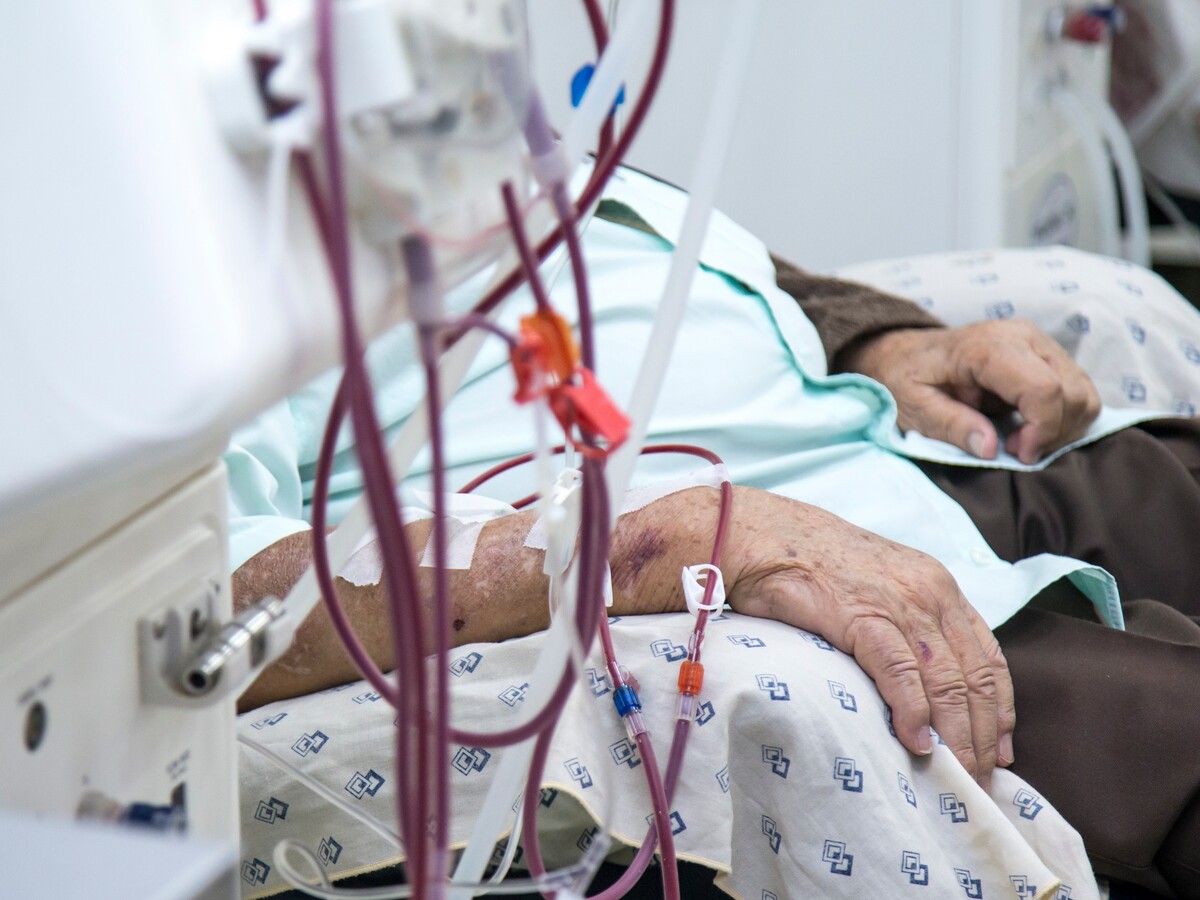
KUALA LUMPUR, March 2 — A patient with kidney failure may wait more than two years from diagnosis – and in some cases close to four years – to secure a routine haemodialysis slot at a government facility, Health Minister Dzulkefly Ahmad told Parliament.
In a written Dewan Rakyat reply to Bera MP Ismail Sabri Yaakob on January 27, Dzulkefly outlined the treatment pathway from confirmation of end-stage kidney disease (ESKD) to dialysis placement, a process that can stretch across multiple phases including diagnosis, specialist assessment, vascular access surgery, fistula maturation, and queue time for a dialysis unit slot.
Dzulkefly said diagnosis and confirmation of ESKD alone can take two to eight weeks. After a nephrologist assesses the need for dialysis and determines the vascular access type and schedule, patients are typically referred to a surgical team within two to three weeks.
The waiting period for arteriovenous fistula (AVF) surgery then ranges from one to six months, depending on hospital capacity.
However, if the surgery is outsourced under the Hospital Services Outsourcing Programme (HSOP), the period from referral to surgery may be shortened to two to three weeks.
Following surgery, the AV fistula requires another four to eight weeks (one to two months) to mature before it can be used for haemodialysis. For critical cases, the vascular catheter (temporary) insertion procedure will be carried out immediately.
For stable patients, the longest delay occurs at the placement stage for a government dialysis unit slot, Dzulkefly said in his reply.
“The waiting time to obtain a haemodialysis treatment slot at a government facility is two to three years,” he said, adding that such patients would undergo treatment at other Health Ministry haemodialysis units with available capacity while waiting for a slot closer to their residence. Eligible patients may also be offered peritoneal dialysis.
By contrast, placement at private dialysis centres typically takes two to four weeks after funding approval is obtained from payers such as zakat institutions, the Social Security Organisation (Socso), or the Public Service Department (JPA).
Taken together, the fastest realistic pathway – assuming outsourced AV fistula surgery and minimum waiting periods – is about two years and three months from diagnosis to a government dialysis slot.
In the slowest scenario, involving in-house surgery and maximum waiting times at each stage, the total wait may approach four years, or roughly three years and 10 to 11 months.
Dzulkefly noted that the overall time for a patient to begin haemodialysis “depends on the patient’s clinical condition (stable or critical), the capacity of the haemodialysis unit (number of beds or machines), the smoothness of vascular access procedures, and administrative or approval processes if the dialysis centre is external.”
He also reported that more than five million Malaysians, or 15.5 per cent of the population, are estimated to be facing chronic kidney disease.
Citing the 32nd Report of the Malaysian Dialysis and Transplant Registry 2024, Dzulkefly said 9,473 new Stage Five CKD patients – those with end-stage kidney failure requiring dialysis – were recorded, with 55,237 dialysis patients currently undergoing treatment nationwide.


