

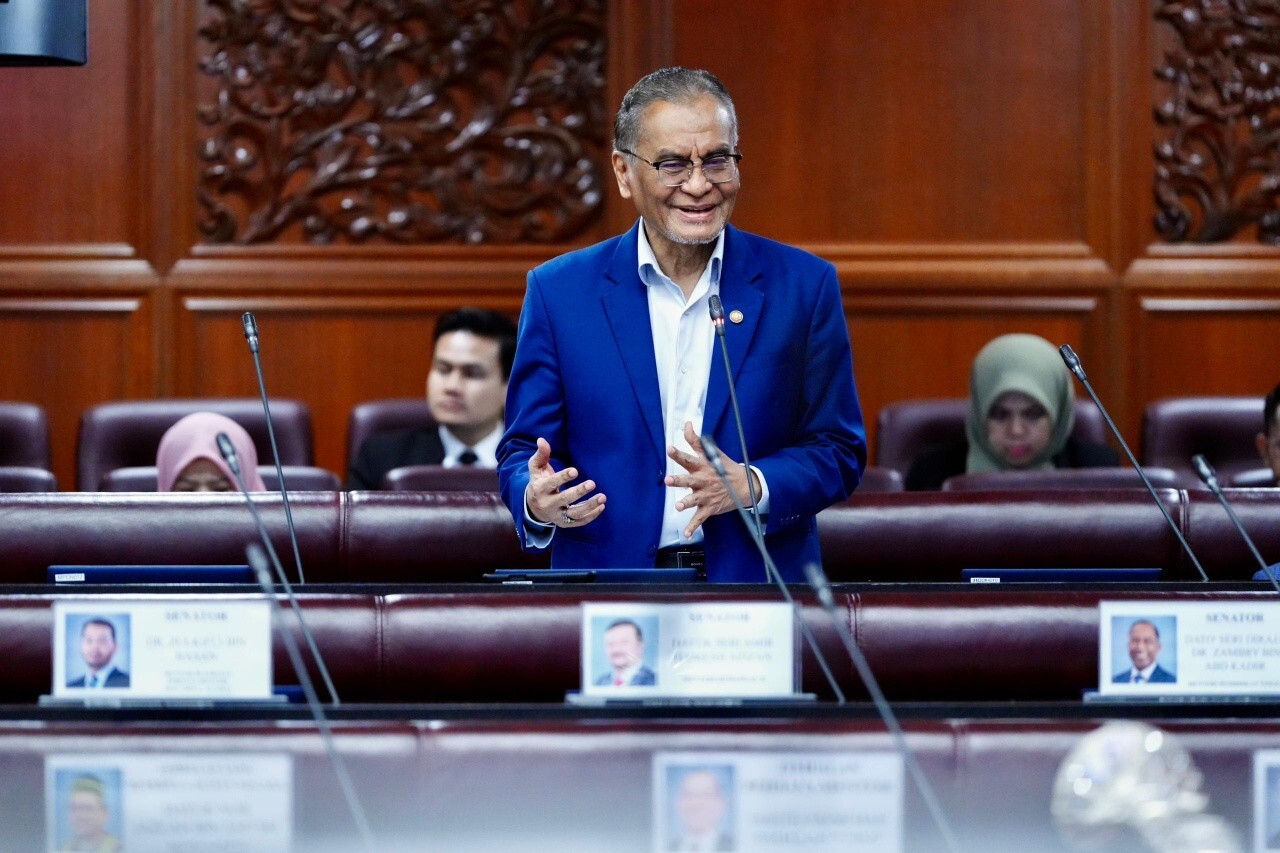
KUALA LUMPUR, March 13 — Four in 10 doctors nationwide fail to report for duty after being offered permanent positions in the national health service, Dzulkefly Ahmad revealed in the Dewan Negara yesterday.
The health minister said the highest attrition in the medical career pathway occurs when doctors transition from contract positions to permanent appointments in the Ministry of Health (MOH).
“I am observing at what point in their career pathway, starting from two years of housemanship, followed by two years of compulsory service, and then the opportunity to obtain a permanent position after two plus five years, where the attrition rate is highest,” Dzulkefly told the Senate.
He was responding to a supplementary question from Senator Dr Wan Martina Wan Yusof, who described the drop in house officer intake in recent years from over 6,000 to around 3,000 as “very critical”, and asked what could be done to attract more young people to pursue medical studies.
According to the health minister, the largest drop-off occurs when senior medical officers previously serving on contract are offered permanent posts in government.
“When they move from contract to permanent positions and are given a placement, including three options today – two in Peninsular Malaysia and one in Sabah or Sarawak – that is where the attrition rate is highest,” said Dzulkefly.
“Four out of ten will be a no-show. They will not come to continue their career with us. This is very unfortunate, and I have a formula that perhaps I cannot share here yet, but in the near future I will announce it.”
Dzulkefly’s revelation of a 40 per cent no-show rate for medical officers offered permanent appointments across the country, beyond East Malaysia, comes after earlier MOH data showed that 43 per cent didn’t report for duty for permanent placements in Sarawak last year.
He said the ministry is examining attrition patterns across different stages of a doctor’s career in order to identify where the largest losses occur.
Dzulkefly added that he wants to improve remuneration for doctors in public service, citing discussions with airlines and banks to give them “a bit of perks and benefits”, plus extras for consultants and specialists.
“Like what I signalled just now, I have a formula to prevent attrition or resignations from public service by giving other benefits.”
The health minister’s plans to increase remuneration for government doctors may be complicated by the Iran war that is driving up oil prices that topped US$100 a barrel again yesterday.
Prime Minister Anwar Ibrahim recently announced that Putrajaya will maintain the Budi95 fuel subsidy for Malaysians, retaining RON95 petrol retail prices at RM1.99 per litre. Communications Minister Fahmi Fadzil told reporters yesterday that the government will also consider other austerity measures like work-from-home policies.
Dzulkefly told Parliament yesterday that Malaysia’s intake of medical graduates into the housemanship training programme has fallen sharply in recent years, reflecting a contraction in the supply of new doctors entering the system.
He also noted that resignations among house officers continue to occur, albeit a declining trend. A total of 206 house officers resigned during their training in 2024 and 2025, comprising 114 resignations in 2024 and 92 in 2025. Another 254 house officers left the programme in 2023.
Dzulkefly said the reasons for resignations were multifactorial, including personal issues, lack of readiness to undergo housemanship training, pursuing further studies, migration overseas, and health problems.
He said addressing Malaysia’s health workforce challenges requires a broader whole-of-government approach involving multiple ministries.
“If this human resource issue is not addressed, we will face a situation that I believe has long been a crisis.”


