

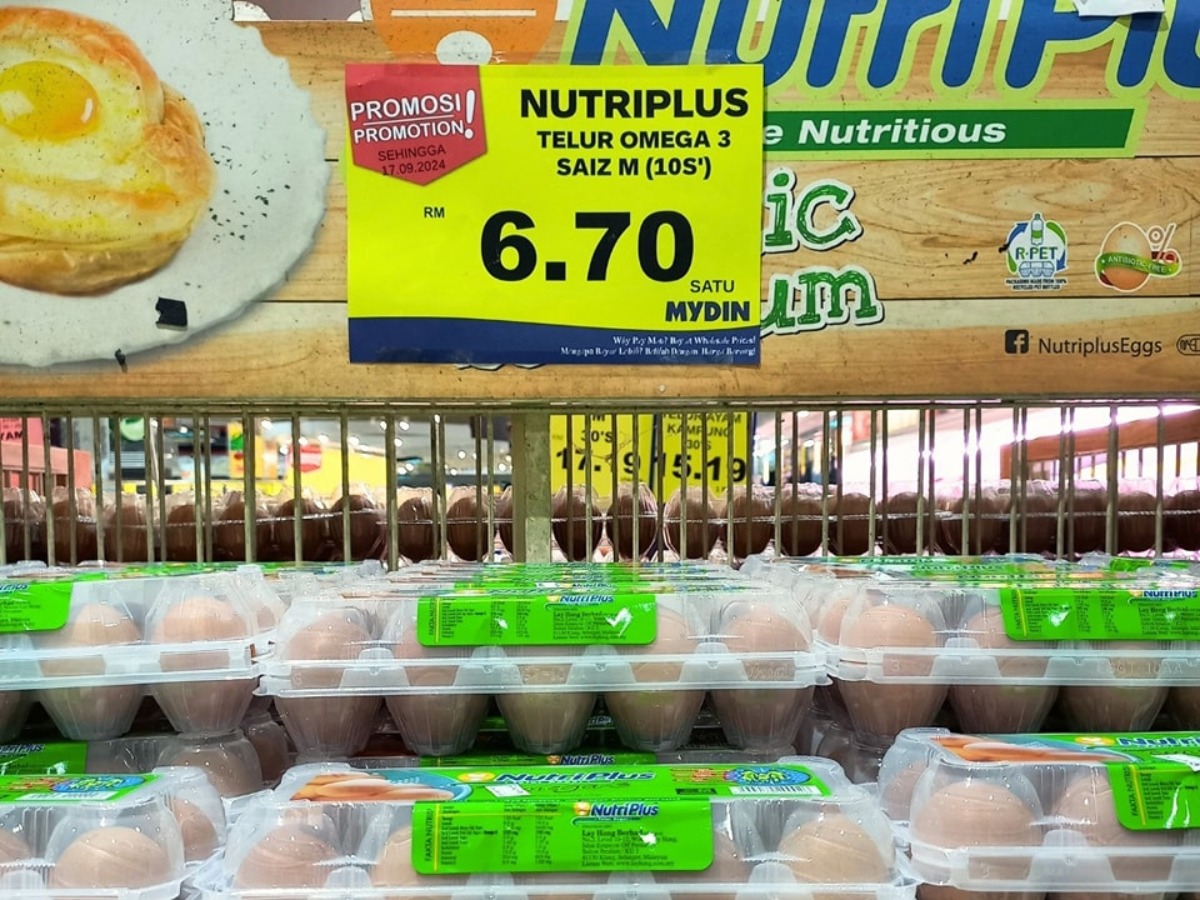
KUALA LUMPUR, Feb 26 — Omega and selenium eggs account for only about 3 to 4 per cent of Malaysia’s total egg production, the Agriculture and Food Security Ministry (KPKM) told Parliament, amid questions over their apparent prevalence in the market.
In a written Dewan Rakyat reply on February 12, KPKM Minister Mohamad Sabu said overall egg production remains dominated by regular chicken eggs, which continue to be prioritised under national food security policy.
According to 2024 livestock statistics, Malaysia produced 15.81 billion chicken and duck eggs in 2024, with output projected to rise by about 10 per cent to 17.39 billion eggs in 2025. The country’s chicken egg self-sufficiency ratio (SSR) stood at 107 per cent in 2024, up slightly from 106.5 per cent in 2023.
“The production of omega and selenium eggs is supplementary in nature and driven by demand from specific consumer segments. Nevertheless, the production of regular chicken eggs continues to dominate the market and remains prioritised in line with the national food security policy,” Mohamad said.
Mohamad was responding to Richard Riot Anak Jaem (GPS-Serian), who asked the minister to state the methods adopted by the ministry to maintain the supply of regular chicken eggs instead of omega or selenium eggs that are widely available in the market.
Omega or selenium eggs differ from regular eggs mainly in the hens’ feed formulation. Producers add nutrients such as omega-3 fatty acids or selenium to chicken feed to increase the nutritional content of the eggs, while regular eggs come from standard feed without such supplementation.
Omega and selenium eggs can appear widely available because they are concentrated in supermarkets and hypermarkets, particularly in urban areas, where branded packaging and “omega” or “DHA” labels draw more consumer attention.
Premium eggs are often sold in six- or 10-egg cartons, making them appear more numerous on store shelves, while regular eggs are typically sold in bulk trays that may be placed on lower shelves.
Mohamad said the ministry, through the Department of Veterinary Services (DVS), continues to monitor and regulate the supply of regular chicken eggs to ensure sufficiency and market stability.
Measures include providing technical advisory support to producers, continuous monitoring of layer farms that may face community disturbances or rapid surrounding development, as well as overseeing production levels, prices, and supply coordination.
KPKM also provides support to egg producers to ensure regular chicken eggs remain the main commodity in Malaysia’s food supply chain, while allowing the controlled and balanced development of value-added egg products.


