

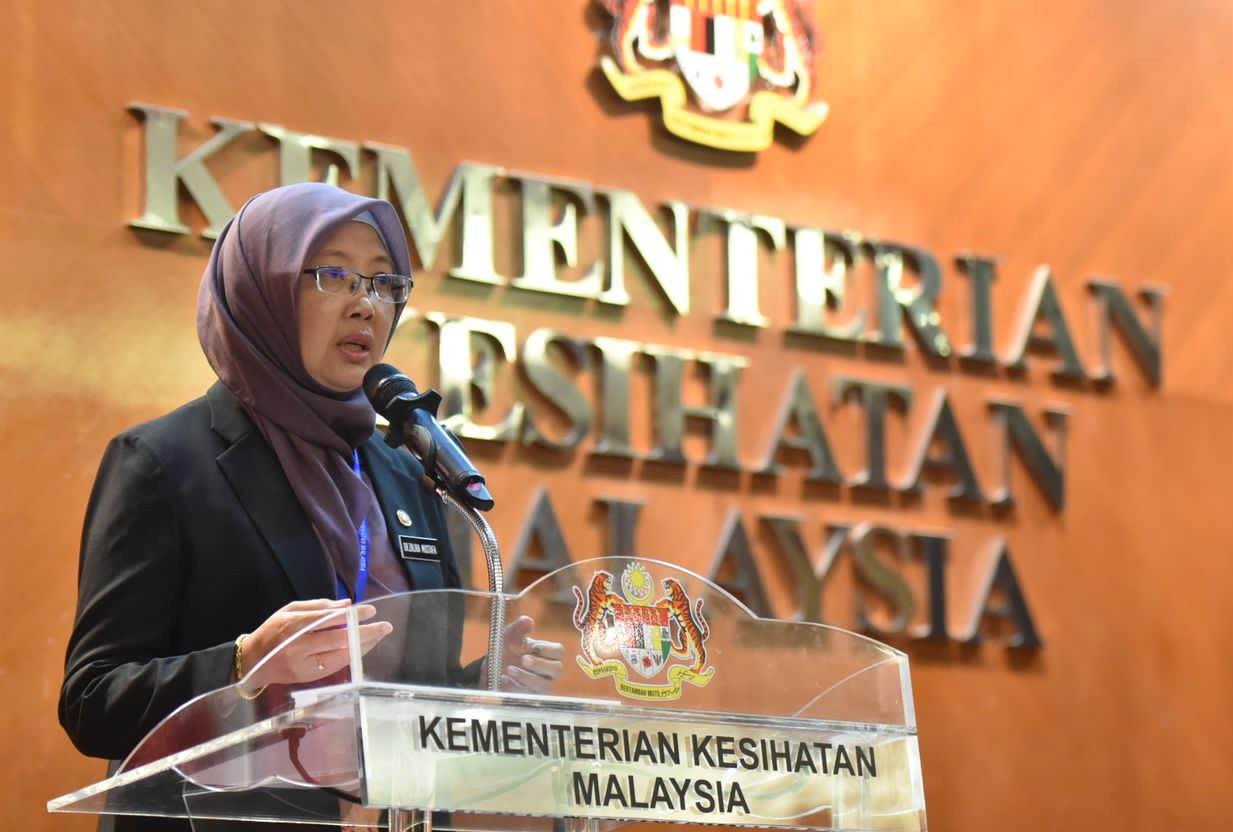
KUALA LUMPUR, Dec 22 — The Center to Combat Corruption & Cronyism (C4) today demanded a corruption investigation into an allegation that a former health minister was offered an RM50 million bribe to kill the tobacco generational end game (GEG) policy.
C4 pointed out that although Dr Zaliha Mustafa’s aide, G. Sivamalar, claimed that the health minister had rejected the bribe offer, Section 25 of the Malaysian Anti-Corruption Commission (MACC) Act 2009 requires bribe offers to be reported to the MACC or police.
“The veracity of Sivamalar’s claims remains to be verified, and it falls upon the MACC to probe the matter further due to the seriousness of the allegations,” said C4 in a statement today.
“The fact that private parties are attempting to influence national legislation to meet their interests – termed ‘policy capture’ – must be investigated seriously by the MACC in order to dismantle such possible coordinated efforts by entities who put profit over the well-being of the nation and its people.
“Section 28 stipulates that it is an offence to even attempt bribery, and therefore it is immaterial that Zaliha may not have accepted the bribe for the perpetrator to be found liable for an offence.”
CodeBlue reported earlier today an op-ed penned by Sivamalar that claimed she had personally witnessed Dr Zaliha, who was health minister from December 2022 to December 2023, rejecting an RM50 million bribe offer to drop the proposed generational ban on tobacco and vape. Dr Zaliha is also Sekijang MP from Pakatan Harapan.
The GEG policy, which sought to ban tobacco and vape products for anyone born from 2007, was later axed from the tobacco bill tabled in the Dewan Rakyat in November 2023 and subsequently passed by Parliament as the Control of Smoking Products for Public Health Act 2024 (Act 852).
While claiming that she didn’t remember details on when, where, or who made the RM50 million bribe offer to Dr Zaliha, Sivamalar told CodeBlue that neither she nor the health minister had lodged a report to the MACC or police because they “didn’t want to waste time”.
C4 pointed out that Section 25 of the MACC Act clearly stipulates that it is an offence not to report offers of gratification.
“It is insufficient to simply ignore a bribe attempt,” said the corruption watchdog. “Sivamalar should have also reported these instances at the time they arose in the spirit of transparency and good governance, especially seeing that she eventually found it acceptable to publicly describe these instances anyways.”
C4 added that statutory provisions place a clear duty on every person to whom bribes are offered to make an official report.
“These provisions exist in a greater anti-corruption framework that must be upheld, ensuring that anti-corruption measures are not merely reactive, but an all-encompassing system of which every party plays an active role in,” said C4.
“The Madani government must take this as an opportunity to reassert and reaffirm its commitment to taking anti-corruption seriously, especially in the eyes of Malaysians, many of whom have lost confidence in the government to tackle these issues adequately.”
C4 urged the MACC to probe the events alleged by Sivamalar and to publicly disclose its investigation findings, besides taking action against individuals or entities found to have violated the MACC Act.


