

KUALA LUMPUR, Nov 28 — Malaysia continues to diagnose lung diseases late, with many people avoiding clinics unless they feel unwell – a pattern respiratory experts say fuels preventable deaths from tuberculosis (TB) to lung cancer.
To close this gap, the National Cancer Society Malaysia (NCSM) has rolled out one of the country’s largest mobile screening programmes, using portable X-rays, artificial intelligence, and a micro-insurance product meant to remove the financial barriers that keep many patients from completing follow-up tests.
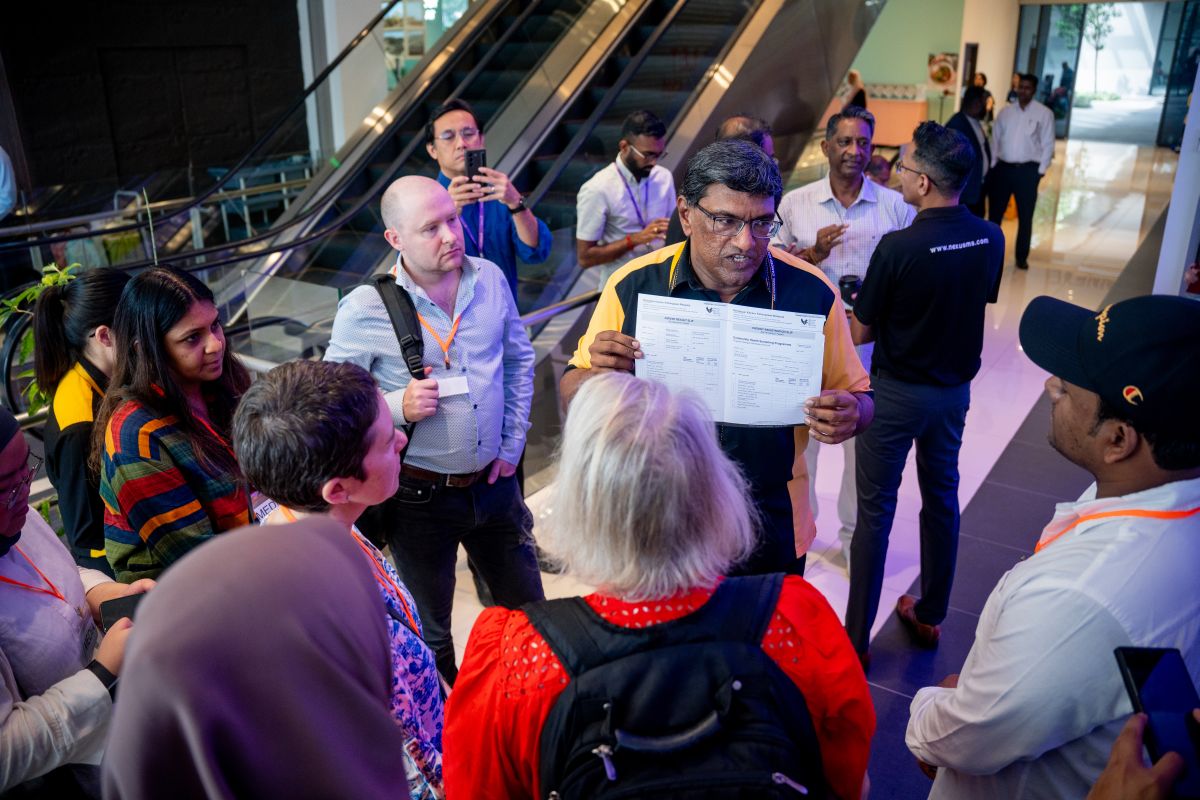
NCSM screens about 100,000 people a year at temporary “pop-up” sites set up in office buildings, community halls and public markets. Reporters from the “Unpacking the Chronic Respiratory Disease Epidemic” media workshop, held in partnership with the World Health Organization (WHO) and Pace University Center for Global Health, visited one of these sites last November 14 in Mutiara Damansara, a commercial and residential district just outside Kuala Lumpur.
Unlike disease-specific campaigns, NCSM bundles multiple tests – chest X-rays, basic non-communicable disease (NCD) screening, and other early-detection checks – into a single visit to capture people who would otherwise skip preventive health care entirely.
“People don’t want to visit a health facility when they feel well,” said NCSM medical director Dr Murallitharan Munisamy. “Screening means coming in when you have no symptoms, and most people won’t do that unless it fits into their daily routine. If we want healthy people to screen, we have to go where they are – workplaces, night markets, community events.”
While corporate pop-ups generally run from 7am to 1pm, factory sites follow a different rhythm. Screenings may begin at 5pm or 6pm, or, in two-shift plants, from roughly 11am until 5pm. “First-shift workers can come right after work, and second-shift workers can come before theirs,” Dr Murallitharan said. “By the end of the day, we’ve screened both.”
To keep the service affordable, NCSM relies on a cross-subsidisation model in which corporate clients pay the full price of RM479, or a promotional rate of RM179, helping to fund screenings in rural or lower-income communities.
New Lung Health Feature Rolls Out In Line With MOH’s National Lung Strategy

In October, NCSM added a lung health component aligned with the Ministry of Health’s (MOH) Lung Health Initiative, pairing AI-assisted chest X-rays with a newly developed micro-insurance product, LungShield, created with its insurance partner, MCIS Life, to cover the high out-of-pocket costs of follow-up diagnostics, including CT scans.
“A full diagnostic workup in the private sector – CT, biopsy, staging, molecular testing – easily adds up to RM10,000. That’s out of reach for most people,” Dr Murallitharan said.
LungShield is meant to remove that barrier. The coverage allows even high-risk individuals, including smokers and those with pre-existing conditions, to complete the full sequence of diagnostic testing if an abnormality appears on the X-ray. Cases are routed into either public or private diagnostic pathways.
“The micro-insurance is designed to push people through the entire diagnostic pathway,” Dr Murallitharan said. “If the X-ray picks up something, the insurance pays for everything up to molecular testing and staging.”
He added that the X-ray is processed through an AI system and then reviewed by a radiologist, with a final report issued within 10 to 12 minutes.
“We’re using battlefield-grade mobile X-ray units developed in Ukraine,” Dr Murallitharan said. “With Starlink telehealth, we can deploy them anywhere, even remote islands.”
How NCSM’s Mobile Screening Circuit Works

The NCSM pop-up functions as a one-stop mobile health checkpoint. Participants rotate through stations offering blood pressure, BMI, glucose testing, carbon monoxide breath analysis for smokers, and stool occult blood kits for colorectal cancer.
Each result is logged on paper and uploaded to the National Cancer Screening Registry, which serves as the programme’s digital backbone.
The lung screening stage begins once a participant signs up for LungShield, NCSM’s micro-insurance product. After answering a brief pre-assessment questionnaire, participants undergo an on-site chest X-ray using a portable digital radiography device.
The image is uploaded to the registry, where AI flags potential abnormalities before a remote radiologist issues a final signed report within minutes.
If the scan reveals an interstitial pulmonary nodule or any other concerning finding, LungShield automatically triggers the next steps: low-dose CT, biopsy and cancer staging, all covered by the micro-insurance.
NCSM physicians and call-centre staff issue referral letters and track follow-up appointments to ensure patients complete the diagnostic pathway.

“This is the station where we do the chest X-ray,” said Dr Ruthresh Rao Subramanyan, an assistant medical director at NCSM, gesturing toward a compact device on a wheeled stand. “The unit we use is the Dexcowin ultra-mobile X-ray – it’s basically the size of a camcorder. It’s tiny, very handy, but it works just as well as a static machine.”
“Because it’s so portable, we can even check it into aircraft cabins. When we do events in East Malaysia, we literally fly it over and the radiographer shoots the X-ray on-site.”
Once the image is captured, it is uploaded to the National Cancer Screening Registry, where an AI tool zooms in on the lung fields and flags possible nodules, infective changes or anomalies in the cardiothoracic ratio. “AI tends to over-report, so the radiologist gives the final decision,” Dr Ruthresh said. Reports are usually ready within 10 to 15 minutes.

The only people who cannot enrol in LungShield are those with a previous cancer diagnosis. Otherwise, any Malaysian aged 18 to 65 is eligible. “What we’re most concerned about is the interstitial pulmonary nodule, which can be suggestive of lung cancer,” he said.
But Dr Ruthresh stressed that not every lung condition is visible on an X-ray. COPD and asthma, for example, require spirometry and clinical examination.
“This morning we screened over 40 people, and about 10 to 12 per cent had abnormalities that required referral,” he said. “If the low-dose CT finds something, we move to biopsy. If it’s confirmed cancer, the next step is CT of the thorax, abdomen, and pelvis for staging.”
Patients are often anxious when told that a scan has uncovered something suspicious. “They’re usually taken aback,” Dr Ruthresh said. “We reassure them that this is just step one. They need to complete steps two, three and four.” Referral appointments for low-dose CT are typically secured within three days, depending on availability.
Employers Step In To Boost Early Detection Among Workers

At the Mutiara Damansara pop-up site, one of the groups to arrive came from SBS Digital Holdings Sdn Bhd. Its chief marketing officer, Jasmine Gan, said she learned about the programme from a flyer circulating near her office and from colleagues who had visited earlier pop-ups.
Gan said the appeal was the combination of convenience and services not typically included in workplace health checks, such as AI-assisted chest X-rays and micro-insurance coverage.
“The site is ten minutes from our office, so it didn’t take much time to bring them out for screening,” she said. “It was affordable compared to other screenings, but more importantly, the time spent was worth it. Health is everything.”
Even then, persuading employees to participate was not straightforward. “At first, quite a few didn’t want to come because they were scared,” Gan said. “They kept saying, ‘I’m fine, I don’t need a check-up.’ We had to get HR to explain that early detection saves lives. Once they knew it was free and simple, they agreed.”
Gan brought six employees on this visit and plans to bring more. “We have about 50 staff, and today I brought six. We’ll bring another batch later,” she said.
She praised the efficiency of the operation and said the reassurance it provided was valuable for both the company and its workers. “For those found healthy, it motivates them to continue taking care of themselves,” she said. “For those who have something, at least we’re facing it together, not alone.”
If a scan reveals something that requires follow-up, she said, the company is prepared to make accommodations. “If something is detected and they need to take leave for follow-up, that’s totally fine – that’s the whole reason we brought them here.”
Gan said she hopes more employers will offer similar on-site screening opportunities, noting that many workers will not pursue preventive care on their own. “Early detection is worth taking time off for,” she said. “Workers shouldn’t be left to manage their health alone.”


