

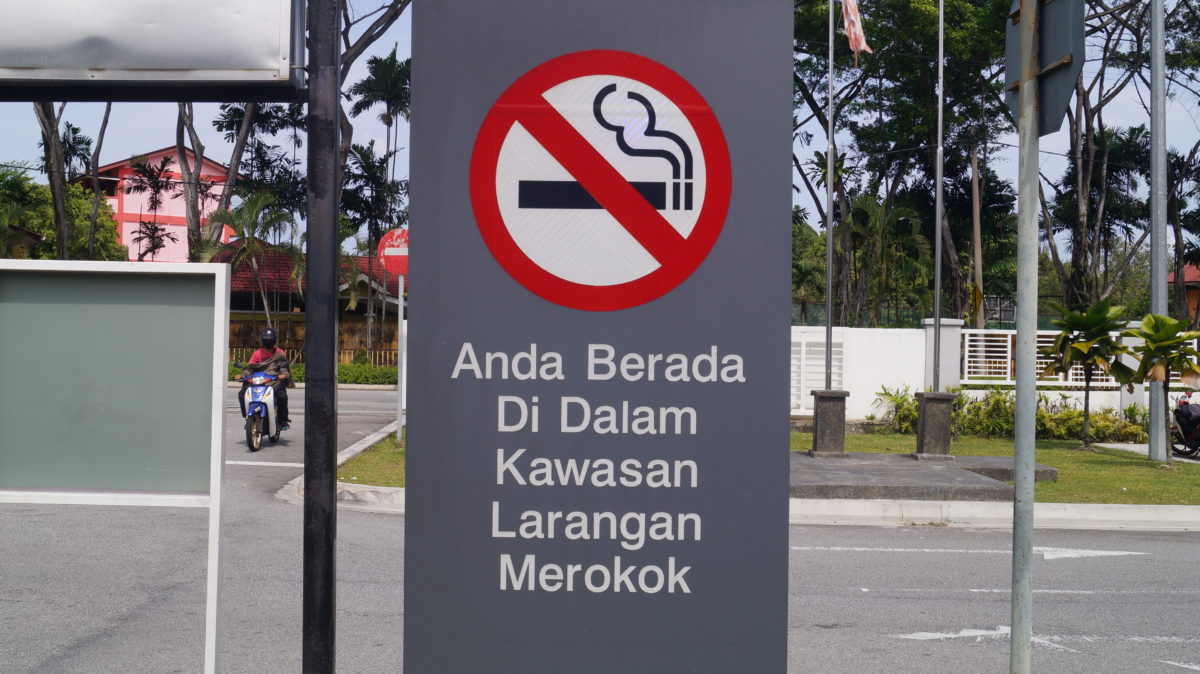
The Malaysian Council for Tobacco Control (MCTC) urges all local authorities (PBT) nationwide to coordinate enforcement actions on licensed businesses to ensure compliance with all laws and licensing conditions, particularly those related to the sale of tobacco products.
In line with the powers granted under the Local Government Act 1976 (Act 171), MCTC emphasises that all local councils are responsible for ensuring business compliance with regulations enforced by other agencies such as the National Kenaf and Tobacco Board (LKTN) and the Ministry of Health (MOH).
Compliance With Retail Tobacco Licensing Under Act 692
Since 2022, LKTN has introduced a licensing system for retailers selling tobacco products under Section 39(1) of the National Kenaf and Tobacco Board Act 2009 (Act 692). All retailers are required to obtain a retail license from LKTN and prominently display it at their premises.
This measure is crucial to curb the sale of illicit tobacco products that have disrupted the legal market and caused significant economic losses. Without a structured licensing framework, convicted sellers can resume operations after paying the minimum fine of RM100,000.
Therefore, retail licensing serves as an effective control mechanism, including prohibiting businesses near educational institutions from selling tobacco products.
Compliance With The Control Of Smoking Products for Public Health Act 2024 (Act 852)
MCTC also calls on local authorities to enforce the following regulations under Act 852:
- Mandatory display of “No Smoking” signs in all designated premises and areas;
- Prohibition on the display of smoking products at sales counters;
- Ban on the sale or promotion of smoking products targeted at minors and youth;
- Only registered smoking products under Act 852 may be marketed;
- All tobacco and smoking product specialty stores must be non-transparent from outside view to prevent exposure to children.
Strengthening Supply Chain Governance Through Track And Trace Systems
MCTC further calls on the government to adopt a comprehensive Track and Trace system, modelled on the United Kingdom’s Tobacco Track and Trace framework, which is both cost-effective and transparent.
Unlike the current Malaysian tax stamp system introduced in 2017—which lacks supply chain traceability and has replaced security ink fiscal markings—the UK system ensures full accountability across the tobacco supply chain, from manufacturer to point of sale.
It involves the participation of enforcement agencies and civil society organisations to monitor, verify, and enforce compliance. Implementing such a system would not only strengthen tobacco control but also serve as a pioneering model for enhancing integrity and transparency in other regulated sectors and public procurement.
This approach could be extended to monitor and protect vital supply chains— such as rice, petroleum, eggs, and cooking oil— from leakages, smuggling, and manipulation, thereby safeguarding national interests and consumer welfare.
Coordinated Local Authority Enforcement As A Strategy To Prevent Duplication And Enhance Efficiency
MCTC believes that coordinated enforcement at the local government level will not only improve compliance but also reduce duplicative actions by other agencies such as LKTN and MOH.
Through holistic licensing conditions, local authorities can mandate adherence to all applicable public health and tobacco control laws as part of a valid business license.
MCTC calls on all local councils to take proactive steps to review and strengthen their business licensing terms by incorporating these legal and regulatory requirements as part of national efforts to protect consumers and public health.
Dr Murallitharan Munisamy is president of Malaysian Council for Tobacco Control (MCTC).
- This is the personal opinion of the writer or publication and does not necessarily represent the views of CodeBlue.


