


During the Covid-19 pandemic, health care workers saved one life at a time. But administrative and diplomatic officers (PTDs) worked behind the scenes on national policies to protect the livelihoods of millions of Malaysians.
While doctors, nurses, and other health care professionals sweated buckets in full protective gear to try to save every patient that came their way, innovative PTDs with a knack for policymaking played a major role in Malaysia’s Covid-19 response to keep the economy running.
This included determining essential services that could operate during lockdowns, the Public-Private Partnership Covid-19 Industry Immunisation Programme (PIKAS), and the Malaysia-Singapore Vaccinated Travel Lanes (VTL), as well as a “Safe at Work” protocol for factories.
What PTDs do exactly is ambiguous. They may also be resented by civil servants at large, due to the perception of PTDs—who are supposed to be the crème de la crème in the civil service—having a seemingly outsized role in making policy simply based on numbers on a spreadsheet, without on-the-ground knowledge or experience.
Ahead of the fifth anniversary of the World Health Organization (WHO) declaring Covid-19 as a global pandemic on March 11, 2020, Ministry of Health (MOH) deputy secretary-general (finance) Norazman Ayob sits down with me to explain the role of PTDs in general and how PTDs contributed specifically to Malaysia’s pandemic response.
It’s a rare interview by a high-ranking career bureaucrat—Norazman is the most senior JUSA A officer, according to the Federal Protocol List—that aims to shed light on how PTDs work. He laughs at my joke about PTDs acting like noblemen running little fiefdoms.
PTDs belong to a select scheme in the public service, numbering at only 10,000 plus officers (0.6 per cent) out of 1.7 million civil servants. The origin of Malaya’s prestigious administrative and diplomatic service dates back to British colonial times, with officers having served in various administrative positions in British colonies and primarily recruited from Oxbridge.
PTDs are mainly deployed to management roles in federal ministries and agencies and in certain states to help the government of the day execute policies. Their job scopes include policymaking, finance, procurement, international relations/negotiations, and project management.
The minimum qualification to be a PTD is a bachelor’s degree; successful applicants must also pass rigorous assessments and interviews. During Norazman’s time, this included an IQ test, as well as written assessments on language competency (Bahasa Malaysia and English) and general knowledge. Assessments were both group and individual. They also had to take a diploma in public management at the National Institute of Public Administration (INTAN) in Bukit Kiara.
He laughs at my joke about PTDs acting like noblemen running little fiefdoms.
When Norazman, who turns 48 this year, joined the highly competitive PTD scheme in 2000, more than 10,000 applicants had applied for just 140 vacancies, or 71 applicants per vacancy. “I was one of the fortunate ones,” recalls Norazman, who has a law degree and a Master of Business Administration (MBA). He got his MBA in 2006.
(Norazman is an alumnus of two prestigious secondary schools—St. John’s Institution and MRSM Taiping.)
During the Covid-19 outbreak in 2020, Norazman was deputy secretary-general (industry) at the Ministry of Investment, Trade and Industry (MITI). Previously, he served as MITI deputy secretary-general (trade) from 2018.
When Covid hit, Norazman and his PTD colleagues at MITI were given the “unenviable” and complex task of developing a list of essential services or sectors allowed to operate during Movement Control Orders (MCO).
Norazman cites the production of a loaf of bread, for example, where it’s not only the factories producing the ingredients for bread that need to be considered, but also the plastic packaging.
“When we talk about the production of a product, we have to look at the whole supply chain. It wasn’t so easy determining what was essential or non-essential,” he says, citing another important lesson from the pandemic about self-sufficiency and supply security for drugs and medical devices.


Ministry of Investment, Trade and Industry (MITI) staff hard at work at their Menara MITI office in Kuala Lumpur during the period when the Public-Private Partnership Covid-19 Industry Immunisation Programme (PIKAS) was conducted. Photos from MITI, circa 2021.
Besides shortlisting essential services in national security or for medical frontliners, PTDs at MITI engaged stakeholders like the Federation of Malaysian Manufacturers and the Malaysia Semiconductor Industry Association to identify which sectors should continue operating during the MCO.
“Various other economies and countries, like Japan, did not have a full-scale nationwide lockdown as practised in Malaysia,” says Norazman.
Japan reportedly had a “lenient” lockdown during the pandemic from 2020 to 2021. The Japanese state of emergency came with almost no enforcement power, but was framed instead as a set of requests and encouragements.
In contrast, Malaysia’s first MCO was a total nationwide lockdown, with people generally prohibited from travelling beyond 10km from their homes.
Norazman reveals that he and his MITI colleagues felt that the MCOs shouldn’t have been “longer than what is necessary”, saying lockdown measures would have to be backed by evidence and science.
“This is where our colleagues from MITI, MOF (Ministry of Finance), Bank Negara, and Khazanah Research Institute were having that deliberation. We were constantly in that dialogue with the Ministry of Health to ensure that we were able to preserve that balancing act between lives and livelihoods.”

Five years on—or even earlier, perhaps—many ordinary citizens and legislators in Malaysia and countries across the world have turned on health regulators and the medical and scientific fraternity, particularly when looking at the devastating impact of lockdowns.
I point out that Malaysia’s shutdowns of varying degrees, which were among the world’s longest at nearly two whole years, severely affected schooling and resulted in generations of children losing their knowledge and skills. Strict movement restrictions, arguably, may not have been scientifically justified to prevent the spread of an airborne respiratory infection.
So I ask Norazman if anyone from MITI or outside the MOH ever tried to fight back against doctors in the Health Ministry who were advocating for harsh lockdowns then.
“Well, I wouldn’t say ‘fight’, but you know, we basically tried to put our views across. But in the end, I think the government, at that point in time, also had to take the medical point of view into consideration.”

Norazman says MITI brainstormed the PIKAS vaccination drive for industry workers to enable economic sectors to operate as soon as possible, given that the National Covid-19 Immunisation Programme (PICK) prioritised high-risk people, like the elderly and those with comorbidities.
They came up with the idea of leveraging private sector resources without costing the government any money, aside from the Covid-19 vaccines that were already a sunk cost.
MITI got hotel and convention centre operators to offer their facilities as vaccination sites (common PPVs). Individual large factory sites also offered on-site PPVs for their workers and surrounding areas.
Volunteers, including from airline crews, were recruited when planes were grounded then, while public transport, and school and factory buses ferried workers for their shots. Food and beverage (F&B) operators catered for staff doing the vaccinations.
The PIKAS team at MITI of less than 20 PTDs managed to open up 80 vaccination sites across the country for the industry immunisation drive. They realised then that they couldn’t manage the huge programme by just using spreadsheets.
So they successfully persuaded Microsoft to develop a system to automate allocation of vaccinees to PPVs without charging the government anything, including providing free cloud storage, to manage vaccination slots for workers at their nearest PPV.
“We got Microsoft because I happened to know their senior management. I asked them whether they’re willing to support this so-called national service,” says Norazman, adding that MITI also roped in the National Cyber Security Agency (NACSA).

Vaccination costs under PIKAS were covered entirely by industries, as a dose was charged at RM45. This comprised RM15 vaccine administration payment to ProtectHealth Corporation, a company fully owned by the MOH, and RM30 to PPV operators for common-use PPVs that also went to paying per diem to volunteers, F&B, and transportation. Two doses for complete vaccination were charged at RM90.
“Within a short period of four and a half months, we managed to vaccinate about 1.1 or 1.2 million people,” says Norazman. “I consider that to be Malaysia’s largest vaccination drive involving the economic sector.”
I point out that some MPs, including Yeo Bee Yin who represented Bakri then, questioned why employers were charged for immunisation of their workers under PIKAS despite a large federal budget allocated. Norazman quips, “To me, if we can help the government save money, then we should be doing that, right?”
“Whatever budget that is allocated by the Ministry of Finance, I think it should be used by the Ministry of Health. As far as MITI was concerned, if we could help the government save money by leveraging private sector resources, well and good.”
Norazman notes that glove manufacturers like Top Glove and Hartalega, which operate multiple factories, could get all their workers vaccinated within just a day or two by just paying a few million ringgit – a small investment to be able to reopen business quickly.
Whatever budget that is allocated by the Ministry of Finance, I think it should be used by the Ministry of Health.
MITI, in consultation with the MOH, also developed a “Safe at Work” protocol for factories, learning from counterparts in other countries like Vietnam.
“What it basically means is that instead of having an MCO, a factory can continue to run, provided the workers stay on site. That means they don’t go back to their homes; they just stay in their bubble,” Norazman says, adding that this would apply to not just labourers but also supervisors, essentially everyone working within the facility.
“The best part is this protocol was developed together with the industry. They provided their views because we cannot say that we know everything about the industry as different sectors operate differently. So there are nuances which we have to cater for.”
By the time the Safe at Work protocol was developed, the acute phase of the Covid-19 pandemic had ended. “So we didn’t actually need to use this protocol, but if at all there’s another pandemic in the future, we already have the Safe at Work protocol.”

Norazman was tasked by both MOH and MITI to lead Malaysia’s negotiations with Singapore to establish the land VTL between the two countries for quarantine-travel by fully vaccinated Malaysian and Singaporean travellers.
“I was given a very strict timeline of less than 30 days,” he says. “We’re talking about opening one of the world’s busiest land border crossings.”
Norazman was given a free hand to select his team members. He recruited both PTDs and non-PTDs (technocrats), including medical officers, from the home affairs; health; science, technology and innovation; and transport ministries for his negotiation team that also included officials from the National Security Council (NSC) and the Immigration Department.
“We had very good cooperation from the Singapore side as well, which enabled us to conclude negotiations in less than 30 days. We formalised it, then the VTL was established.”
The Malaysia-Singapore land VTL via the Causeway, as well as the air VTL between Changi Airport and Kuala Lumpur International Airport, were launched on November 29, 2021.
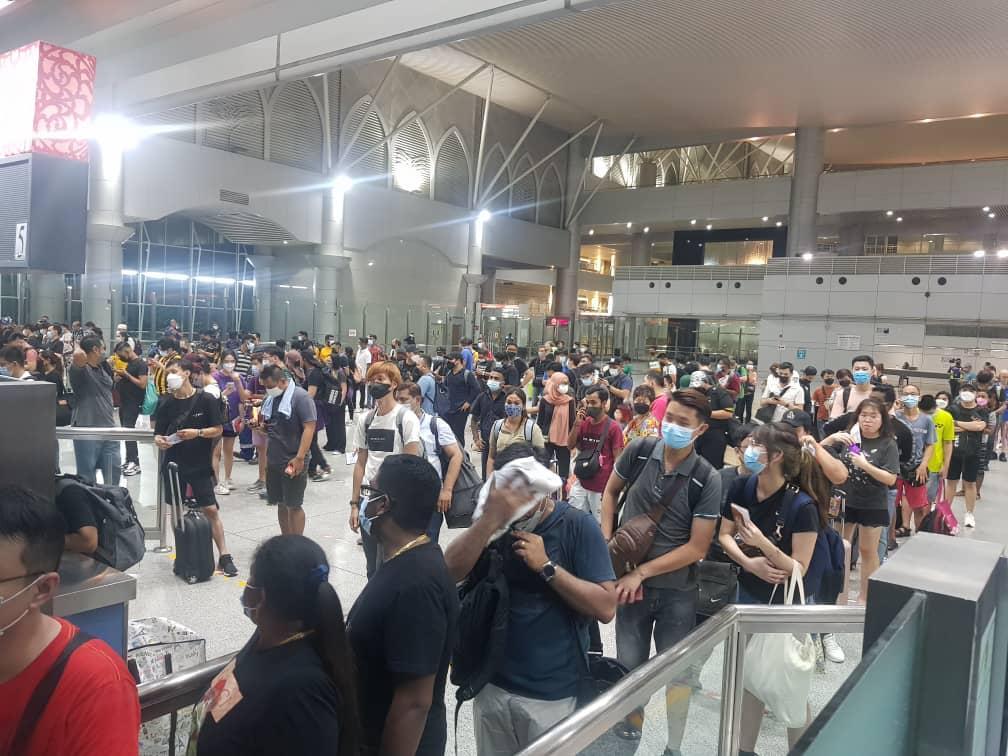
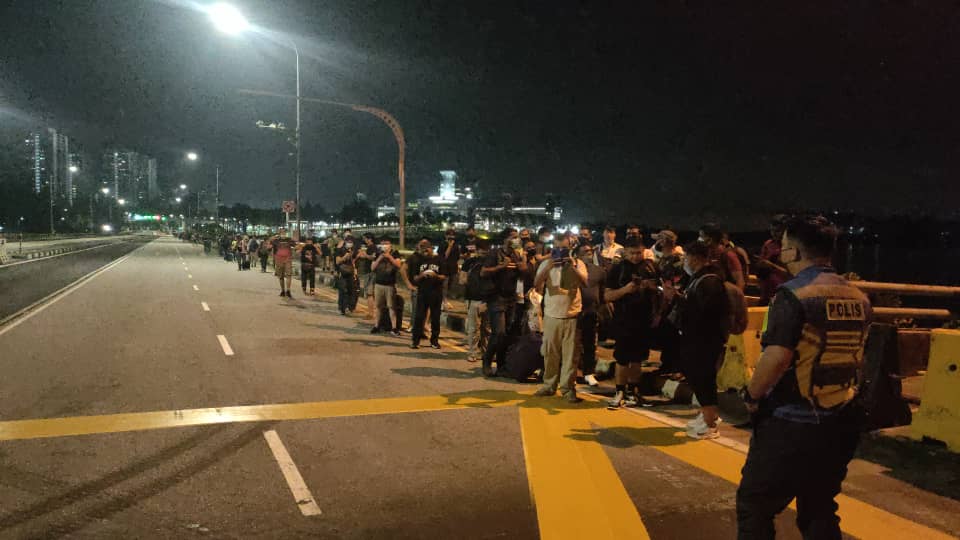
The Causeway in November 2021. Photos from MITI.
I ask if there were difficulties in negotiations with Singapore. The initial challenge, says Norazman, was setting the parameters for discussion.
“I remember having started by engaging in an informal chat with my counterpart talking about, ‘okay, what are the parameters by which we will conduct these negotiations?’ Both sides were, I think, very prompt in the decision-making.
“So I think what’s important is to get the support of everyone: number one, the relevant ministries and agencies and number two, you have the government behind you. That means when you meet, when you need to make very quick decisions, you have, say, a minister to call who will say ‘yes’ or ‘no’, right then and there or within a few minutes or half an hour, rather than having to go through this back-and-forth process of getting that position.”
This was crucial in times of crisis.
Norazman thanked his team members, the prime minister, ministers, the Chief Secretary to the Government (KSN), the Public Service director-general (KPPA), and the MITI secretary-general for their trust and support.
He describes the establishment of the VTL as a “very enriching experience.”
“I still remember us standing on the Causeway—Singapore on their side and us on our side of the crossing,” Norazman reminisces.
“I was very happy because the night that the borders were opened, you could see the faces of fellow Malaysians who could come back. They were so happy meeting their family members.”

One of the ways that MITI helped to ensure accurate communication of various Covid-19 measures that frequently changed throughout the early phase of the pandemic was by establishing a WhatsApp group on the text-messaging platform for the industry.
Prior to the creation of the WhatsApp group in 2020, industry representatives often asked MITI whether something they saw on social media was true.
“One fine day, it just struck me—why can’t we create a WhatsApp group where the administrator is MITI and we get the industry representatives, the president or the secretary-general of the industry associations, to be members of this WhatsApp group? So whatever questions that they want to ask, put it in the WhatsApp group,” Norazman says.
Norazman recruited not just MITI officials to be part of the WhatsApp group, but also representatives from MOF and public health officials from the MOH. “It was cheap, fast, and efficient,” he says. “Very helpful.”
The WhatsApp group began with the manufacturing sector. As word got out, other economic sectors wanted to join, like services, travel, and construction, as well as professional groups.
“So eventually, we created two WhatsApp groups: one for manufacturing and another for services. We also created one more for the chambers of commerce,” says Norazman. “This was way back in 2020. Until today, the group still exists.”
When you need to make very quick decisions, you have, say, a minister to call who will say ‘yes’ or ‘no’, right then and there or within a few minutes or half an hour, rather than having to go through this back-and-forth process of getting that position.
The WhatsApp groups weren’t just one-way communication from government officials to industry, but served as a platform for industry representatives to provide quick feedback or suggestions.
“Whatever feedback provided by the industry, we’d escalate it,” says Norazman.
Norazman, who is currently serving as the deputy secretary-general (finance) at MOH, even used the existing industry Covid WhatsApp groups to source for donations of laptops or desktops for Kuala Lumpur Hospital (HKL).
“I reached out to that WhatsApp group and said, ‘General Hospital Kuala Lumpur requires X number of laptops and desktops. If anybody is interested to contribute, do let me know. We accept both new and secondhand ones’,” says Norazman.
Immediately, the American and Japanese chambers of commerce, as well as a few individual companies, offered to donate computers to HKL.
“If I had not served in MITI before, I might not have suggested this idea. By doing that, I saved the government money. We didn’t have to use our money to buy new laptops. Industries were willing to contribute.”


Left: Health Minister Dzulkefly Ahmad and Ministry of Health (MOH) deputy secretary-general (finance) Norazman Ayob share a light moment at MOH’s Putrajaya headquarters on March 22, 2024. Right: Norazman (on the right, in a suit) officiates the MSU Primary Care Symposium 2024 in Shah Alam, Selangor, on November 30, 2024. Photos from the MOH.
Norazman goes on to talk about his other experiences in the public service beyond the Covid-19 response. He started in the Ministry of Home Affairs in 2000, before moving to the Ministry of Internal Security in 2003. At that time, his portfolio included handling appeals of deregistration of societies, as well as international matters like finance and transnational crime following the 9/11 terrorist attack in the United States.
Then he did his MBA in Australia, after which he was posted to the Ministry of Entrepreneur and Cooperative Development. He moved to MITI from 2006 to 2009, during which he served under three different ministers, including Rafidah Aziz. Norazman was later seconded to Proton Holdings Berhad for about two years.
“My two years’ experience in Proton was an eye-opener, exposing me to corporate practices, including how business proposals are reviewed or evaluated, or how business cases are prepared and presented to the board.”
After Proton, Norazman was director of the Infrastructure Section at the Public-Private Partnership Unit (UKAS) in the Prime Minister’s Department, where he worked with the late Ali Hamsa who later became Chief Secretary to the Government. Norazman served as Ali’s senior private secretary for six years.
“Being in that office, having dealt with ministers, Cabinet members, the union, civil servants, private sector, civil society – this is where you gain that exposure, the experience. In 2018, I was posted back to MITI.”
It doesn’t matter whether a cat is black or white, as long as it catches mice.
At MITI, he was tasked to lead Malaysia’s negotiations for the Regional Comprehensive Economic Partnership (RCEP), the world’s largest free trade agreement (FTA) between 15 countries in Asia and the Pacific: China, Japan, South Korea, Australia, New Zealand, and 10 Asean member states. Norazman moved to the MOH as deputy secretary-general (finance) in March 2023.
“Those kinds of experiences are not easy to come by. So when I came to KKM (Ministry of Health), it’s like, you bring with you all these experiences, exposure, and you can then suggest innovative approaches towards looking at how a problem can be solved,” he says, citing industries’ donation of computers to HKL as an example.
When I ask if PTDs should be described like a Swiss army knife, he says PTDs are either subject matter experts or a jack of all trades. Norazman would like to consider himself as “having a good balance of the two.”
Norazman quotes Deng Xiaoping, the leader of China from the late 1970s until his death in 1997: “It doesn’t matter whether a cat is black or white, as long as it catches mice.”
(Norazman admires Chinese tenacity and perseverance, as well as Japanese and German discipline and attention to detail.)
“I think that’s a good quote to put a stop to this PTD, non-PTD thing. If it catches mice, it’s a good cat lah. It doesn’t matter if it’s black or white. If we cannot help you, what’s the point? It’s about the individual, not which scheme they’re from.”
CodeBlue editor-in-chief Boo Su-Lyn conducted this exclusive interview with Norazman on February 3, 2025, in Kuala Lumpur. This article is part of a special CodeBlue series marking the fifth anniversary of the World Health Organization declaring Covid-19 as a global pandemic on March 11, 2020.


