

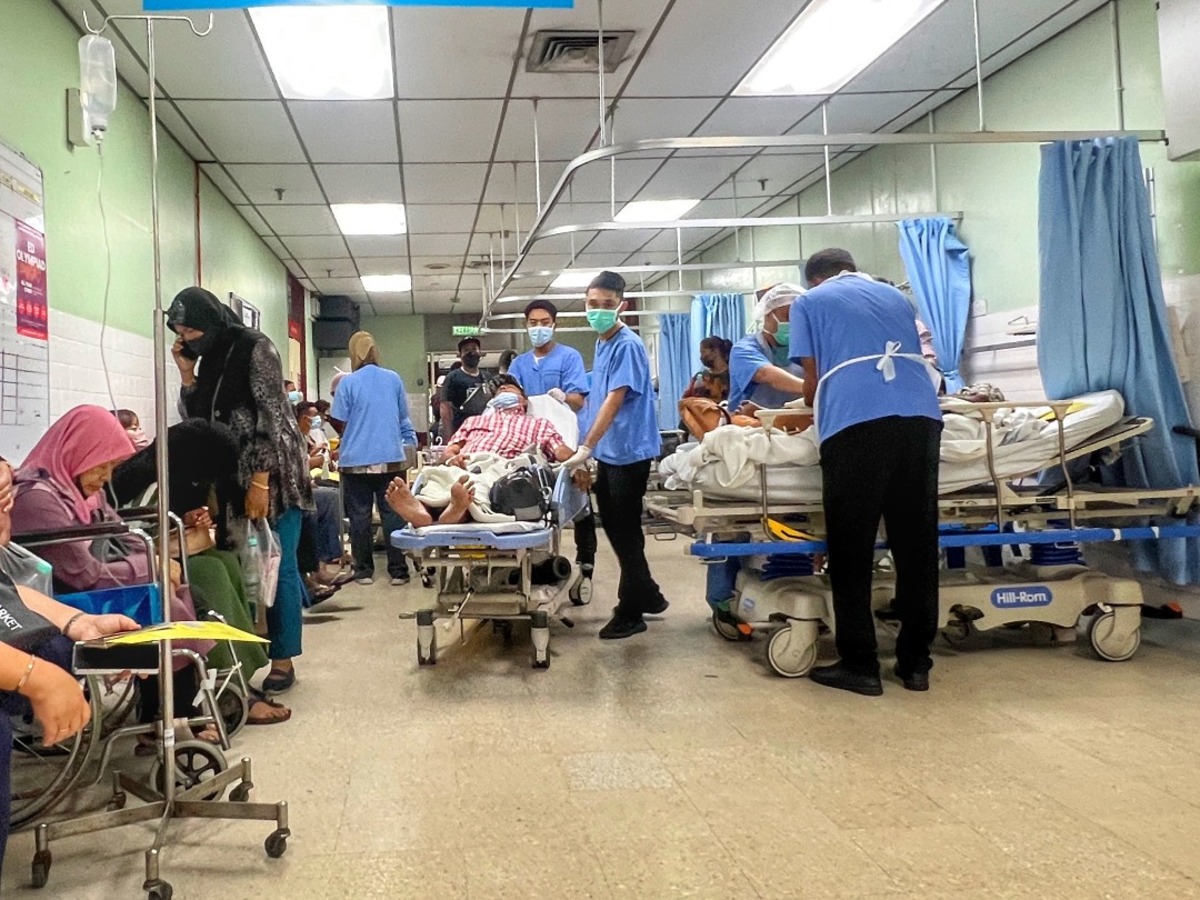
The Malaysian health care system has long been a source of national pride, often touted as one of the most accessible and affordable in the region.
However, recent developments suggest that the system is teetering on the brink of collapse, despite assurances from Health Minister Dzulkefly Ahmad that all is well.
The reality on the ground paints a starkly different picture: a mass exodus of medical professionals, overworked and underpaid staff, and a system struggling to cope with increasing demands.
Dzulkefly’s refusal to acknowledge these issues is not just a failure of leadership but a dangerous delusion that threatens the health and well-being of millions of Malaysians.
The Brain Drain Crisis: Doctors and Nurses Fleeing For Greener Pastures
One of the most alarming signs of the health care system’s decline is the massive brain drain of medical professionals. Doctors and nurses, the backbone of any health care system, are leaving Malaysia in droves, seeking better opportunities abroad.
Countries like Singapore, Australia, and the Middle East offer significantly higher salaries, better working conditions, and more opportunities for career advancement.
For many Malaysian health care workers, the decision to leave is not just about financial gain, but about escaping a system that has failed to value their contributions.
The numbers are staggering. According to the Malaysian Medical Association (MMA), over 5,000 Malaysian doctors have left the country in the past decade.
This trend shows no signs of slowing down, with more young doctors opting to complete their housemanship and then immediately seeking opportunities overseas.
The loss of experienced nurses is equally concerning, with many citing burnout and poor working conditions as their primary reasons for leaving.
The impact of this brain drain is felt acutely in public hospitals, where the shortage of medical staff has reached critical levels. Hospitals are understaffed, and those who remain are forced to work longer hours to cover the gaps.
This not only compromises the quality of care but also puts immense pressure on health care workers, leading to fatigue, stress, and, ultimately, more resignations.
Overworked And Underpaid: The Plight Of Those Who Remain
For those who chose to stay in Malaysia’s health care system, the situation is far from ideal. Doctors and nurses are routinely required to work long hours, often without adequate rest or compensation.
The workload has increased significantly in recent years, driven by a growing population, an ageing society, and the rising prevalence of chronic diseases.
However, the number of health care workers has not kept pace with these demands, leaving those who remain to shoulder an ever-increasing burden.
The issue of pay is another major point of contention. Despite their critical role in society, Malaysian health care workers are among the lowest-paid in the region.
A junior doctor in Malaysia earns significantly less than their counterparts in Singapore or Australia, even when adjusted for cost of living. Nurses, who are often on the front lines of patient care, are paid even less.
This disparity has led to widespread dissatisfaction and demoralisation among health care workers, many of whom feel that their hard work and dedication are not adequately rewarded.
The consequences of this overwork and underpayment are dire. Burnout is rampant, with many health care workers reporting physical and mental exhaustion.
This not only affects their wellbeing, but also compromises patient safety. Studies have shown that overworked health care workers are more likely to make mistakes, leading to preventable medical errors and adverse outcomes.
In a system already stretched to its limits, these errors can have catastrophic consequences.
A System In Denial: Dzulkefly’s Dangerous Delusion
Despite these glaring issues, the health minister continues to downplay the severity of the situation. In a recent statement, he compared Malaysia’s health care system favourably to the National Health Service (NHS) in the United Kingdom, claiming that Malaysia’s system is not crashing.
This statement is not only misleading, but also deeply concerning. It reflects a dangerous level of denial and a refusal to address the systemic problems that are pushing the health care system to the brink of collapse.
The comparison to the NHS is particularly ironic, given that the NHS itself is facing significant challenges, including staff shortages, funding cuts, and increasing demand.
To suggest that Malaysia’s health care system is in better shape than the NHS is to ignore the very real and pressing issues that are plaguing the system.
It is a disservice to the health care workers who are struggling to keep the system afloat and to the patients who rely on it for their care.
Dzulkefly’s refusal to acknowledge the crisis is not just a failure of leadership; it is a betrayal of the trust that the Malaysian people have placed in him.
As health minister, it is his responsibility to ensure that the health care system is functioning effectively and that the needs of both patients and health care workers are met.
By turning a blind eye to the problems, he is failing in this duty and putting the health and wellbeing of millions at risk.
Condemning The Ministry Of Health: A Call For Accountability
The Ministry of Health (MOH) must be held accountable for its role in the current crisis. The failure to address the brain drain, improve working conditions, and increase pay for health care workers is a dereliction of duty.
The MOH’s inaction has created a vicious cycle: as more health care workers leave, those who remain are forced to work even harder, leading to more burnout and resignations. This cycle must be broken if the health care system is to be saved.
There are several steps that the MOH can take to address the crisis. First and foremost, it must recognize the severity of the situation and take immediate action to retain and attract health care workers.
This includes increasing salaries, improving working conditions, and providing more opportunities for career advancement.
The MOH should also invest in training and development programs to ensure that health care workers have the skills and support they need to provide high-quality care.
In addition, the MOH must address the root causes of the brain drain. This includes not only improving pay and working conditions but also addressing the systemic issues that drive health care workers to leave.
For example, the MOH should work to reduce bureaucracy and streamline processes, making it easier for health care workers to do their jobs. It should also invest in technology and infrastructure to modernise the health care system and reduce the burden on staff.
Finally, the MOH must engage with health care workers and listen to their concerns. Too often, the voices of doctors and nurses are ignored, and their needs are overlooked.
By involving health care workers in decision-making and policy development, the MOH can ensure that its actions are aligned with the needs of those on the front lines.
Conclusion: A System On The Brink
The Malaysian health care system is at a crossroads. The mass exodus of medical professionals, the overwork and underpayment of those who remain, and the refusal of the health minister to acknowledge the crisis are all signs of a system in decline.
If immediate action is not taken, the system will collapse, with devastating consequences for the health and well-being of millions of Malaysians.
Dzulkefly’s denial of the crisis is not just a failure of leadership; it is a betrayal of the trust that the Malaysian people have placed in him. The MOH must be held accountable for its role in the current crisis and take immediate action to address the systemic issues that are pushing the health care system to the brink.
The time for denial is over; the time for action is now. The future of Malaysia’s health care system — and the health of its people — depends on it.
The author is a medical officer at a government hospital in the Klang Valley. CodeBlue is giving the author anonymity because civil servants are prohibited from writing to the press.
- This is the personal opinion of the writer or publication and does not necessarily represent the views of CodeBlue.


