

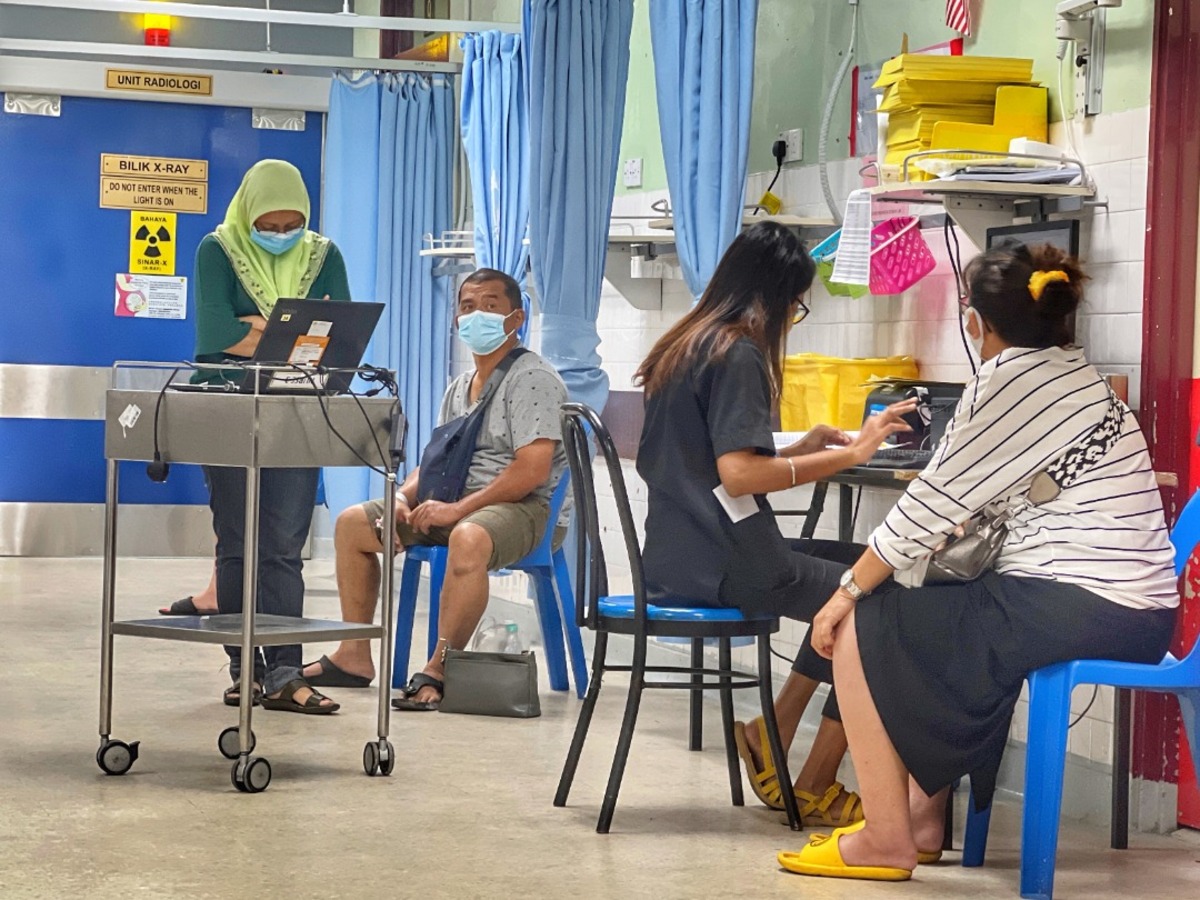
Being in the hospital service of the Ministry of Health (MOH), which is in dire need of resuscitation, doctors must stay true to the saying, “Don’t kill the messenger,” and listen to the message.
Reading the recently published articles “Calling Code Blue For Emergency Care In MOH Hospitals: Part 1 and Part 2,” it is clear that the patient journey at the hospital entry point needs to change. This change should add value by incorporating patient co-design.
Our hospital system today operates on the principle that “doctors are the driver of the system, and patients’ needs are its passive riders.” This means that the public hospital system is designed based on doctors’ perspective.
This system has remained unchanged, is not evidence-based, and offers limited value to patients unless they successfully get admitted. We need to recognise the realities of our failing and overburdened hospital system:
- There are now more accessible primary care facilities, meaning consultation and triaging begin at the community level. Patients needing only cough and cold medicine receive treatment there, while only those requiring specialist care are referred to hospitals.
- The current Emergency Department (ED) design acknowledges that most arriving patients are stable — more fall into the “Non-Critical Green” and “Semi-Critical Yellow” zones compared to the “Critical Red Zone.”
- EDs currently receive walk-in patients from the community, primary care referrals, and Specialist Clinic patients — not only for urgent stabilisation or same-day admission but also for same-day reviews due to new symptoms or worsening conditions before their scheduled Specialist appointment, often due to long clinic wait times.
- Many patients discharged from the ED’s non-critical zone or Observation Ward with referral letters to Specialist Clinics return to the ED for the same unresolved issue and end up getting admitted. Some patients are seen by specialists in the ED, but not all receive Specialist Clinic appointments within the same week to manage their condition.
- Specialist Clinic appointments are often many months away.
- Only certain hospital services, such as the ED and wards, run 24 hours. Other supporting services operate at full capacity for nine hours (during government working hours), after which services are reduced to what is considered an “emergency.” Supporting services like Imaging, Diagnostics, and Ambulatory Care could significantly improve treatment efficiency if their hours were extended.
- Illness does not follow government working hours. In the current economic climate, many patients cannot afford to take leave for hospital appointments. As a result, they delay seeking medical care and only visit health care facilities after working hours or in emergencies.
The ED is overburdened with everything (points 1-3). A closer look at the current ED system design (Figure 1) helps explain why point (4) occurs.

The “Emergency Physician working in Klang Valley,” in Part 2 of the article, wrote about changing the paradigm of how an ED works. I disagree — instead of focusing on how an ED functions, the focus should be on redesigning the hospital entry point.
The author is correct on the following points:
- Expanding the Emergency Department or creating new subunits within its silo will not add value to patient care.
- The Green Zone and Observation Wards should be removed from ED management and rebranded as a Multidisciplinary Ward and Urgent Care Clinics.
- Emergency Medicine should ensure all patients receive direct Specialist Contact Time.

However, the author did not address several significant issues and solutions in Hospitalist Care. Some additional solutions to be considered are:
- Subspecialties should work within their parent General Specialty to enable early identification of patients who require specialized expertise.
- Hospital service hours should be extended beyond the standard 5pm to at least 10pm. This would enhance patient care, improve service efficiency, and better align with patient needs and demand. Delaying cases to the next working day, whether inpatient or outpatient, creates a backlog, prolongs hospital stays, and allows diseases to progress before patients can see specialists. For instance, performing ultrasounds on the same day would provide immediate value for efficient management and treatment planning.
The Hospital Entry Point system should be adaptive to a patient-centered journey approach. The overall hospital system design must value the patient journey, demands, and needs.
If it fails to recognise these changing patient values, then the Ivory Tower will embark on the wrong interventions to address overcrowding.
The solution is not merely expanding the ED or resorting to corridor medicine. Instead, the entire system — from entry point to hospitalist care to discharge — must evolve together.
Embarking solely on ED expansion and corridor medicine will divert precious resources from the core hospitalist function.
The author is a hospitalist from the central region. A hospitalist is a physician who cares for inpatients, meaning they only work inside a hospital. These doctors have often completed residency training in general internal medicine, paediatrics, neurology, obstetric and gynaecology, or oncology.
CodeBlue is providing the author anonymity because civil servants are prohibited from writing to the press.
- This is the personal opinion of the writer or publication and does not necessarily represent the views of CodeBlue.


