

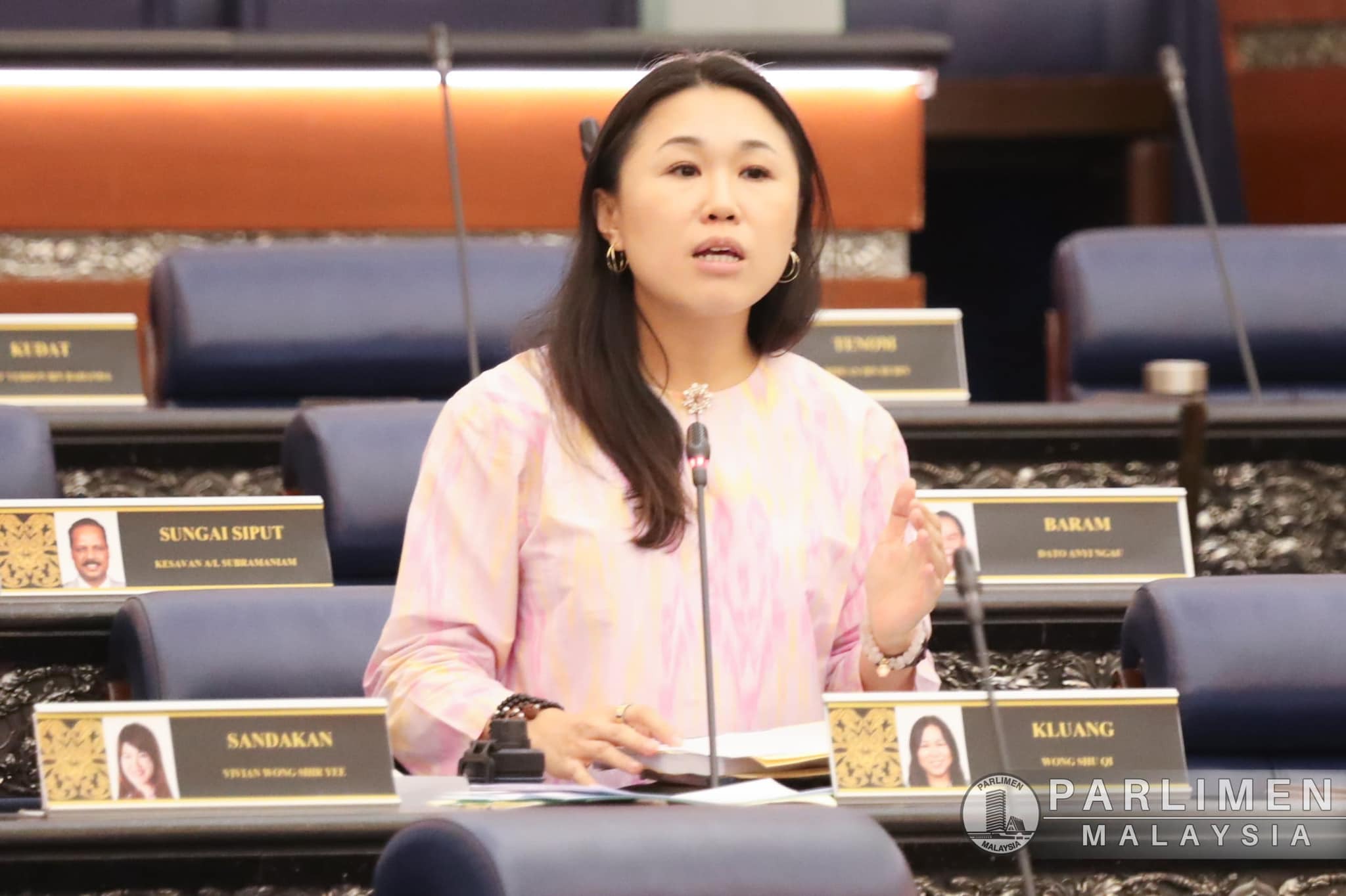
KUALA LUMPUR, Nov 28 — Wong Shu Qi (PH-Kluang) today complained about Bank Negara Malaysia (BNM) and the Ministry of Health (MOH) pushing responsibility to each other over rising health insurance premiums and private hospital charges.
The DAP lawmaker said that when she and her fellow Members of Parliament met with BNM on the increase in medical insurance premiums, the central bank told them that private hospital services are regulated by the MOH.
But MOH told the legislators to discuss with BNM instead; the central bank regulates the insurance industry.
“Can both parties sit together to resolve this issue?” Wong told Deputy Health Minister Lukanisman Awang Sauni in the Dewan Rakyat during Question Time.
“It’s not just the people; I’m sure MPs here are also affected by higher insurance premiums.”
Wong said the issue of rising health insurance premiums is currently debated widely on the internet, besides pointing out that private hospital group KPJ Healthcare Berhad hit an historic RM1 billion quarterly revenue milestone for the third quarter this year.
Utusan Malaysia recently reported that medical insurance premiums are expected to rise by 40 per cent to 70 per cent next year.
Galen Centre for Health and Social Policy chief executive Azrul Mohd Khalib posted on X yesterday, which received 170,000 views, that the increase in health insurance premiums is forcing people to dump their now unaffordable insurance, instead of taking up copayment schemes as expected by BNM.
Some people responding to Azrul’s post said they were either considering or have already cancelled their policies or reduced their coverage.
Lukanisman told Parliament that the MOH is looking at introducing diagnostic related groups (DRG) at the national level to determine hospital charges. DRG involves paying a fixed amount based on the complexity of the case, rather than itemising each charge. Hospitals would receive a set amount (e.g., RM21,000) and manage their resources within that budget.
“We also have a case mix model in facilities with clear costing for procedures that can be a guide, so as to avoid overcharging by private hospitals,” said the deputy health minister.
“DRG is important for private health care financing to look at health care costing and case mix in hospitals to ensure that hospitals like university, military, and private hospitals use DRG to determine costs to ensure that they’re not excessive.”
Currently, most private hospital charges are not regulated; the Private Healthcare Facilities and Services Act (PHFSA) 1998 only regulates doctors’ fees.
The 13-page bill of nearly RM19,000 for Life Insurance Association of Malaysia (LIAM) CEO Mark O’Dell’s minor hernia surgery at a private hospital in Kuala Lumpur last May contained multiple line items for consignment supplies; the use of equipment or instruments; gases supply; imaging; laboratory investigation; medical and surgical supplies; medication; nursing care; nursing procedure; the use of the operating theatre; room and board; and doctor charges, among others.
The discussion in Parliament was sparked by Dr Ahmad Yunus Hairi (PN-Kuala Langat), who asked the deputy health minister about measures to resolve congestion in public hospitals as a result of unaffordable medical insurance premiums and private health care providers giving patients more services and drug prescriptions than necessary.
Lukanisman said 2019 to 2022 data did not show a significant increase in referrals from private hospitals to MOH hospitals, with 1,602 patients referred in 2019 and 1,604 in 2022.
“MOH also does not have sufficient capacity to accept patients due to our heavy workload, even though we’re trying our best. The workload must be shared with private hospitals, but at appropriate charges.”


