

As a very concerned citizen who has accompanied relatives and friends on public hospital visits, who is knowledgeable about patients’ rights and medical ethics, and who is a disciplined taxpayer, I wish to highlight a growing problem associated with poor documentation in public hospitals.
According to Hampton and King, Attorneys at Law, common causes of negligence in a hospital include misunderstandings or lack of clear communication among health care professionals, staffing shortages or overworked staff, malfunctioning or improperly maintained hospital equipment, inaccurate or incomplete medical records, lack of supervision of patients, not following established medical protocols, mistakes in prescribing, administering, or monitoring medication, poor hygiene practices or inadequate infection control, and failing to correctly diagnose a medical condition or delaying the diagnosis.
I have witnessed numerous such incidents. For lack of time and words and space, I will mention the experience of a patient involving the emergency departments of two tertiary hospitals which offer Full Paying Patient (FPP) services in Selangor.
The first incident involved wrong or false entry of clinical examination findings into the hospital computer system, despite no doctor having conducted any clinical examination on the patient. This was despite the patient being in the emergency department for more than 24 hours.
The second incident was in another tertiary hospital’s emergency department, where the patient’s unresolved symptoms were claimed to have already been resolved in a sealed referral letter. The patient was to be sent away from the emergency department to be seen by another specialist department, one to two weeks later. This was despite the patient not having any reduction or resolution of symptoms like dizziness and headache at the emergency department.
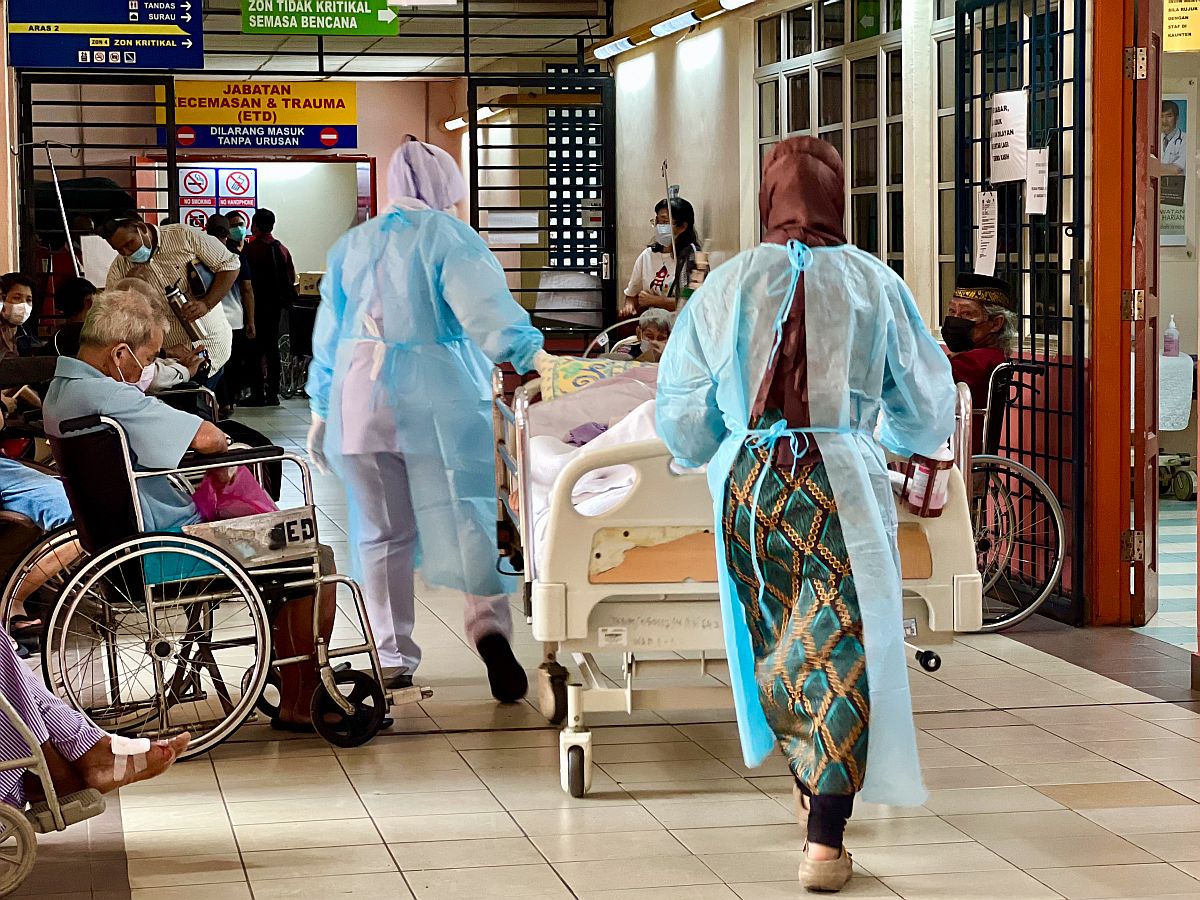
The said patient in this incident had a spinal issue and was in severe chronic pain and had chronic dizziness, which had not been managed for almost one year. One of the emergency departments also provided the patient with a damaged bed that could not be laid flat. The patient with spine issues had to use that bed for almost six hours, with the agony of not being able to lie flat while waiting for dizziness and pain management that was never provided.
This had to be endured despite the patient informing attending the doctor, medical assistant and nurse about the problems with the bed. These health care workers should have the professionalism to voice out their resource issues to their superiors, instead of providing substandard conditions to patients.
Have they no courage to speak up to management?
Pain scores in hospitals have now become a hypocrisy for patients and a pain for doctors, who are concerned about pain scores only during pain control audits. A sane patient who has been up and down the clogged-up emergency departments in two tertiary health care facilities in 48 hours for failed pain and dizziness management will OBVIOUSLY fall asleep from exhaustion, even with unrelieved pain.
The tiredness of going from one hospital to another is enough to wear down any patient. Does that mean the treating doctors can hypothesise that the pain has reduced? That was what the emergency department doctors mentioned in their reports.
Can this be considered a lie? Or lack of responsibility? An outcome of doctors being overworked? Understaffed? A way of venting out their frustrations? Whichever the answer, the patient is at the receiving end of it all.
There is also a severe lack of concern in expediting treatment for patients who are unemployed, even if the unemployment is due to illness. There are many pains and struggles in life that cannot be represented by the clinical pain score alone.
Who measures the pain of disability? The pain of being unemployed? The pain of not earning? The pain of not being able to care for their elders at home? The pain of not being able to eat well? The pain of not being to sleep well? The pain of having to struggle with daily toilet habits? Of not being able to have a bath every day? The pain of not being able to stand or sit or walk even for short durations?
The pain of losing one’s independence? The pain of being ill, especially when there is no social support to rely on? The pain of fearing a fall for months? Ironically, for patients who are employed, doctors are meticulous about expediting treatment because they are responsible for the number of medical leave days given, etc.
Despite the patient in this scenario needing to be seen by a neurologist or neurosurgeon, two public hospitals managed to delay the patient seeing a neurologist for pain and dizziness management, and the patient’s condition only worsened in the last 12 months.
For someone without any chronic medical illness like diabetes and hypertension, and having been health-conscious all their lives, there has not been any difference in improving the quality of life for this patient.
Rare clinical conditions are what they are, but does that mean a doctor will never see such conditions in their lifetimes? Some of these doctors have subjected the said patient to unnecessary scans with radiation without adequate examination, when the scan had already been done by the patient at a private hospital recently.
Instead of ruling out diseases, these doctors repeated the same tests with no proper management algorithm. Doctors who do not keep up with recent research do not have the common sense or urgency to refer the patient to departments which have the expertise to manage the symptom or condition.
They end up wasting government resources and the patient’s time and financial resources. For lack of a better word, such doctors are a nuisance to the government, taxpayers, and patients, with their substandard management skills and lack of clinical professionalism.
Besides, who came up with the idea of referring patients from department to department to narrow down their diagnosis, especially when the symptoms are significant, marked, or worsening? Can’t the health facility just set up a combined clinic where difficult cases are discussed by specialists from different departments, and the brainstorming and investigation is done at a faster pace in order to arrive at a diagnosis?
Bear in mind that not all patients can last physically, what more mentally or financially, until all the various specialty visits are completed, with weeks-long gaps in between, often with no symptom improvement, which is made worse by the lack of waiting facilities, lying-down facilities, specialists, food facilities, and hygienic toilets.
I wish to reinforce the fact that the issues I discuss here are merely related to one individual’s experience with a debilitating disease condition. I have yet to share other individuals’ experiences.
My heart goes out to those who may have been victims of circumstance, have gone unnoticed, have lost the quality of life, and/ or died because of medical negligence, which seems to be increasing day by day.
The absence of organisations which champion patients’ rights merely adds salt to the wound. Most patients do not even know they have rights in public hospitals.
Hospitals have bold, obvious signs of “NO RECORDING ALLOWED” in their premises. Patients are abiding by these rules. However, this is bound to be ignored in the near future if mismanagement issues continue, as the public will begin recording proof of mismanagement in health care facilities.
Without any proof, it will be the patient’s words against the health care professionals’. Some might resort to bringing a medical lawyer during visits to the hospital grounds to get every little mistake fixed on the spot. Some might bring along an undercover VIP to have a look at the surroundings or bring media personnel to bear witness to the violation of rights.
If public hospitals are concerned about their patients, there should be a system change where the patient can verify, with their signatures at the end of every clinical or ward encounter, that the records in the patient’s clinical summary are indeed true. This will serve as a check-and-balance mechanism to ensure a win-win situation for both doctors and patients.
Providing better access for patients to view the contents of their case files for authentication is even more relevant now, especially during the current situation of a lack of human resources in overcrowded health care facilities.
A patient has all the right to view notes of what has been written about themselves. This is important because these notes act as points of reference for further management of the patient.
This verification can also ensure that there is no misdocumentation and can improve the doctor-patient relationship. It will also place greater responsibility on the doctor to value their patients and for the patients to play an active role in directing their disease management goals.
Patients should be actively given a copy of their hospital encounter summary, since most hospitals in Malaysia do not have a national computerised database of patient encounters. In view of a growing ageing population, most of whom live alone, this becomes even more necessary.
The idea of sharing doctor notes with patient is not new. According to the American College of Rheumatology website, the OpenNotes pilot project began in 2010, funded by the Robert Wood Johnson Foundation. It was motivated by a belief in the value of patient-centered medicine.
During the pilot project, patients were able to view the notes through existing patient portals at participating sites. The pilot project, which ran for a year, involved primary care practices at Beth Israel Deaconess Medical Center, Boston; Geisinger Health System, Pennsylvania; and Harborview Medical Center, Seattle. More than 100 primary care physicians and 13,564 patients were included in the initial study.
The project was considered successful as patients reported benefits and requested the process be continued. After the pilot study, when clinicians had the opportunity to turn off OpenNotes, none of them did. Since then, other institutions have adopted the policy.
Follow-up studies have continued to demonstrate the potential benefits of the practice in better patient understanding, trust, and compliance. Clinicians who were initially taking poorer notes may find that increased medical note access has motivated them to make more thorough observations.
The Malaysian government recently introduced a new salary system for civil servants, which also includes public hospital health care workers, termed the Sistem Saraan Perkhidmatan Awam (SSPA) to replace the previous Sistem Saraan Malaysia (SSM).
Despite being given an option to choose to participate in the new system with an attractive salary increment or to remain in the old system, most of the already employed public service doctors will eventually be part of the SSPA system during their next grade rise, regardless of what they choose now. In a nutshell, regardless of whether they chose to opt in or out of the SSPA, all of them will eventually be categorised under the SSPA in certain aspects.
The area of interest here is the evaluation process. The new system is meant to improve services in the public sector. However, it is sad that in terms of evaluation, nothing much has changed. It is hoped that there can be an added scope of patient input, which also contributes to the evaluation system of the health care worker.
For example, having a patient to score the doctor’s services after every encounter can bring constructive improvement in the doctor-patient relationship. The current evaluation which relies on specific Key Performance Indexes (KPIs) does not have an element to measure or consider individual patient-doctor interaction or assess patient satisfaction.
Reliance on the complaints department at hospitals is a very passive way of measuring patient satisfaction. Patient satisfaction must be searched for and measured actively in every health care facility for every health care provider. It can also act as a scale to compare and point out doctors who are ‘gems’, and doctors who can improve to be ‘gems’.
There is room for improvement in the doctor-patient relationship and its outcome. More quantitative and qualitative indicators are required to know the direction of health care with reference to patients, doctors, and the system itself.
The patient must be the priority of the health care system. When patients are unhappy, it means the system should be revitalised. It is necessary to keep up with new ideas that other developed and developing countries are implementing in their health care facilities.
CodeBlue is providing the author anonymity as civil servants are prohibited from writing to the press.
- This is the personal opinion of the writer or publication and does not necessarily represent the views of CodeBlue.


