

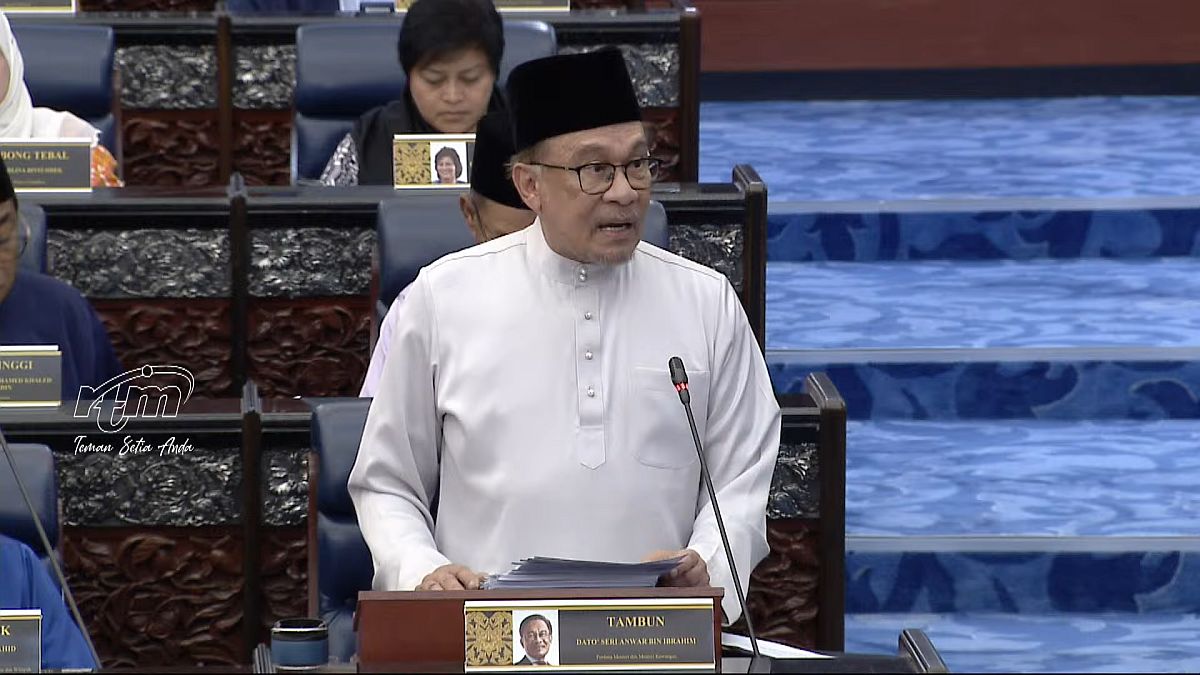
KUALA LUMPUR, Oct 18 — Prime Minister Anwar Ibrahim today surprisingly announced targeted health care subsidies as part of Budget 2025, with higher-income earners in the top 15 per cent (T15) bracket set to pay “slightly more” for public health services.
Anwar, who also serves as Finance Minister, said the move is aimed at easing the financial burden on the country’s public health care system. He made the announcement during his budget speech, which also included similar measures for subsidies on fuel and education.
“Subsidies, like charity, should not be taken advantage of by the extremely wealthy,” Anwar told the Dewan Rakyat. “We have been spending bulk subsidies on fuel, electricity, water, education, health care, and even basic goods like chicken. It is an unsustainable approach when the country is burdened by debt and limited revenue.”
Anwar highlighted the inequality in the current public health care system, where all citizens, regardless of income, pay just RM1 for outpatient care and RM5 for specialist services at Ministry of Health (MOH) facilities.
“Right now, those earning RM100,000 a month or even millions pay the same RM1 as low-income patients. It’s only fair that they contribute slightly more to help fund health care for the less fortunate,” Anwar said. However, he did not specify the amount T15 earners would be required to pay.
Malaysia’s highly subsidised public health system has long been considered unsustainable, with the RM1 and RM5 fees accounting for just one per cent of the government’s total expenditure on health care.
It is unclear if Anwar’s announcement is related to RakanKKM with the proposed establishment of private wings.
In addition to health care, Anwar announced plans to increase school fees for students from the T15 income group. He noted that up to 30 per cent of students in fully residential schools come from high-income families, receiving subsidies that amount to RM15,000 per student annually.
“Originally, these schools were meant to help high-achieving students from low-income families, including those from rural and urban poor areas,” Anwar explained. He also pointed out that the cost of higher education is heavily subsidised, citing pharmacy undergraduates as having to pay only RM3,000 a year, while the actual cost stands at RM30,000.
“Only the top 15 per cent will see a slight increase in fees, while the majority of students, including those from the B40 and M40 groups, will be unaffected,” he said, referring to the bottom 40 per cent and middle 40 per cent income groups, respectively.
Anwar also announced that subsidies for RON95 petrol would be adjusted by mid-2025, with savings redirected to education, health care, and social welfare programmes.


