

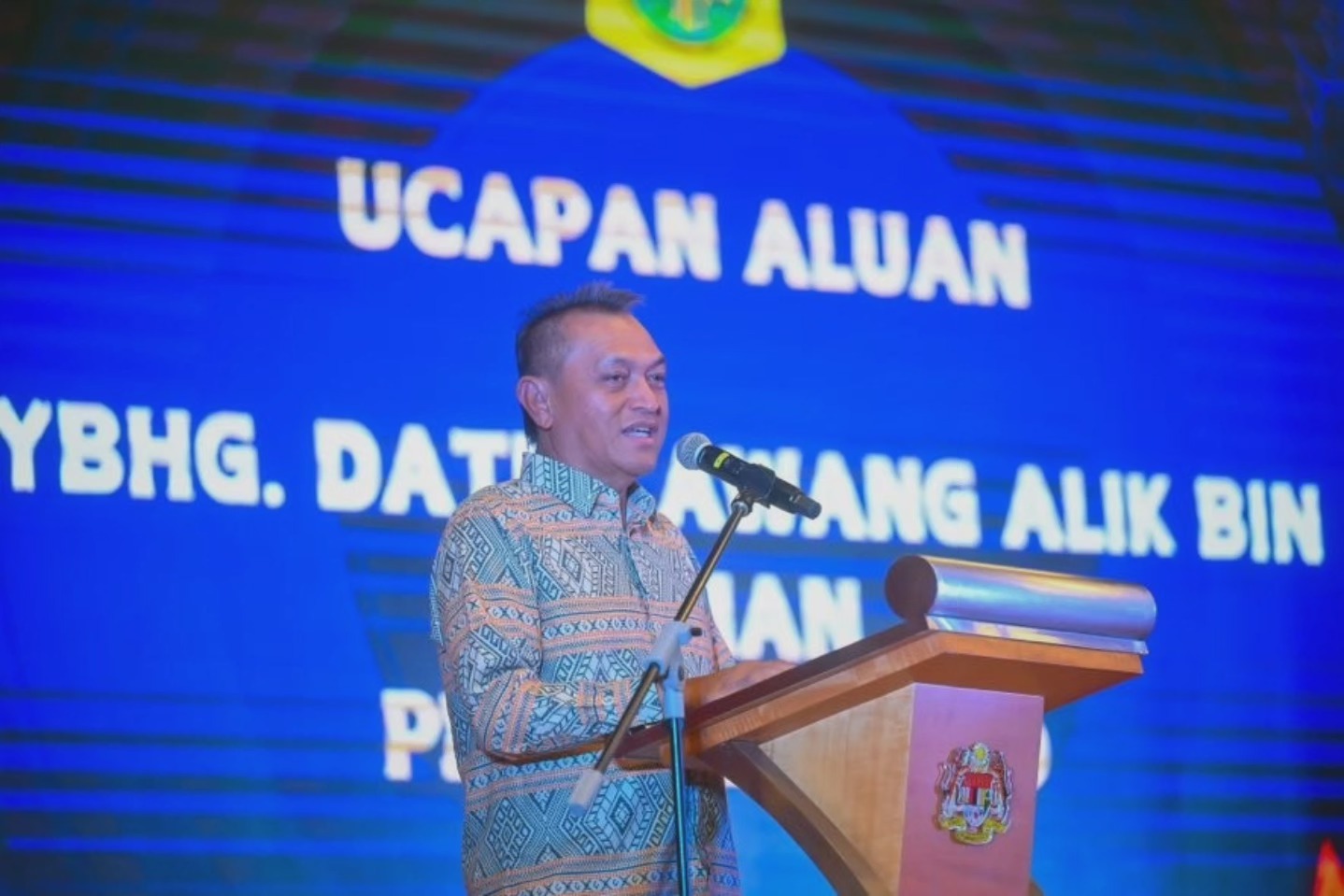
KUALA LUMPUR, Feb 14 — Administrative and diplomatic service (PTD) officers provide crucial support to technical expertise in the health service, said the Administrative and Diplomatic Service Association (PPTD).
PPTD president Awang Alik Jeman, who is also secretary-general at the Home Affairs Ministry, sought to defend the relevance of the elite PTD scheme, in response to a CodeBlue report yesterday that called for the phasing out of the century-old colonial-era legacy.
“In the context of the health sector and other critical sectors, the PTD plays an important complementary role to technical expertise,” Awang Alik said in a statement yesterday.
“PTD officers are directly involved in budget planning, procurement management, infrastructure development, human resource management, and the formulation of strategic policies.
“It is the synergy between technical expertise and strategic administrative leadership that has enabled the country to effectively manage various challenges, including the 1997/1998 Asian Financial Crisis, global pandemics, and diverse socio-economic and geopolitical challenges.”
CodeBlue’s article titled “Time To Phase Out Colonial-Era PTD Scheme From Malaysia’s Civil Service” – which included comments from the Galen Centre for Health and Social Policy, as well as interviews with a serving PTD and a retired one – proposed replacing the elite generalist cadre with specialist policy professionals.
CodeBlue noted that the United Kingdom has already transitioned from exclusive reliance on a prestigious administrative class since nearly six decades ago, arguing that Malaysia has a large pool of skilled professionals in the 2020s that no longer necessitate civil service generalists.
The Ministry of Health (MOH) has more than 700 positions for PTDs this year, over half of which are concentrated in hospital management (peninsula), state management (peninsula), and the human resource division.
CodeBlue’s report sparked a vigorous debate on Facebook, with some people expressing support for an elimination of the PTD scheme, whereas others questioned if medical doctors could be good administrators.
One person described PTDs in professional organisations as “postmen” with large salaries, claiming that during his time, PTD officers merely took resolutions from professionals during a brainstorming session for a particular policy and “improved formatting” for presentation to a minister.
“What is there to talk about? The note-taker and typist are of the same rank as us! That’s the kind of work PTD officers do in professional organisations: a typist.”
Another said as many Malaysians these days have professional qualifications, PTD officers should also be qualified under whichever recognised professional board, be they medical professionals, engineers, surveyors, or other technical experts.
“Why are we paying high salaries to people who are not properly qualified? PTD officers should already be professionally qualified from the beginning. Instead of continuously sending underqualified people to course after course and claiming they are managing the country, they should already have the necessary expertise,” said the person.
However, another argued that doctors should focus on clinical work, noting that most divisions in the MOH like medicine and family development are already led by medical professionals, even as a few others said the health service needs more doctors, not PTD officers.
“PPTD recognises that technical expertise is important and must continue to be strengthened,” Awang Alik said in his statement.
“However, strategic coordination capacity, comprehensive policy formulation capability, and administrative leadership are critical components that ensure the government system functions effectively. A constructive and inclusive reform approach will strengthen, not weaken, the nation’s institutional capacity.”
PPTD stressed that the “colonial-era” nature of the PTD scheme, which was formed in 1921 as the Malayan Civil Service, must be viewed in the context of institutional evolution.
“The country’s administrative structure has undergone significant transformation through a competitive recruitment system, continuous professional training, emphasis on integrity, and a work culture based on performance and accountability,” said Awang Alik.
“The PTD scheme today is a modern institution that continuously adapts to the nation’s present and future needs.”
He added that the PTD scheme has evolved from an historical into a strategic institution that plays a “vital” role in ensuring administrative stability, policy continuity, and the effective implementation of the national development agenda since Independence.
“Since its establishment, the PTD has contributed directly to the formulation and implementation of major national policies, including coordination of the Five-Year Malaysia Plans, implementation of the New Economic Policy, rural development, fiscal reforms, as well as various government transformation initiatives,” said Awang Alik.
“The PTD’s ability to coordinate policies across ministries and agencies is a critical institutional strength in ensuring that a whole-of-government approach can be implemented in an integrated and effective manner.”
PPTD also highlighted the increased importance of the PTD’s role as “relevant, respected, consulted, and trusted strategic administrators” in an era of global challenges encompassing climate change, food security, digital transformation, and fiscal stability.
“The PTD remains committed to supporting the public service reform agenda, strengthening national governance, and ensuring that the aspirations of Malaysia Madani are realised for the well-being of the people and the prosperity of the nation.”
Awang Alik praised the leadership of Prime Minister Anwar Ibrahim, Chief Secretary to the Government (KSN) Shamsul Azri Abu Bakar, and Public Service director-general (KPPA) Wan Ahmad Dahlan Abdul Aziz.
Public service reform initiatives led by the KSN, he noted, emphasise efficiency, accountability, and performance-based outcomes, whereas the KPPA continues to strengthen the public service system through emphasis on meritocracy, competency development, field specialisation, and outcome-based performance evaluation.
“These measures ensure that civil servants, including PTD officers, remain competent, responsive, and prepared to face increasingly complex modern administrative challenges.”


