

KUALA LUMPUR, Sept 4 — The Malaysian Association of Medical Assistants (PPPM) has estimated a shortage of more than 14,000 assistant medical officers (PPP) in the Ministry of Health (MOH).
The group representing PPPs, also known as medical assistants, said there are 16,720 permanent positions for PPPs and 3,261 contract PPPs in the government health service, totalling 19,981.
However, the MOH needs 34,405 PPPs, according to PPPM’s internal analysis, translating to a deficit of 14,425 medical assistants nationwide.
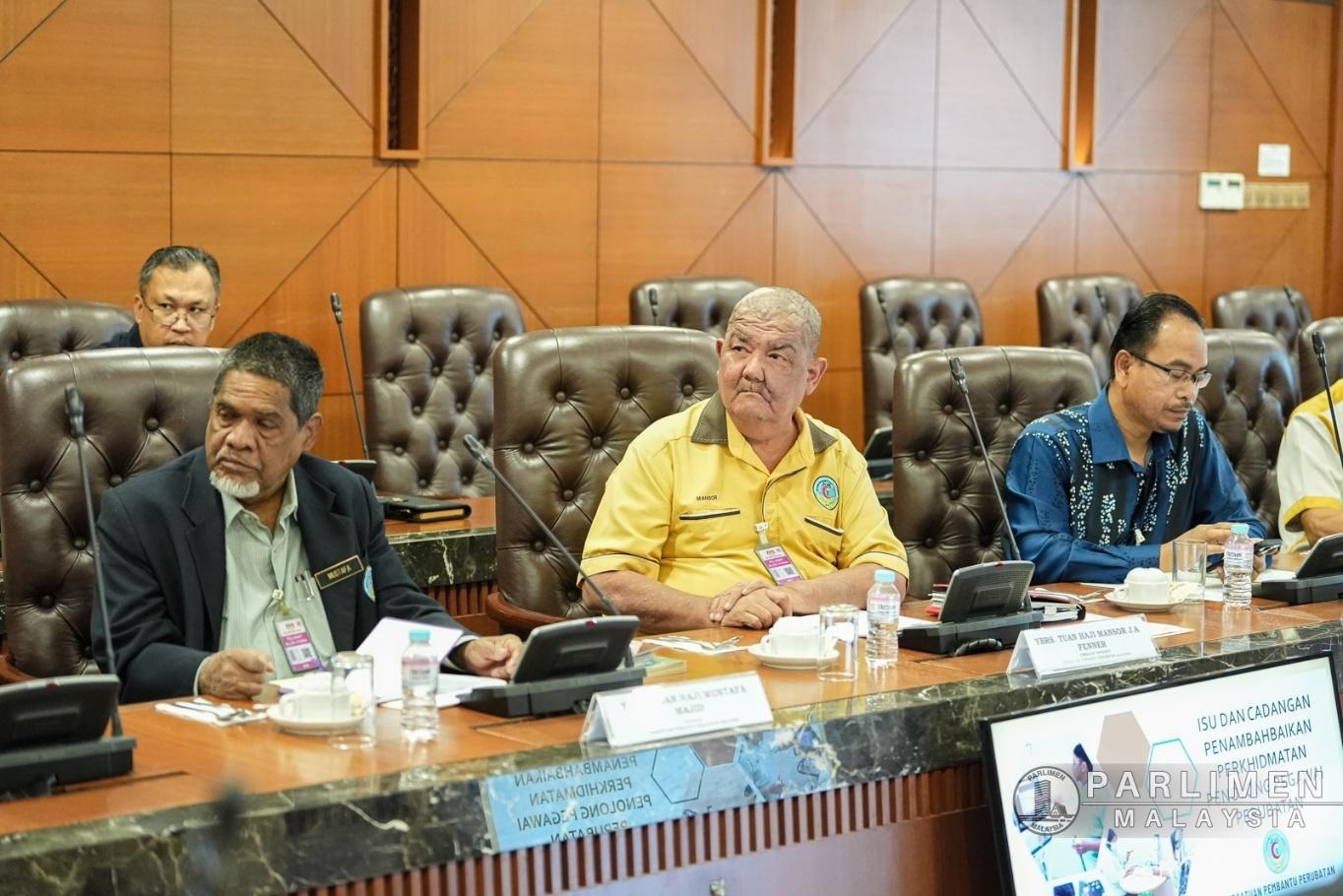
“Nearly 30 per cent to 50 per cent of PPPs have to work overtime to meet the needs of the service, especially in the Emergency Department,” according to a slide presented by PPPM at a Health parliament special select committee (PSSC) hearing last February 20.
Health deputy director-general (medical) Dr Nor Azimi Yunus told the Health PSSC separately at a February 27 hearing that the MOH has 15,251 PPPs this year, which she deemed to be a “rather comfortable” figure.
Coupled with PPPM data, this indicates vacancies in permanent positions for PPPs and that the actual shortage could exceed 19,000 medical assistants – rather than the 14,000 plus deficit quoted by PPPM.
Last year, the PPP registry recorded 30,650 registered PPPs, including those working in the private sector. This makes PPPs the third largest group of health care workers, after nurses and doctors.

Associations representing medical assistants highlighted the shortage of PPPs in specialist clinics in government hospitals that became especially critical following the diversion of nurses from specialist clinics to wards, due to nursing shortages.
“For your information, YB, we don’t have or rather, we lack PPP positions in specialist clinics. Some places only have two PPPs. So, to cover the whole gap left by these nurses, we take contract [PPPs],” Kesatuan Kebangsaan Penolong Pegawai Perubatan Semenanjung Malaysia (KKPPPSM) deputy president Muhammad Tajuddin Azaha told MPs at the same Health parliamentary committee meeting with PPPM.
“The problem arises at the end of the contract of these contract PPPs. So who fills their spots? The nurses have already gone to the wards.”
He pointed out that the contracts of 1,055 contract PPPs from MOH’s training institute (ILKKM) are due to end in one or two years’ time.
“We ask for at least one-off appointments of these 1,055.”
Tajuddin also highlighted disruption in the career pathway of medical assistants. For example, even though a contract PPP is trained on the job in cardiology, the medical assistant may not necessarily be retained in that specialty after absorption into permanent status.
PPPs in Malaysia mostly practise in family health (37 per cent) and emergency and prehospital care (31 per cent). Some 800 PPPs have been registered as assistant medical officer technical experts (Amotex) with specialist expertise.
PPPM education bureau chairman Assoc Prof Alias Mahmud called for the creation of flexi grades for PPPs registered as Amotex at Grades U9/U10 and U12/U13/U14.
“On the issue of promotions, we ask for them to stay in their place with a single pathway. So we ask for flexi grades to be considered to avoid brain drain and the like,” he said. “Then when they get promoted, they will stay there.”
PPPM president Mustafa Majid complained to parliamentarians about how contract PPPs are not permitted to pursue advanced training like an advanced diploma or a degree, despite having served for three years, as this is only allowed for permanent medical assistants.
“Their experience only begins when they are appointed on a permanent basis, even though they’ve been working for three, four, five years under contract. Then they need another three years for advanced courses. This makes it even longer,” he told MPs.
Mustafa, who is also a member of the Medical Assistant Board, said the board management and Public Service Department (JPA) have told him that the limitation of advanced training to only permanent PPPs was a “condition of service.”
Tajuddin explained that based on norms, there should be a set number of PPPs according to specialty, such as cardiology or nephrology, but human resource constraints force the health service to use medical assistants on a shared basis across specialties.

KKPPPSM further highlighted a lack of positions for PPPs in old hospitals despite service expansion, as new positions are typically approved only for new hospitals.
Tajuddin noted that in Kelantan, for example, some klinik desa and klinik komuniti are upgraded to klinik kesihatan, but the upgrades are not accompanied with additional positions. Similarly, old hospitals that expand specialty services are not given new staffing positions.
“These are actually new services, but current policy states that we can’t create posts in old facilities. We can only create posts in new facilities,” he said.
Health PSSC member Dr Alias Razak (PN-Kuala Nerus) remarked: “Chairman, the issue of there not being enough – everything’s not enough. Not enough doctors, also not enough nurses, now not enough PPPs.”
“MPs are enough,” replied Health PSSC chairman Suhaizan Kaiat (PH-Pulai) with a laugh, according to the Hansard.
Upgrade Minimum Qualifications For PPPs To Bachelor’s Degree

PPPM called for minimum qualifications for registered PPPs to be upgraded to a Bachelor’s degree from the current diploma requirement in Malaysia.
Even lower-income economies like Bangladesh and a few African countries require a Bachelor’s degree for medical assistants and clinical officers respectively – their equivalent profession to Malaysia’s PPP.
Thailand and Brunei also require a Bachelor’s degree for medical assistants. Physician assistants or physician associates in the United States and United Kingdom – the equivalent to Malaysia’s PPP – are now being required to have a Master’s qualification.
“It’s quite embarrassing when we compare ourselves to other countries,” said Alias at the Health PSSC meeting.
He added that Malaysian PPPs are unable to register with the UK General Medical Council due to their lower qualifications.
“But the main point is to have a Bachelor’s degree to give quality service to our people.”
In Malaysia, Universiti Kebangsaan Malaysia (UKM) offers a Bachelor of Science in Emergency Medicine with honours, whereas Open University Malaysia (OUM) and Universiti Sultan Zainal Abidin (UniSZA) offer a Bachelor in Medical and Health Sciences.
A PPP’s education pathway includes a Diploma in Medical and Health Sciences; post basic or advanced diploma; a Bachelor in Medical and Health Sciences or BSc. in Emergency Medicine; and a Master or PhD in Medical and Health Sciences.

A PPP’s job scope comprises five main tasks: patient treatment in a set scope, handling medical devices for the purposes of treatment, handling health screening programmes in public health, conduct tests and screenings for diagnostic purposes, and handling pre-hospital services. PPPs play promotive, preventive, curative, rehabilitative, and palliative roles.
Alias pointed out that the US has many physician assistants (PAs) who can treat minor cases with short waiting times, a practice that he said could be adopted in the green zone of the Emergency Department in government hospitals in Malaysia for mild cases.
“Currently, PPPs don’t see patients there. So patients are stuck for eight to 12 hours in the green zone. Imagine if PPPs could see patients there, they’d be able to go back home quicker,” he said.
“So these are among the issues that we should look at because we’re capable of seeing patients like that. For severe cases, we’d definitely refer those. Developed countries are already looking there.”
Finally, PPPM called for the establishment of a service division for assistant medical officers in the MOH, who are currently under a branch under the MOH’s practice division. A separate division for PPPs would regulate more than 30,000 PPPs across the public and private sectors, as well as another 30,000 health care assistants (PPKs) and estate hospital assistants (PHE).
The Health PSSC tabled its inquiry in a 455-page report titled “Proposal to Form a Health Service Commission” in the Dewan Rakyat on August 27.


