

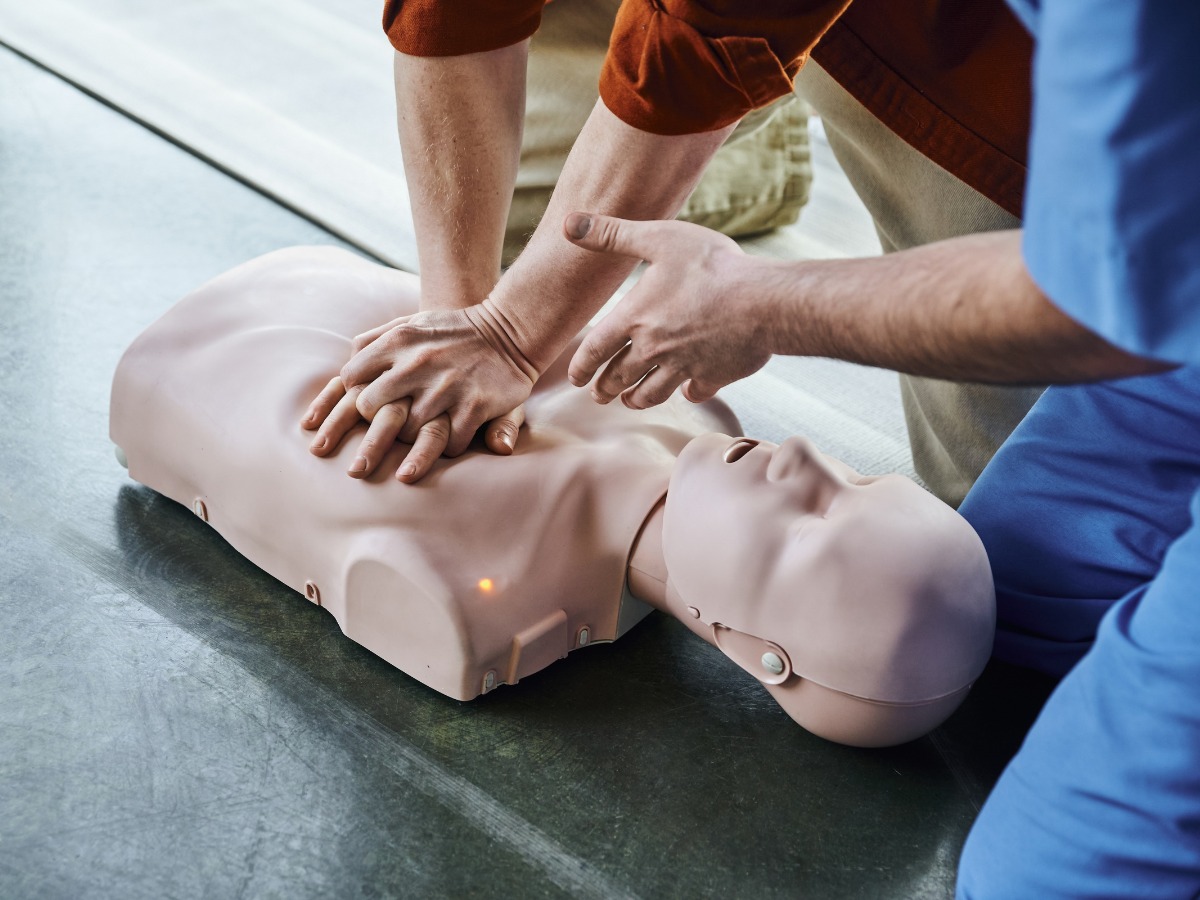
Imagine witnessing a family member suddenly collapse at home, a colleague becoming unresponsive at work, or a stranger experiencing cardiac arrest in a shopping mall. Would you know what to do?
In such emergencies, every second counts. The actions taken by people nearby during the first few minutes can make a critical difference between life and death.
Sudden cardiac arrest occurs when the heart unexpectedly stops pumping blood effectively, depriving the brain and other vital organs of oxygen. Without immediate intervention, the consequences can be fatal. However, early recognition, prompt cardiopulmonary resuscitation (CPR), and timely use of an automated external defibrillator (AED) can significantly improve the chances of survival.
This highlights the importance of strengthening the chain of survival, an internationally recognised approach that emphasises coordinated life-saving actions, from recognising cardiac arrest and activating emergency services to providing CPR, early defibrillation, and advanced medical care.
Community Members Are The First Link In The Chain
Although emergency health care professionals play a vital role in resuscitation, they are rarely the first people present when cardiac arrest occurs outside a health care facility.
Family members, colleagues, neighbours, and bystanders are often the first to witness an emergency.
Their ability to recognise cardiac arrest, call emergency services, and initiate CPR can influence the patient’s chances of survival.
Many individuals may hesitate to intervene because of limited knowledge, fear of performing CPR incorrectly or uncertainty about what actions to take.
This highlights the need for continuous public education, accessible CPR training and greater awareness of AED availability.
In Malaysia, strengthening community readiness should be recognised as an essential component of emergency health care rather than an optional skill.
MyResQ And The Importance Of Community Emergency Response
Digital technology offers opportunities to strengthen coordination between emergency services and community responders. Initiatives such as MyResQ highlight the potential role of technology-supported community response in improving awareness, preparedness and participation during emergencies.
Community response initiatives can complement formal emergency medical services by encouraging trained individuals to participate in lifesaving efforts while professional assistance is being arranged. However, technology alone cannot save lives.
Its effectiveness depends on public awareness, appropriate training, timely activation, reliable coordination, and the willingness of individuals to respond.
Therefore, initiatives such as MyResQ should be supported by continuous community education and collaboration among health care institutions, emergency services and the public.
Nurses As Advocates For Community Preparedness
Nurses have an important role in strengthening the chain of survival beyond hospitals and clinical settings. As educators, clinicians and community advocates, nurses are well positioned to promote CPR awareness, encourage emergency preparedness, and support public confidence in responding to cardiac emergencies.
Nursing education should extend beyond the acquisition of clinical competencies to include community engagement and the promotion of lifesaving skills among the public.
Through health education programmes, community outreach, workplace training and public awareness initiatives, nurses can help bridge the gap between professional emergency care and community action.
Universiti Malaya’s Commitment To Emergency Preparedness
Recognising the importance of public awareness and professional engagement, the Emergency, Surgical and Peri-operative Care Cluster, Faculty of Nursing, Universiti Malaya, organised its second Nursing Coffee Talk webinar on November 19, 2026.
The webinar, titled “Strengthening The Chain of Survival: The Roles Of MyResQ”, featured Dr Mohd Afiq Mohd Nor, an emergency physician from the Emergency Medicine Department, Universiti Malaya Medical Centre. The session was moderated by T. Sivajothy Teramani, nurse educator at the Faculty of Nursing.
The programme attracted 117 participants, reflecting encouraging interest in emergency preparedness, community response and the importance of early lifesaving interventions.
The webinar provided a platform to raise awareness of the chain of survival and discuss the roles of MyResQ in supporting community emergency response.
Moving Towards A CPR-Ready Malaysia
Strengthening the chain of survival requires a collective effort. Health care institutions, educational organisations, policymakers, emergency services, and community members all have important responsibilities in building a society that is prepared to respond to cardiac emergencies.
Malaysia should continue to prioritise accessible CPR and AED training, public awareness campaigns, emergency response education and collaboration with community-based initiatives.
Schools, universities, workplaces, and residential communities can become important settings for promoting basic lifesaving skills.
At the same time, health care professionals, particularly nurses, should be encouraged to lead and participate in community-based emergency preparedness programmes.
Such efforts can help create a culture in which recognising cardiac arrest, calling for help and initiating CPR become shared community responsibilities.
Every Malaysian Can Make A Difference
Saving a life should not depend solely on the arrival of an ambulance or the availability of health care professionals. It begins with an informed, prepared and confident community.
The Universiti Malaya Nursing Coffee Talk illustrates the value of continued education and collaboration in promoting awareness of emergency response. However, awareness must translate into action.
Every Malaysian should be encouraged to learn CPR, understand the importance of AEDs, and recognise the steps to take during a cardiac emergency.
A stronger chain of survival begins with a community that is ready to act. When every second counts, the knowledge and courage of an ordinary person may become someone’s greatest chance of survival.
Dr Noor Hasliza Che Seman, Junainah Abu Bakar, Siti Azlina Mohd Amin, Haslinda Saad, T. Sivajothy Teramani, Rohidayah Ibrahim, and Syarina Aris are members of the Emergency, Surgical and Peri-operative Care Cluster, Faculty of Nursing, Universiti Malaya.
- This is the personal opinion of the writer or publication and does not necessarily represent the views of CodeBlue.


